Introduction
When selecting steel for HVAC ductwork or roofing systems, two common options are galvalume and galvanized steel.
Both materials offer corrosion protection, but they differ in composition, lifespan, and ideal applications. In this guide, we’ll compare galvalume vs galvanized steel in terms of coating chemistry, corrosion resistance, cost, and HVAC suitability.
What Is Galvalume?
Galvalume steel is coated with an alloy consisting of:
55% Aluminum
43.4% Zinc
1.6% Silicon
This aluminum-zinc coating provides enhanced oxidation resistance compared to standard galvanized steel.
It is commonly used in:
Metal roofing panels
Outdoor structural panels
Agricultural buildings
The aluminum component improves long-term corrosion resistance, especially in atmospheric exposure.
What Is Galvanized Steel?
Galvanized steel is coated with pure zinc, typically through hot-dip galvanizing.
Unlike galvalume, galvanized steel relies entirely on zinc for corrosion protection, offering:
Strong sacrificial protection
Better cut-edge performance
Excellent indoor durability
Coating & Composition Differences
| Feature | Galvalume | Galvanized Steel |
|---|---|---|
| Coating Type | Aluminum-Zinc | Pure Zinc |
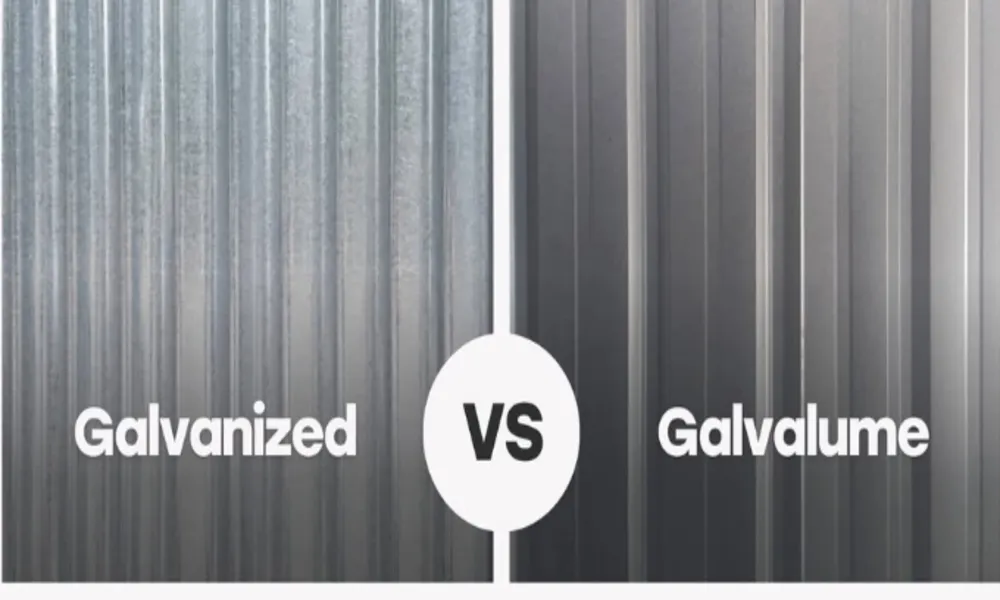
| Appearance | Matte silver | Bright silver |
| Corrosion Resistance | Very High | High |
| Cut Edge Protection | Moderate | Better |
| Typical Use | Roofing | HVAC Ductwork |
Key Insight
Galvalume excels in atmospheric corrosion resistance.
Galvanized steel performs better when edges are cut or scratched due to zinc’s sacrificial behavior.
Corrosion Resistance Comparison
Galvalume typically lasts longer in outdoor environments.
Estimated Lifespan (varies by environment):
| Environment | Galvalume | Galvanized |
|---|---|---|
| Indoor | 30+ years | 20–30 years |
| Coastal | 25–40 years | 15–25 years |
| Industrial | High | Moderate |
However, inside HVAC duct systems (controlled indoor air), galvanized steel already provides sufficient protection at a lower cost.
Roofing vs HVAC Applications
Roofing Systems
Galvalume is often preferred because:
Superior atmospheric corrosion resistance
Reflective aluminum surface
Longer outdoor lifespan
HVAC Ductwork
Galvanized steel is usually preferred because:
More cost-effective
Excellent performance in indoor environments
Better edge protection during fabrication
For most commercial air distribution systems, G60 or G90 galvanized steel is more than adequate.While material selection affects durability, duct insulation plays a critical role in preventing heat loss and surface condensation.
Cost Comparison
In general:
Galvalume costs slightly more than galvanized steel.
Price difference varies by region and raw material fluctuations.
Although galvalume may have a longer lifespan outdoors, the added cost is often unnecessary for indoor HVAC duct systems.
For budget-sensitive commercial projects, galvanized steel provides the best value-to-performance ratio.
When Should You Choose Galvalume?
Choose galvalume if:
The duct or panel will be exposed to outdoor weather
The environment is highly humid or coastal
Long-term atmospheric corrosion resistance is critical
When Should You Choose Galvanized Steel?
Choose galvanized steel if:
The application is indoor HVAC ductwork
Budget efficiency is important
Fabrication involves many cut edges
For most HVAC contractors and duct manufacturers, galvanized steel remains the standard material.
Final Recommendation
If your focus is:
Indoor HVAC duct systems → Galvanized (G60 or G90)
Outdoor roofing or exposed panels → Galvalume
High-corrosion industrial setting → Consider stainless steel
Understanding the difference between galvalume and galvanized steel helps you select the right material based on environment, budget, and expected service life.
For custom duct fabrication projects, both materials can be processed depending on your specification and climate requirements.
FAQ
1. What is the difference between G60 and G90 galvanized sheet metal?
G90 has a heavier zinc coating than G60, offering better corrosion resistance. G60 is typically used for indoor HVAC ducts.
2. What gauge is used for HVAC ductwork?
26–24 gauge is common for residential systems, while 22–20 gauge is used for commercial or higher-pressure ducts.
3. How long does galvanized sheet metal last?
In indoor HVAC systems, galvanized sheet metal typically lasts 20–30 years, depending on environment and coating thickness.
4. Is galvanized steel better than black steel for ductwork?
Yes. Galvanized steel resists corrosion and is standard for HVAC ducts, while black steel is mainly used for fire-rated systems.