
What is HVAC Duct Fabrication?
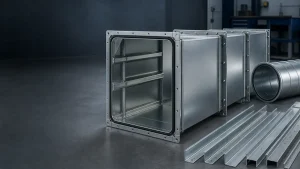
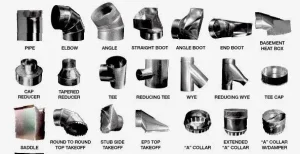
HVAC duct fabrication is the process of manufacturing air distribution ducts from sheet metal or other materials, used to deliver conditioned air in heating, ventilation, and air conditioning systems. It involves cutting, forming, assembling, and sealing components to ensure efficient airflow and minimal leakage.
This process is widely used in commercial buildings, industrial facilities, and residential HVAC systems. The quality of duct fabrication directly affects system efficiency, indoor air quality, and long-term operational costs.
Well-fabricated ducts ensure proper airflow distribution, reduce energy loss, and maintain system performance over time.
HVAC Duct Fabrication Process Overview
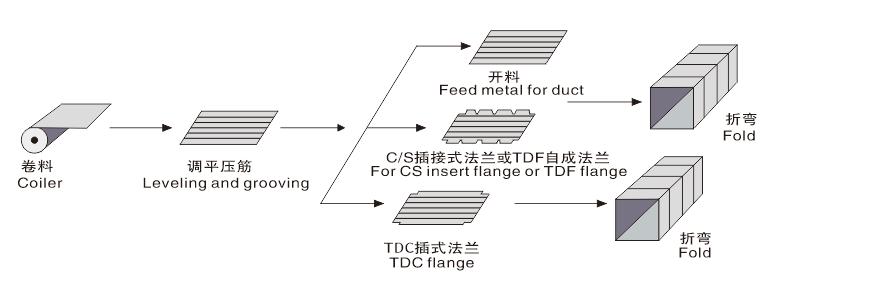
The HVAC duct fabrication process typically includes the following steps:
Each stage plays a critical role in determining the final duct quality. Errors in early steps (such as cutting or bending) often lead to air leakage, misalignment, and increased material waste.
Step-by-Step HVAC Duct Fabrication Process
Step 1 – Sheet Metal Cutting
The fabrication process begins with cutting sheet metal into required sizes and shapes. Common materials include:
- Galvanized steel (GI)
- Stainless steel
- Aluminum
Two primary cutting methods are used:
| Method | Accuracy | Cost | Application |
|---|---|---|---|
| Plasma Cutting | Medium | Lower | Thick materials |
| Laser Cutting | High | Higher | Precision ducts |
Laser cutting is preferred for high-precision HVAC ducts, as it reduces edge deformation and improves downstream forming accuracy.
Insight: High-quality cutting reduces errors in later stages and improves overall production efficiency.
Step 2 – Bending and Forming
After cutting, metal sheets are bent into specific shapes using a press brake. This step determines the dimensional accuracy and structural integrity of the duct.
Precision bending is critical because even small deviations can lead to poor sealing and air leakage.
A commonly used formula in bending is:
Where:
- Angle = bending angle
- Radius = inner bend radius
- K = material factor
- Thickness = sheet thickness
Insight: CNC press brakes significantly improve consistency and reduce manual errors.
Step 3 – Lock Forming (Pittsburgh Seam)
Lock forming is used to create seams that connect duct sections. The most common method is the Pittsburgh seam, widely used in rectangular duct fabrication.
| Seam Type | Strength | Application |
|---|---|---|
| Pittsburgh | High | Rectangular ducts |
| Snap Lock | Medium | Light-duty ducts |
Lockformer machines are used to produce consistent and tight seams, which are essential for minimizing air leakage.
Insight: Seam quality directly affects duct durability and air tightness.
Step 4 – Assembly
In this stage, different duct components are assembled together. Proper alignment is critical to ensure:
- Structural stability
- Smooth airflow
- Easy installation
Manual assembly may introduce inconsistencies, while automated systems improve repeatability and speed.
Step 5 – Sealing and Reinforcement
Sealing prevents air leakage at joints and seams. Common sealing methods include:
- Sealants (mastic)
- Gaskets
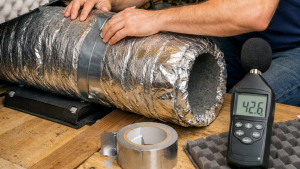
- Tape sealing
Reinforcement may also be added to maintain duct shape under pressure.
Insight: Poor sealing can result in energy losses of up to 20–30% in HVAC systems.
Step 6 – Inspection and Quality Control
Final inspection ensures the duct meets required standards and performance criteria.
Typical checks include:
- Air leakage testing
- Dimensional accuracy
- Surface quality
Insight: Quality control reduces long-term maintenance costs and improves system reliability.
Common Problems in HVAC Duct Fabrication (and Solutions)
| Problem | Cause | Solution |
|---|---|---|
| Air leakage | Poor sealing or seams | Improve forming & sealing |
| Deformation | Incorrect bending | Use CNC press brake |
| Misalignment | Manual assembly errors | Use automated systems |
Many of these issues originate from low-precision equipment or inconsistent processes.
Machines Used in HVAC Duct Fabrication
Different machines are used at each stage of the fabrication process:
| Process | Machine Type |
|---|---|
| Cutting | Laser / Plasma Cutter |
| Bending | Press Brake |
| Forming | Lockformer Machine |
| Production | Auto Duct Line |
Modern HVAC factories increasingly adopt automatic duct production lines, which integrate multiple processes and significantly improve efficiency.
Key Benefit: The right equipment can increase productivity by 30–50% while reducing labor costs.
How to Improve HVAC Duct Fabrication Efficiency
To optimize duct fabrication, manufacturers should focus on:
1. Automation
Automated duct lines reduce manual labor and increase consistency.
2. Material Optimization
Reducing waste through better cutting layouts lowers production costs.
3. Workflow Optimization
Streamlining the fabrication sequence improves throughput.
4. Equipment Upgrade
Modern machines provide higher precision and reliability.
Insight: Factories using advanced automation can reduce labor costs by up to 40%.
Conclusion
The HVAC duct fabrication process involves multiple critical steps, from cutting and bending to sealing and inspection. Each stage directly impacts duct quality, system efficiency, and long-term performance.
For manufacturers and contractors, investing in the right fabrication equipment is essential to achieving high precision, reducing errors, and improving production efficiency.
FAQ
1. What is the HVAC duct fabrication process?
It is the process of manufacturing air ducts from sheet metal through cutting, forming, assembly, and sealing.
2. What machines are used in duct fabrication?
Common machines include laser cutters, press brakes, lockformers, and automatic duct production lines.
3. What is a Pittsburgh seam?
It is a widely used locking method for joining rectangular duct sections.
4. How can duct leakage be reduced?
By improving sealing methods and using high-precision fabrication equipment.
5. What material is best for HVAC ducts?
Galvanized steel is the most commonly used due to its durability and cost-effectiveness.