What is HVAC Ductwork?
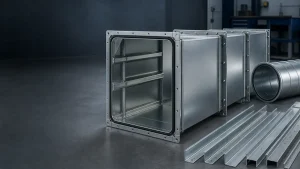
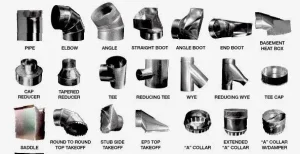
HVAC ductwork refers to a network of air ducts used to distribute and remove air in heating, ventilation, and air conditioning (HVAC) systems. These ducts deliver conditioned air from HVAC units to different spaces and return air back for reconditioning.
In both commercial and industrial environments, ductwork plays a critical role in maintaining indoor air quality, temperature consistency, and energy efficiency. Poorly designed or fabricated duct systems can lead to air leakage, uneven airflow, and increased operational costs.
High-quality HVAC ductwork ensures efficient airflow distribution, minimizes energy loss, and supports long-term system performance.
How Does HVAC Ductwork Work?
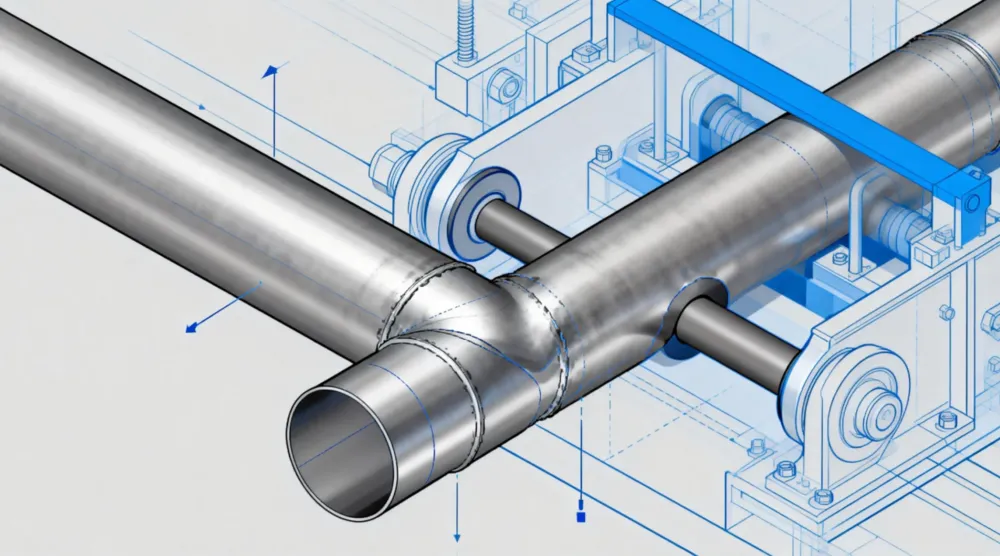
HVAC duct systems operate by circulating air through a closed-loop system consisting of supply ducts and return ducts.
- Supply ducts deliver conditioned air (heated or cooled) into rooms
- Return ducts carry air back to the HVAC system for reprocessing
The effectiveness of ductwork depends on airflow dynamics, pressure balance, and system design.
A basic airflow formula used in HVAC systems is:
Where:
- CFM = cubic feet per minute
- Velocity = air speed
- Area = cross-sectional area of the duct
Proper duct sizing and airflow design are essential to ensure system efficiency and comfort.
Types of HVAC Ductwork
Different types of ductwork are used depending on the application, budget, and performance requirements.
1. Sheet Metal Ducts
Sheet metal ducts are the most commonly used type in commercial and industrial HVAC systems. They are typically made from galvanized steel or stainless steel.
Advantages:
- High durability
- Smooth airflow surface
- Fire-resistant
Applications: factories, large buildings, commercial HVAC systems
2. Flexible Ducts
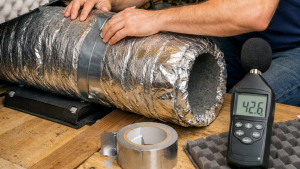
Flexible ducts are made of a wire coil covered with plastic and insulation.
Advantages:
- Easy to install
- Low cost
Disadvantages:
- Lower durability
- Higher airflow resistance
Applications: residential HVAC systems
3. Fiberglass Duct Board
Fiberglass ducts are used for thermal insulation and noise reduction.
Advantages:
- Good acoustic performance
- Built-in insulation
Disadvantages:
- Lower structural strength
- Potential maintenance issues
4. Spiral Ducts
Spiral ducts are round ducts commonly used in modern commercial and industrial designs.
Advantages:
- Better airflow efficiency
- Lower leakage rates
- Aesthetic appearance
Comparison of Duct Types
| Type | Durability | Cost | Application |
|---|---|---|---|
| Sheet Metal | High | Medium | Industrial/Commercial |
| Flexible | Low | Low | Residential |
| Fiberglass | Medium | Medium | Noise-sensitive areas |
| Spiral | High | Medium | Commercial spaces |
HVAC Ductwork Materials
The choice of material significantly impacts duct performance, durability, and cost.
Common Materials Used:
- Galvanized Steel (GI): Most widely used due to its strength and cost-effectiveness
- Stainless Steel: Used in corrosive or high-humidity environments
- Aluminum: Lightweight and corrosion-resistant
- PVC: Used in specialized applications
Material Comparison
| Material | Strength | Corrosion Resistance | Typical Use |
|---|---|---|---|
| GI Steel | High | Medium | Standard HVAC |
| Stainless Steel | Very High | High | Industrial |
| Aluminum | Medium | High | Lightweight systems |
| PVC | Low | High | Special environments |
Key Factors in HVAC Duct Design
Proper duct design is essential for system efficiency and performance.
1. Airflow (CFM)
Determines the volume of air delivered to each space.
2. Static Pressure
Affects how easily air moves through the system.
3. Duct Sizing
Incorrect sizing leads to airflow imbalance and inefficiency.
4. Pressure Loss
Longer ducts and higher velocities increase pressure loss.
5. Leakage Control
Air leakage reduces system efficiency and increases energy consumption.
Well-designed duct systems can reduce energy loss by up to 30%.
How HVAC Ductwork is Manufactured
HVAC ductwork is typically manufactured using a series of sheet metal fabrication processes:
- Cutting (laser or plasma)
- Bending (press brake)
- Lock forming (Pittsburgh seam)
- Assembly and sealing
Modern factories often use automatic duct production lines to improve efficiency and consistency.
For a detailed breakdown, see our guide on HVAC duct fabrication process.
Common HVAC Ductwork Problems
| Problem | Cause | Solution |
|---|---|---|
| Air leakage | Poor sealing | Improve fabrication quality |
| Noise | Poor insulation/design | Use insulated ducts |
| Low airflow | Incorrect sizing | Optimize duct design |
| Deformation | Weak materials | Use stronger materials |
Many of these issues can be prevented through proper design and high-quality manufacturing processes.
Machines Used in HVAC Ductwork Production
The production of HVAC ductwork involves several key machines:
- Laser/Plasma Cutting Machines – for precise sheet cutting
- Press Brakes – for accurate bending
- Lockformer Machines – for seam forming
- Automatic Duct Lines – for high-efficiency production
Investing in advanced duct fabrication equipment can significantly improve production quality and efficiency.
Conclusion
HVAC ductwork is a fundamental component of any heating, ventilation, and air conditioning system. From material selection to design and fabrication, each aspect plays a critical role in ensuring efficient airflow, energy savings, and system reliability.
For manufacturers and contractors, understanding duct types, materials, and production processes is essential for making informed decisions and optimizing HVAC performance.
FAQ
1. What is HVAC ductwork used for?
It is used to distribute and circulate air within HVAC systems.
2. What are the types of HVAC ductwork?
Common types include sheet metal, flexible, fiberglass, and spiral ducts.
3. What material is best for ductwork?
Galvanized steel is the most widely used due to its durability and cost efficiency.
4. What is the difference between spiral and rectangular ducts?
Spiral ducts offer better airflow efficiency, while rectangular ducts are easier to fit into tight spaces.
5. How does ductwork affect airflow?
Proper duct design ensures balanced airflow and system efficiency.