For HVAC duct manufacturers, choosing between an auto duct production line and manual fabrication is a critical business decision. Both methods can produce quality ductwork — but they differ significantly in speed, cost, labor demand, and long-term ROI.
This guide breaks down the core differences so you can decide which approach fits your operation.

1.Production Speed
An auto duct line integrates decoiling, leveling, beading, cutting, notching, and Pittsburgh locking into a single continuous pass. A task that takes a manual team hours can be completed in a fraction of the time.
Manual fabrication requires each step to be handled separately, increasing production cycles and limiting daily output — especially under tight deadlines.
➡ Winner: Auto duct line for high-volume orders.
2.Dimensional Accurac
CNC-controlled systems maintain tolerances within ±0.5 mm, ensuring consistent duct dimensions across every batch. This reduces on-site fitting issues and rework.
Manual processes depend on operator skill. Even experienced workers can introduce small deviations that compound across large orders.
➡ Winner: Auto duct line for precision-sensitive projects.
3. Labor Requirements
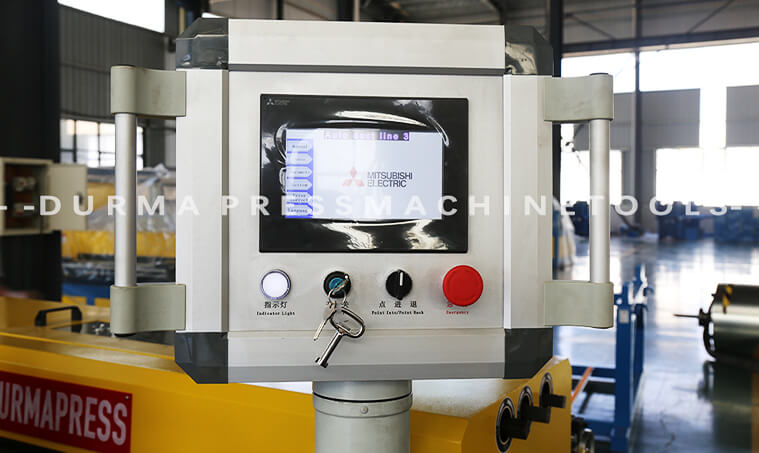
Manual fabrication relies on skilled sheet metal workers — a resource that is increasingly scarce and expensive. One auto duct line can be monitored by fewer operators, each overseeing multiple functions simultaneously.
➡ Winner: Auto duct line on labor cost; manual wins on flexibility for small custom jobs.
4.Upfront Investment vs Long-Term ROI
| Auto Duct Line | Manual Fabrication | |
|---|---|---|
| Initial Cost | Higher | Lower |
| Labor Cost | Low | High |
| Material Waste | Minimal | Moderate |
| Payback Period | 1–3 years | Ongoing labor spend |
Auto duct lines typically achieve full ROI within 1–3 years through labor savings and material efficiency.
5.Flexibility for Custom Work
Manual fabrication still holds an advantage for irregular shapes, small batches, or one-off custom projects. Skilled fabricators can make on-the-spot adjustments without reprogramming.
Modern auto duct lines allow quick parameter changes via the control panel for switching between duct sizes and types, but highly complex geometries may still require manual finishing.
➡ Winner: Manual for custom/complex jobs; Auto line for standard repeated specs.
6.When Should You Switch to an Auto Duct Line?
Consider upgrading when:
- Your shop is consistently backlogged or missing deadlines
- You’re facing rising labor costs or difficulty hiring skilled fabricators
- More than 60–70% of your output is standard rectangular or round ducts
- You need consistent quality across large-volume contracts
7.Conclusion
For manufacturers focused on scale, consistency, and cost control, an auto duct production line is a clear long-term investment. Manual fabrication remains relevant for custom work and smaller operations — but as demand grows, automation becomes the competitive advantage.