1. What Is Galvanized Steel?
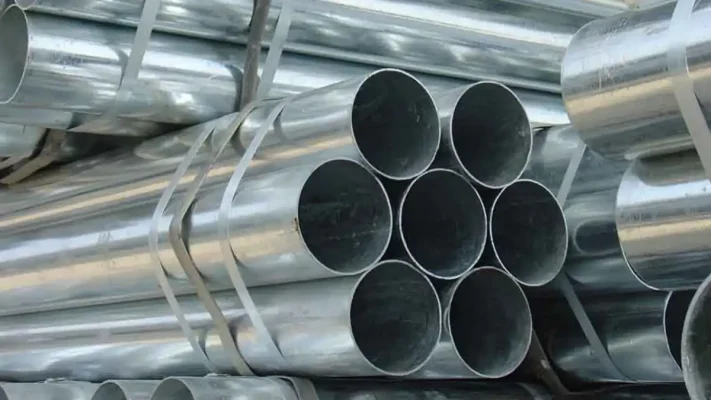
Galvanized steel is carbon steel that has been coated with a layer of zinc — typically through a hot-dip process where the steel is submerged in molten zinc. The zinc bonds to the surface and acts as a sacrificial barrier: it corrodes first, protecting the steel underneath. That is the basic logic behind why galvanized steel works.
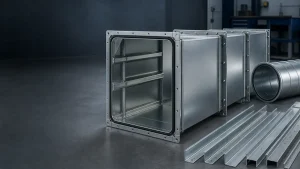
In HVAC ductwork, galvanized steel is the default material for a reason. It handles moderate humidity, normal temperature swings, and the mechanical demands of supply, return, and exhaust systems without issue. It is easy to cut, bend, and form — which means faster fabrication and lower labor costs. For manufacturers using spiral duct machines to produce galvanized ductwork at scale, the material’s consistency and workability are a clear advantage. For standard commercial and industrial installations, it delivers what most projects actually need.
The limitation is straightforward: once the zinc coating is damaged or worn through — from physical impact, prolonged moisture, or coastal salt air — the underlying steel is exposed and rusts. In demanding environments, that is not a minor issue.
2. What Is Stainless Steel?
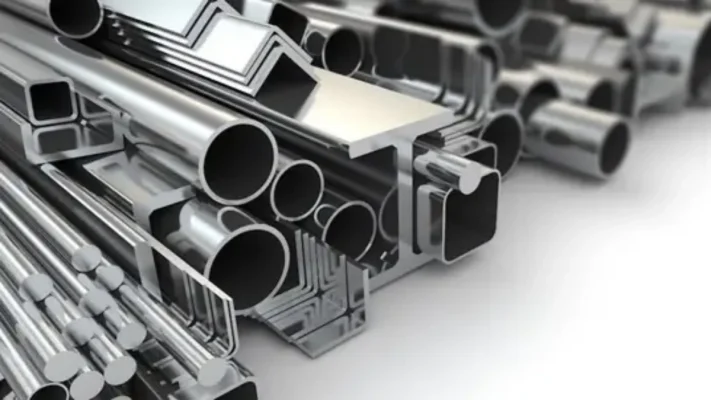
Stainless steel is an alloy of iron, carbon, and chromium — the chromium content (typically 10.5% or higher) is what makes it different. Chromium reacts with oxygen to form a thin, stable oxide layer on the surface. This passive layer is self-repairing: if the surface is scratched, it reforms. No additional coating required.
For HVAC ductwork, stainless steel is specified when the environment or application leaves no margin for corrosion failure. Food processing plants, pharmaceutical facilities, hospitals, chemical handling areas, coastal installations — these are environments where galvanized steel’s zinc coating would degrade within years, not decades. Fabricators working with rectangular duct forming machines on stainless steel projects need equipment capable of handling the material’s higher forming resistance and work-hardening characteristics.
It is also worth noting that stainless steel is not one product. Grade 304 covers most HVAC applications. Grade 316 adds molybdenum for better resistance to chlorides and acids — the right choice for marine environments or chemical exposure. Specifying the wrong grade is a real mistake that gets made.
3. Galvanized Steel vs. Stainless Steel: Key Differences

Quick Comparison Table
| Attribute | Galvanized Steel | Stainless Steel |
|---|---|---|
| Corrosion Resistance | Good in moderate humidity; base steel exposed once zinc wears | Superior resistance across humidity, chemicals, and salt air |
| Cost | Lower upfront cost | Higher upfront; can win on lifecycle cost |
| Strength & Durability | Good for standard supply, return, exhaust | Superior under pressure, heat, and chemical exposure |
| Weight | Heavier than aluminum, lighter than most stainless | Heavier; stronger hangers and supports required |
| Hygiene & Cleanability | Adequate for general use | Smooth surface; preferred for food and healthcare |
| Lifespan | Long in mild conditions; under 10 years in harsh environments | 20–30+ years even in aggressive environments |
| Typical Applications | General industrial HVAC, warehouses, standard commercial | Food, pharma, hospitals, coastal, chemical plants |
3.1 Corrosion Resistance
Galvanized steel holds up well in typical indoor conditions. The zinc coating does its job in moderate humidity, and for most warehouses and office buildings, that is enough. The problem is that zinc is consumed over time — it is a sacrificial layer by design. In coastal environments, chemical-heavy industrial spaces, or anywhere with persistent moisture, that consumption accelerates significantly.
Stainless steel does not rely on a coating. The chromium oxide layer is part of the material itself, and it regenerates. For applications where corrosion failure is not an acceptable outcome, stainless steel removes the question.
3.2 Strength & Durability
Both materials are structurally capable for most HVAC applications. Where they diverge is under sustained stress: high static pressure, temperature cycling, or exposure to corrosive media. Galvanized steel performs adequately under normal conditions but degrades faster when the environment pushes past moderate. Stainless steel maintains its structural integrity further into difficult conditions.
3.3 Maintenance
Galvanized ductwork needs periodic inspection, particularly in areas prone to moisture or physical contact. If the zinc coating is compromised and left unaddressed, rust progresses — and replacing sections of installed ductwork is not a trivial job. Stainless steel requires cleaning but not recoating or patching. That difference adds up over a system’s lifetime.
3.4 Fabrication & Installation
Galvanized steel is easier to work with. It cuts cleanly, bends predictably, and most duct fabrication equipment handles it routinely. Stainless steel requires more careful handling — it work-hardens during forming, welding demands more skill and control, and the material is heavier, which affects rigging and hanger loads. The labor premium for stainless steel fabrication is real and should be factored into project budgets.
The direct answer is: it depends entirely on what you are asking the material to do.
For standard commercial and industrial HVAC installations — warehouses, manufacturing floors, office buildings, retail spaces — galvanized steel is the correct choice. It delivers adequate corrosion protection, it is cost-effective, and it is straightforward to fabricate and install. There is no engineering reason to specify stainless steel in these environments, and doing so adds cost without a corresponding benefit.
Where stainless steel becomes the correct choice is when the environment or application changes that equation. Food processing lines where ductwork must withstand regular washdowns. Pharmaceutical clean rooms where contamination risk is unacceptable. Coastal installations where salt air would consume a zinc coating within a few years. Chemical plants where airborne compounds attack metal surfaces.
In short: galvanized steel is better where conditions are mild. Stainless steel is better where conditions are not.
4. Is Galvanized Steel Better Than Stainless Steel?
Before assembling anything, inspect each duct section interior. Debris inside the duct at this stage becomes a contamination problem after the system is commissioned. Wipe down or blow out any dirt before joining sections.
Inspect rubber gaskets on every fitting before insertion. Damaged gaskets will leak regardless of how well the joint is mechanically secured. If a gasket shows cuts, deformation, or missing sections, replace it before proceeding.
Joint assembly procedure:
- Align the fitting with the duct end and push straight in until the fitting reaches its stop position.
- Slight rotation during insertion helps seat the fitting correctly — do not force it with lateral pressure, which risks gasket distortion.
- Once fully seated, secure with self-tapping screws or centered pop rivets distributed evenly around the circumference.
- Keep fasteners approximately 10mm back from the duct end and the fitting stop to avoid driving through the gasket.
- Any holes caused by incorrect fastener placement must be sealed — an unsealed hole defeats the entire leakage control effort.
5. Which Costs More — and What Does That Actually Mean?
Total Cost View
| Galvanized Steel | Stainless Steel | |
|---|---|---|
| Upfront Material Cost | Lower | Higher (approx. 3–5× galvanized) |
| Fabrication Labor | Standard | Higher (requires skilled labor) |
| Maintenance Frequency | Periodic inspection; patching in corrosive zones | Minimal; primarily cleaning |
| Typical Lifespan | 15–20 years mild; under 10 in harsh conditions | 20–30+ years even in harsh conditions |
| Best Fit | Standard commercial and industrial HVAC | Food, pharma, healthcare, coastal, chemical plants |
Galvanized steel costs roughly a fraction of stainless steel on the material side alone. For large ductwork projects, that gap is significant. But the upfront number is only part of the story.
If a galvanized duct system in a high-humidity or coastal environment needs partial replacement in year eight, and again in year fifteen, the total spend starts to look different. Add in the labor cost of replacement — which often means working around an operating facility — and the lifecycle math can shift toward stainless steel being the more economical option over the full project life.
The practical rule: if your environment is mild, the lifecycle economics favor galvanized. If your environment is corrosive or your application demands hygiene standards, run the lifecycle numbers before defaulting to the lower upfront cost.
6. Which One Should You Choose?
The decision comes down to four practical factors: environment, application, budget, and maintenance tolerance.
6.1 Choose galvanized steel when:
The installation environment is a standard indoor commercial or industrial space — moderate humidity, no chemical exposure, no coastal salt air. The project has clear cost constraints and the operational environment does not demand more than galvanized steel can deliver. This covers the majority of HVAC ductwork installations. If you are evaluating production capacity for galvanized duct fabrication, our HVAC duct production line covers the full range of forming and joining requirements.
6.2 Choose stainless steel when:
The environment is high-humidity, coastal, or involves chemical exposure. The application has hygiene requirements — food production, pharmaceutical manufacturing, healthcare facilities — where surface cleanability and contamination control matter. The project has a long service life requirement and frequent maintenance is operationally disruptive or unacceptable. The cost of corrosion failure — in downtime, replacement, or compliance — is higher than the premium for stainless steel.
One point worth making directly: over-specifying stainless steel in a mild environment is a budget decision, not an engineering one. And under-specifying galvanized steel in a demanding environment is a maintenance problem waiting to happen. Neither mistake is a good outcome.
7. Conclusion
Galvanized steel and stainless steel are both proven materials for HVAC ductwork — the question is never which one is universally better, but which one fits the actual conditions of your project.
For most standard installations, galvanized steel is the right call. It is cost-effective, widely available, and easy to fabricate — and it performs reliably within its design parameters. For environments that push past those parameters — corrosive, humid, sanitary, or coastal — stainless steel is not the premium option, it is the correct one.
If you are planning a ductwork project and need guidance on material selection or fabrication equipment, contact the Durmahvac team directly. We work with fabricators and contractors across a range of applications and can help you identify the right solution for your specific requirements.
8.FAQ
For general ventilation areas away from direct grease or steam exposure, galvanized steel can be acceptable. For exhaust ductwork directly above cooking equipment — where grease accumulation and cleaning chemicals are factors — stainless steel is the standard specification and the safer long-term choice.
In mild indoor environments, a well-fabricated galvanized steel duct system can last 20 years or more with proper maintenance. In coastal, high-humidity, or chemically active environments, that figure can drop to under 10 years depending on exposure severity.
In the right environment, yes — often definitively. In food processing, pharmaceutical, healthcare, or coastal applications, the combination of longer lifespan, lower maintenance, and hygiene compliance makes stainless steel the more economical choice over the full system lifecycle. In a standard warehouse or office building, the premium is difficult to justify.
Grade 304 is the standard choice for most HVAC applications requiring stainless steel. Grade 316 adds molybdenum, which significantly improves resistance to chlorides and acids — making it the correct specification for marine environments, coastal installations, or any application involving chemical exposure. For standard hygienic applications indoors, 304 is typically sufficient.
Yes. Welding burns away the zinc coating at and around the weld joint, leaving bare steel exposed. For structural or pressure-critical applications, the weld area should be treated or regalvanized after fabrication. In practice, most galvanized ductwork uses mechanical joining methods — flanged connections, spiral lock seams — specifically to avoid this issue.