
Introduction
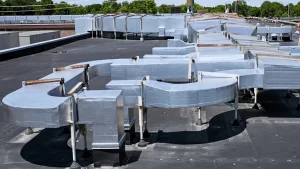
Galvanized sheet metal is one of the most widely used materials in HVAC systems. From spiral ductwork to rectangular ducts and plenums, its corrosion resistance, strength, and cost-efficiency make it the industry standard.
In this guide, we’ll explain what galvanized sheet metal is, the difference between G60 and G90 coatings, gauge thickness standards, corrosion performance, and how to choose the right specification for your HVAC project.

What Is Galvanized Sheet Metal?
Galvanized sheet metal is carbon steel coated with a layer of zinc to prevent rust and corrosion. The most common method is hot-dip galvanizing, where steel is submerged in molten zinc, forming a protective metallurgical bond.
The zinc layer protects steel in two ways:
Barrier Protection – Prevents moisture and oxygen from reaching the steel.
Sacrificial Protection – Zinc corrodes first, protecting exposed steel edges.
Most HVAC-grade galvanized steel follows ASTM A653 standards.
Because of its balance between strength, corrosion resistance, and affordability, galvanized sheet metal is widely used in:
Spiral ductwork
Rectangular duct systems
Air plenums
HVAC fittings and accessories
G60 vs G90: What’s the Difference?
One of the most common questions in HVAC fabrication is: Should I use G60 or G90?
The difference lies in the zinc coating weight.
| Coating Type | Zinc Coating Weight | Corrosion Resistance | Typical HVAC Use |
|---|---|---|---|
| G60 | 0.60 oz/ft² | Standard | Indoor ductwork |
| G90 | 0.90 oz/ft² | Higher | Humid or semi-outdoor environments |
Key Differences
G60 is standard for most indoor HVAC duct systems.
G90 provides extra corrosion protection and is better for humid climates or exposed mechanical rooms.
G90 typically costs slightly more due to the heavier zinc coating.
For standard commercial buildings, G60 is often sufficient. However, in coastal or high-moisture environments, G90 is a safer long-term choice.
Sheet Metal Gauge Thickness Chart
In HVAC systems, thickness matters for structural integrity and air pressure handling.
Below is a common gauge reference chart:
| Gauge | Thickness (inches) | Thickness (mm) |
|---|---|---|
| 26 | 0.0187 | 0.475 |
| 24 | 0.0239 | 0.607 |
| 22 | 0.0299 | 0.759 |
| 20 | 0.0359 | 0.912 |
| 18 | 0.0478 | 1.214 |
How Gauge Selection Works in HVAC
26–24 gauge → Low-pressure residential ductwork
22–20 gauge → Commercial and medium-pressure systems
18 gauge and thicker → High-pressure or industrial applications
The required gauge depends on:
Static pressure
Duct size
SMACNA standards
Local building codes
Choosing a thinner gauge than required may cause duct deformation, vibration, or air leakage.

HVAC Applications of Galvanized Sheet Metal
Galvanized sheet metal plays a critical role in nearly every HVAC system component:
1. Spiral Ductwork
Round ducts often use lighter gauge galvanized steel due to their self-reinforcing shape.
2. Rectangular Duct Systems
Common in ceiling spaces and compact installations.
3. Plenum Boxes
Used to distribute airflow evenly.
4. Custom Fittings
Elbows, reducers, transitions, and dampers.
Because galvanized steel is easy to form and fabricate, it remains the preferred choice for duct manufacturing lines worldwide.
Corrosion Resistance Explained
The lifespan of galvanized steel depends on:
Humidity levels
Air pollution
Chemical exposure
Mechanical damage
Under normal indoor HVAC conditions, galvanized steel can last 20–30 years or more.
In aggressive environments, lifespan may decrease unless a heavier coating (G90) or alternative material is used.
Zinc forms a protective oxide layer over time, which slows further corrosion — this is why galvanized ductwork performs reliably in most commercial buildings.In addition to material protection, proper duct insulation is essential to prevent condensation and improve energy efficiency in HVAC systems.
Galvanized Steel vs Black Iron Steel
Another common comparison in HVAC is galvanized vs black steel.
| Feature | Galvanized Steel | Black Iron Steel |
|---|---|---|
| Rust Resistance | High | Low |
| Surface Finish | Silver | Dark/Raw |
| HVAC Duct Use | Common | Rare |
| Fire Duct Applications | Limited | Common |
| Cost | Medium | Lower |
Black iron steel is sometimes used in fire-rated duct systems, but for general air distribution, galvanized steel is the standard.
How to Choose the Right Specification
When selecting galvanized sheet metal for HVAC, consider:
1. Environment
Indoor → G60 is usually sufficient
Humid/coastal → G90 recommended
2. Pressure Class
Higher pressure requires thicker gauge.
3. Fabrication Method
Coil stock for automated production
Flat sheets for custom fabrication
4. Budget Considerations
Balance initial cost with expected service life.
Conclusion
Galvanized sheet metal remains the backbone of modern HVAC duct systems due to its corrosion resistance, structural strength, and cost efficiency.
For most commercial applications:
G60 coating
24–22 gauge thickness
ASTM A653 compliance
Choosing the correct specification ensures long-term system performance and reduced maintenance costs.
If you’re sourcing galvanized steel coils or flat sheets for duct fabrication, ensure consistent coating quality and thickness control for reliable production results.
FAQ
1. What is the difference between G60 and G90 galvanized sheet metal?
The main difference lies in the zinc coating weight. G60 has 0.60 oz/ft² of zinc coating, while G90 has 0.90 oz/ft². G90 provides better corrosion resistance and is recommended for humid or semi-exposed environments, whereas G60 is typically sufficient for indoor HVAC duct systems.
2. What gauge galvanized sheet metal is used for HVAC ductwork?
The gauge depends on duct size and pressure class.
26–24 gauge is common for residential and low-pressure systems.
22–20 gauge is used for commercial and higher-pressure applications.
Selection should follow SMACNA standards and local building codes.
3. How long does galvanized sheet metal last in HVAC systems?
In standard indoor environments, galvanized sheet metal can last 20–30 years or more. Lifespan depends on humidity levels, air quality, and coating type (G60 vs G90). Proper duct insulation and maintenance can extend service life.
4. Is galvanized sheet metal better than black steel for ductwork?
For general HVAC air distribution, galvanized sheet metal is preferred due to its corrosion resistance. Black steel is more commonly used in fire-rated duct systems or specialty applications but is not ideal for standard air ducts.