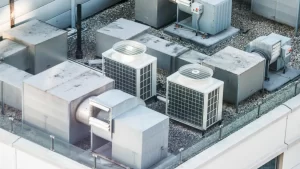
An HVAC air distribution system is responsible for delivering conditioned air from the heating or cooling equipment to occupied spaces while maintaining airflow balance, pressure control, and energy efficiency.
A properly designed air distribution system directly affects comfort, indoor air quality, and operating costs. In both residential and commercial buildings, inefficient duct design can lead to uneven temperatures, high energy consumption, and premature equipment wear.
This guide explains how HVAC air distribution systems work, their main components, common design principles, and how to improve overall efficiency.

What Is an HVAC Air Distribution System?
An HVAC air distribution system is the network that moves air throughout a building.
It typically includes:
Air handling equipment (AHU or furnace)
Supply ducts
Return ducts
Diffusers and registers
Dampers and control devices
The system ensures that conditioned air reaches each room at the correct temperature and airflow rate.
Without proper distribution design, even high-quality HVAC equipment cannot deliver optimal performance.
Main Components of an Air Distribution System
Understanding HVAC duct system components is essential for proper system design.
1. Air Handling Unit (AHU)
The AHU conditions and moves air through the duct network. It contains:
Blower fan
Heating or cooling coils
Filters
The fan creates the static pressure required to move air through ducts.
2. Ductwork System
Ductwork transports air from the AHU to occupied spaces.
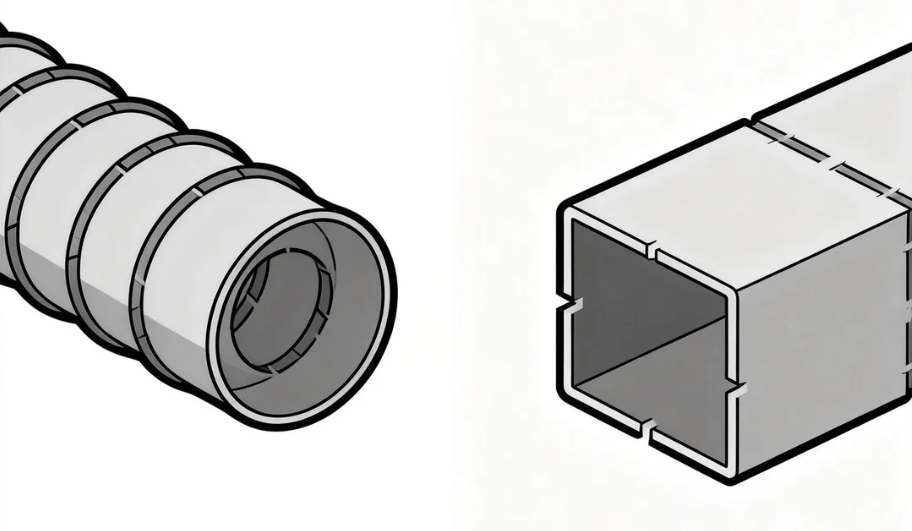
Common duct materials include galvanized sheet metal and spiral ducts.
You can learn more about duct material differences in our
Spiral Duct vs Rectangular Duct Guide.
For corrosion resistance and durability considerations, see our Galvanized Sheet Metal in HVAC Systems Guide.
3. Dampers and Diffusers
Dampers regulate airflow volume and direction.
Diffusers distribute air evenly into rooms, preventing drafts and uneven airflow.
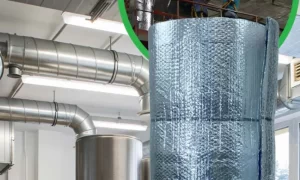
4. Duct Insulation
Proper duct insulation prevents heat loss, reduces condensation, and improves energy efficiency.
In unconditioned spaces, insulation is essential to avoid moisture problems.
See our detailed Duct Insulation Guide for R-value selection and material options.
5. Condensate Removal System
Cooling systems generate condensation. When gravity drainage is not possible, a
HVAC condensate pump ensures safe water removal.
Proper condensate management prevents mold growth and structural damage.
Types of HVAC Duct Systems
Different duct configurations affect airflow efficiency and installation cost.
Spiral Duct
Round shape improves airflow efficiency
Lower leakage rates
Often used in commercial and exposed ceiling designs
Rectangular Duct
Space-efficient in tight ceiling areas
Common in residential systems
Flexible Duct
Easy installation
Lower initial cost
Higher pressure loss if improperly installed
Each type must be selected based on airflow requirements, available space, and budget.

Airflow Design Principles
Effective air distribution system design focuses on airflow balance and pressure control.
1. Static Pressure Management
Static pressure is the resistance air encounters while moving through ducts.
Excessive pressure causes:
Noise
Reduced airflow
Increased energy consumption
Proper duct sizing reduces pressure loss.
2. Duct Sizing
Undersized ducts increase resistance.
Oversized ducts raise material costs and may reduce air velocity.
Accurate load calculations and airflow design ensure optimal sizing.
3. Air Balancing
Air balancing ensures each room receives the required airflow.
This process includes:
Measuring airflow at diffusers
Adjusting dampers
Verifying pressure levels
Balanced systems improve comfort and reduce energy waste.
Common Air Distribution Problems
Poor design or installation can cause several issues.
Uneven Temperature
Often caused by improper duct sizing or balancing.
Excessive Noise
Usually related to high air velocity or high static pressure.
Energy Loss
Leaks and insufficient insulation reduce efficiency.
Condensation
Occurs when ducts pass through unconditioned spaces without insulation or proper moisture control.
How to Improve HVAC System Efficiency
Improving airflow efficiency can significantly reduce operating costs.
1. Seal Duct Leaks
Use proper sealing materials to prevent air leakage.
2. Upgrade Insulation
Improve R-values in unconditioned spaces.
3. Optimize Duct Layout
Reduce sharp bends and long duct runs.
4. Perform Regular Maintenance
Inspect filters, ducts, and condensate systems annually.
Residential vs Commercial Air Distribution Systems
Air distribution systems differ significantly between residential and commercial buildings.
| Feature | Residential | Commercial |
|---|---|---|
| Duct Size | Smaller | Larger |
| Static Pressure | Lower | Higher |
| Control System | Thermostat | Advanced Building Management System |
| Air Volume | Moderate | High |
Commercial systems require more complex airflow calculations and higher-capacity components.
Conclusion
An HVAC air distribution system is more than just ductwork. It is a coordinated network of components designed to deliver airflow efficiently, maintain indoor comfort, and control operating costs.
Proper system design, duct selection, insulation, and airflow balancing all contribute to long-term performance.
For residential and commercial projects, investing in proper air distribution design ensures reliable operation, energy efficiency, and occupant comfort.
FAQ
1. What is the purpose of an HVAC air distribution system?
It delivers conditioned air evenly throughout a building while maintaining airflow balance and pressure control.
2. What affects airflow efficiency in duct systems?
Duct size, layout, insulation, leakage, and static pressure levels all impact efficiency.
3. How do I improve my air distribution system?
Seal leaks, optimize duct design, upgrade insulation, and perform air balancing.
4. Is spiral duct better than rectangular duct?
Spiral ducts generally offer better airflow efficiency and lower leakage, while rectangular ducts are space-efficient.