
HVAC condensate pumps play a critical role in removing condensation produced by air conditioning and heating systems. When gravity drainage is not possible, a condensate pump ensures safe and automatic water removal.
In this guide, we’ll explain how HVAC condensate pumps work, compare different types, discuss sizing methods, review installation basics, and provide troubleshooting tips to prevent water damage and system failure.
What Is an HVAC Condensate Pump?
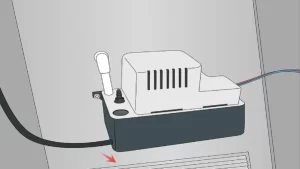
A condensate pump is a small automatic pump designed to remove water generated by HVAC systems.
During cooling operation, warm air passes over the evaporator coil, causing moisture in the air to condense into water. This condensate normally drains by gravity. However, when the system is installed in:
Basements
Attics
Interior mechanical rooms
Locations without proper slope
a condensate pump is required to lift and discharge the water.
Without proper drainage, condensation can cause water damage, mold growth, and system inefficiency.
For more information on condensation control in duct systems, see our Duct Insulation Guide.

How Does a Condensate Pump Work?
Most HVAC condensate pumps operate automatically using a float switch mechanism.
Basic components include:
Reservoir tank
Float switch
Electric motor
Discharge line
Working Principle
Condensate flows into the reservoir.
As water rises, the float switch activates.
The motor turns on and pumps water through the discharge pipe.
Once water drops to a safe level, the pump shuts off.
This cycle repeats automatically during system operation.
Types of HVAC Condensate Pumps
Choosing the right type depends on system size and application.
1. Mini Condensate Pump
Compact design
Ideal for wall-mounted split AC systems
Quiet operation
Lower capacity
Mini condensate pumps are commonly used in residential ductless systems.
2. Tank / Reservoir Condensate Pump
Larger storage tank
Higher pumping capacity
Suitable for central HVAC systems
This is the most common type used in residential and light commercial applications.
3. Commercial / High-Capacity Pump
High GPH rating
Greater lift height
Designed for large commercial systems
Used in office buildings, retail spaces, and industrial facilities.
Quick Comparison
| Type | Capacity | Application | Noise Level |
|---|---|---|---|
| Mini | Low | Split AC | Low |
| Tank | Medium | Central HVAC | Moderate |
| Commercial | High | Large systems | Moderate–High |
How to Size a Condensate Pump
Proper condensate pump sizing ensures reliable performance.
Key factors to consider:
1. Flow Rate (GPH)
Check the HVAC system’s condensate output in gallons per hour.
The pump must handle equal or greater capacity.
2. Vertical Lift (Head Height)
Measure how high the water must be pumped vertically.
Higher lift requires a stronger motor.
3. Discharge Distance
Longer horizontal runs increase resistance and may require additional capacity.
4. Voltage Requirements
Confirm compatibility with system power supply (typically 115V or 230V).
Undersized pumps may fail prematurely or cause overflow issues.
Condensate Pump Installation Overview
Proper condensate pump installation reduces maintenance issues.
Basic steps include:
Position the pump near the HVAC unit
Connect the drain line to the reservoir
Install the discharge tubing
Wire the safety overflow switch
Test operation
Many systems integrate a safety switch that shuts down the HVAC unit if the pump fails, preventing water damage.
For broader HVAC system installation standards, see our HVAC Duct Installation Guide.

Common Condensate Pump Problems
Condensate pump troubleshooting is a common search topic. Below are frequent issues.
1. Condensate Pump Not Working
Possible causes:
Power supply failure
Float switch stuck
Motor burnout
Check electrical connections and clean the reservoir.
2. Pump Running Constantly
Often caused by:
Stuck float switch
Blocked discharge line
Continuous high condensate production
Cleaning the float mechanism usually resolves the issue.
3. Water Leaking or Overflow
Causes:
Clogged drain line
Improper installation
Pump capacity too low
Regular maintenance prevents most overflow problems.
4. Excessive Noise
Noise may indicate:
Vibration against wall
Air in discharge line
Worn motor components
Ensure proper mounting and inspect internal parts.
Maintenance Tips for Condensate Pumps
Routine maintenance extends pump lifespan.
Recommended practices:
Clean reservoir annually
Inspect float switch
Flush discharge line
Test safety shutoff
Most condensate pumps last 3–5 years depending on usage and maintenance quality.
When Do You Need a Condensate Pump?
A condensate pump is necessary when:
The HVAC unit is below the main drain line
There is no gravity drainage slope
Water must be pumped upward
The installation space is enclosed
In properly sloped systems, gravity drainage may eliminate the need for a pump.
Conclusion
HVAC condensate pumps ensure safe and efficient removal of condensation in systems where gravity drainage is not possible.
Selecting the right type, properly sizing the pump, and performing routine maintenance prevent overflow, water damage, and system downtime.
For residential and commercial HVAC installations, understanding condensate pump capacity and lift requirements is essential for long-term reliability.
FAQ
1. What happens if a condensate pump fails?
If a condensate pump fails, water can overflow and damage walls, ceilings, or HVAC components. Many systems include a safety switch to shut down the unit.
2. How long do condensate pumps last?
Most condensate pumps last 3–5 years, depending on usage and maintenance.
3. How do I know what size condensate pump I need?
Choose a pump that matches your system’s condensate output (GPH) and required vertical lift height.
4. Can I install a condensate pump myself?
Basic installations are possible, but wiring safety switches may require a qualified technician.