1. Introduction
Setting up an HVAC duct manufacturing line is a major investment for any sheet metal or mechanical engineering company. Understanding the cost structure, key equipment, and operational expenses is crucial for making informed decisions.
This guide provides a detailed breakdown of HVAC duct line setup costs, including equipment, labor, utilities, production capacity, and ROI calculations. By the end, you’ll be able to plan a cost-effective line tailored to your production scale, whether small or medium-large.

2. Overview of an HVAC Duct Manufacturing Line
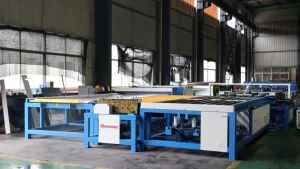
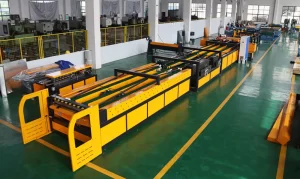
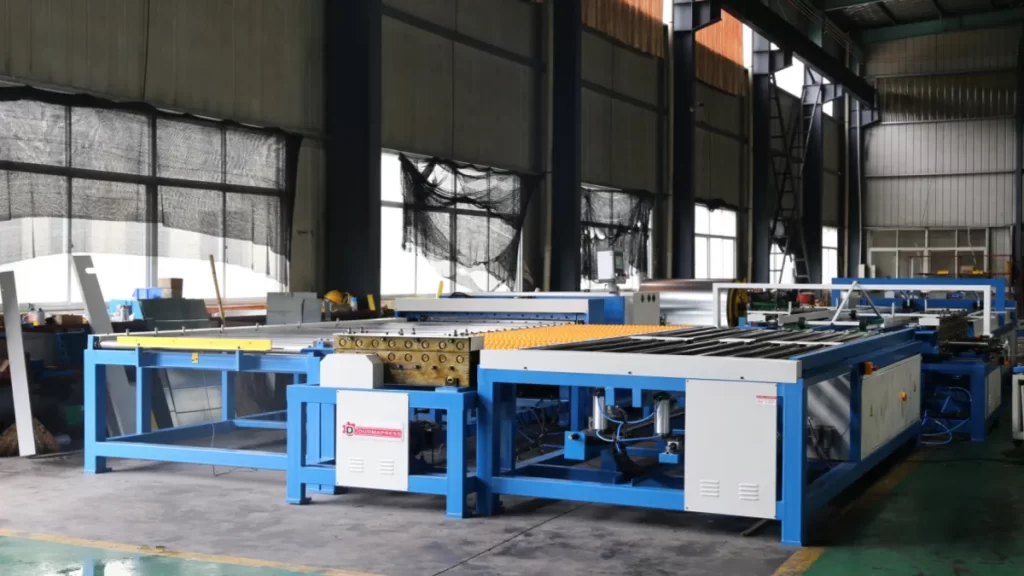
A typical HVAC duct line consists of several key machines, each responsible for a stage in the production process:
| Equipment | Function | Approx. Price Range (USD) |
|---|---|---|
| Duct Leveler | Flatten sheet metal coils | $5,000–$15,000 |
| Rollformer | Shape duct profiles | $20,000–$50,000 |
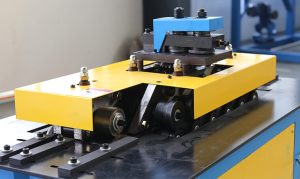
| Lock Former | Seam forming & locking | $8,000–$25,000 |
| Cut-to-Length Machine | Precise duct cutting | $10,000–$30,000 |
| Optional CNC / Robotic Handling | Automates forming & stacking | $50,000–$120,000 |
Notes:
- Small-scale lines can use semi-automatic machines to reduce upfront costs.
- Medium to large-scale lines benefit from automation, which lowers labor cost and improves production consistency.
3. Key Cost Components
Breaking down costs helps calculate both initial investment and ongoing operational expenses.
3.1 Equipment Cost
Total Equipment Cost=∑(Individual Machines)+Installation+Shipping
Example:
| Equipment | Price (USD) |
|---|---|
| Rollformer | $35,000 |
| Lock Former | $15,000 |
| Duct Leveler | $10,000 |
| Cut-to-Length | $20,000 |
| Installation & Shipping | $10,000 |
| Total Equipment Cost | $90,000 |
Prices are approximate and may vary by supplier and region. Contact suppliers for a customized quote.
3.2 Factory / Space Cost
- Small line: 150–200 m²
- Medium line: 400–600 m²
- Costs include rent or purchase, electrical setup, dust control, and humidity management.
3.3 Labor Cost
Labor Cost per Month=#Operators×Avg Monthly Salary
3.4 Utilities & Maintenance
Monthly Electricity Cost=Total KW×Operation Hours×kWh Rate
- Maintenance includes spare parts, lubrication, and periodic inspection (~5–10% of equipment value annually).
3.5 Raw Material & Other Overhead
- Raw materials: galvanized or aluminum sheet metal coils
- Overhead: warehouse, logistics, insurance, and miscellaneous expenses
Summary Table of Monthly/Annual Costs:
| Cost Component | Monthly / Yearly | Notes |
|---|---|---|
| Equipment | $90,000 (one-time) | Purchase + installation |
| Factory | $2,000 / month | Rent & utilities |
| Labor | $4,800 / month | 5 operators + 1 supervisor |
| Utilities | $1,000 / month | Electricity, water, compressed air |
| Maintenance | $500 / month | Spare parts & service |
| Raw Material | $10,000 / month | Sheet metal coils |
4. Production Capacity vs Cost
Understanding the relationship between production output and unit cost helps optimize investments.
Unit Cost=[Equipment Depreciation + Labor + Utilities + Maintenance]/Monthly Output
Example:
| Monthly Output | Unit Cost (USD) |
|---|---|
| 1,000 ducts | $50 |
| 2,000 ducts | $35 |
| 5,000 ducts | $20 |
Higher output reduces unit cost but requires higher initial investment.
5. ROI and Payback Period
ROI(%)=Annual Profit/Total Investment×100
PaybackPeriod(Years)=Total Investment/Annual ProfitPayback
Example:
| Total Investment | Annual Profit | ROI (%) | Payback Period |
|---|---|---|---|
| $150,000 | $50,000 | 33% | 3 years |
- These metrics allow you to compare production scales and plan upgrades.
6. Tips for Cost Optimization
- Automation vs Semi-Automation: Start semi-auto, upgrade as demand grows.
- Bulk Material Purchase: Reduce raw material cost per unit.
- Energy Efficiency: Invest in low-power motors to cut electricity bills.
- Outsource Logistics: Avoid large upfront transport investment.
7. Frequently Asked Questions (FAQ)
Q1: What is the average cost to set up a small HVAC duct line?
A: Typically $50,000–$100,000 depending on automation and equipment selection.
Q2: How much space is needed for a medium-scale plant?
A: Around 400–600 m², considering machines, storage, and movement space.
Q3: Can I start with semi-automatic machines and upgrade later?
A: Yes, semi-auto lines reduce upfront costs and can scale with production demand.
Q4: What is the typical payback period?
A: Usually 2–4 years, depending on output and profit margins.
Q5: Are financing options available?
A: Many suppliers offer installment plans, leasing, or bank financing.
8. Conclusion
Investing in an HVAC duct manufacturing line requires careful planning of equipment, space, labor, and utilities. By calculating total cost, unit cost, and ROI, manufacturers can make informed decisions to maximize efficiency and profitability.
Next Steps for Readers:
- Download a cost estimation template for HVAC duct lines.
- Contact suppliers for customized quotations.