In HVAC duct manufacturing, connection quality directly affects system airtightness, structural strength, and installation efficiency. As duct production shifts from manual fabrication to automated lines, duct grooving has become a standardized and widely adopted process. It plays a critical role in ensuring consistent duct connections, especially in rectangular duct systems produced at scale.
This article explains what duct grooving is, how the duct grooving process works, where it is used in modern HVAC manufacturing, and how it compares with other duct connection methods. Whether you are an HVAC contractor, factory owner, or equipment buyer, understanding duct grooving will help you evaluate duct production lines more effectively.
What Is Duct Grooving?
Duct grooving is a forming process used in HVAC duct manufacturing where a continuous groove is created along the edge of a sheet metal duct section. This groove allows the duct to be securely connected with matching components, such as flanges or joining frames, creating a stable and airtight connection.
In rectangular duct production, duct grooving is commonly applied to the duct edges after forming and before final assembly. The grooved edge improves mechanical strength while maintaining dimensional consistency, making it suitable for automated and high-volume duct production.
Unlike traditional manual methods, duct grooving is typically performed by a duct grooving machine, which ensures uniform groove depth, width, and alignment across every duct section.In modern HVAC factories, this process is typically performed by a duct grooving machine, which ensures consistent groove depth and alignment across every duct section.
Why Duct Grooving Is Used in HVAC Duct Manufacturing
Duct grooving is widely used in HVAC duct manufacturing because it supports both production efficiency and installation quality. Key reasons include:
- Improved connection strength: Grooved edges provide a precise interface for duct joining, reducing the risk of misalignment.
- Consistent quality: Automated grooving eliminates variability caused by manual forming.
- Higher production efficiency: Duct grooving is well suited for continuous operation in automatic duct lines.
- Better sealing performance: Uniform grooves contribute to improved airtightness when combined with proper sealing materials.
For manufacturers producing large volumes of rectangular ducts, grooving helps standardize output and reduce rework during installation.
Duct Grooving Process Explained Step by Step
Understanding the duct grooving process helps clarify why it is such an important stage in HVAC duct production.
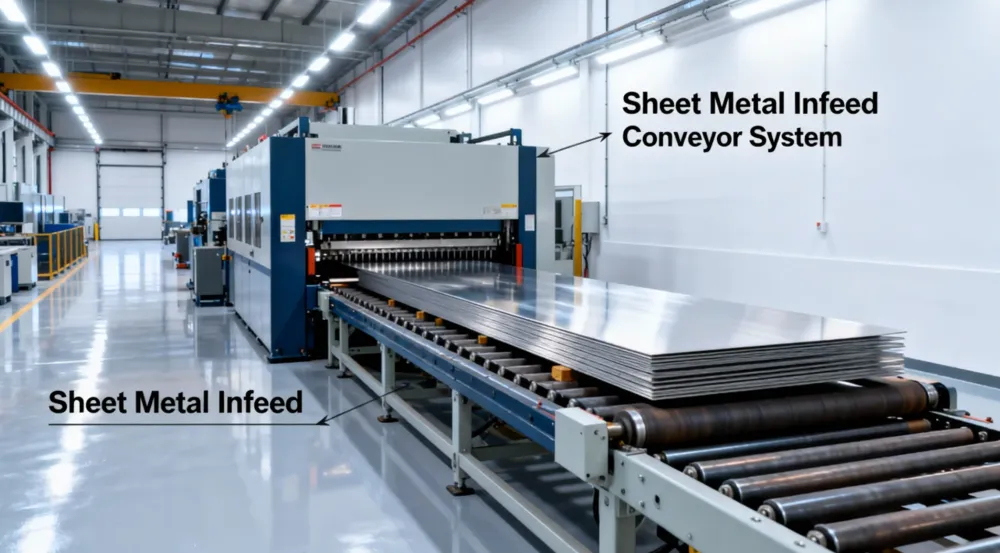
1. Sheet Metal Feeding and Positioning
The process begins with flat sheet metal—typically galvanized steel, stainless steel, or aluminum—being fed into the production line. Accurate positioning is essential to ensure the groove is formed at the correct location along the duct edge.
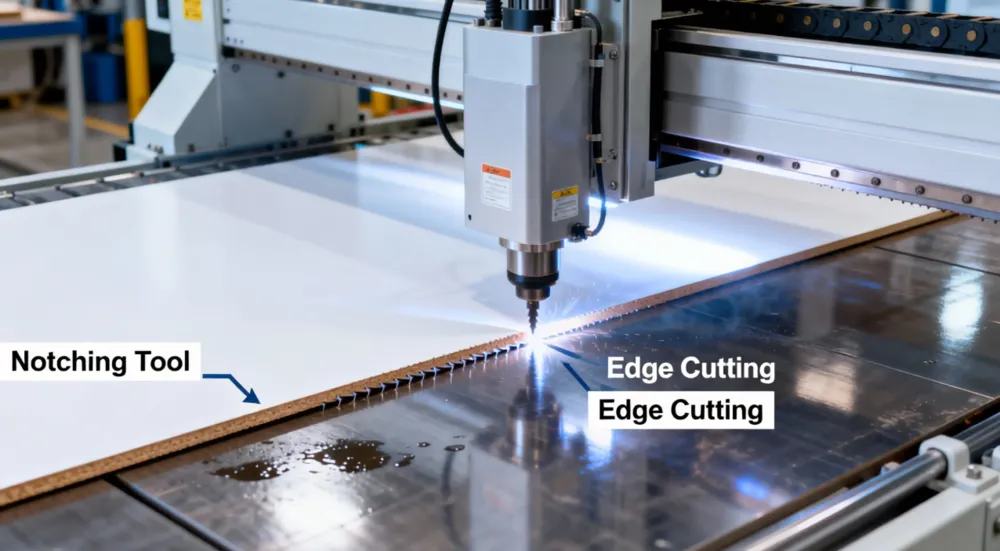
2. Grooving Formation on Duct Edges
As the duct section passes through the grooving station, forming rollers or tools press a continuous groove into the metal edge. The process is controlled to maintain uniform pressure and alignment throughout the operation.
3. Groove Depth and Profile Control
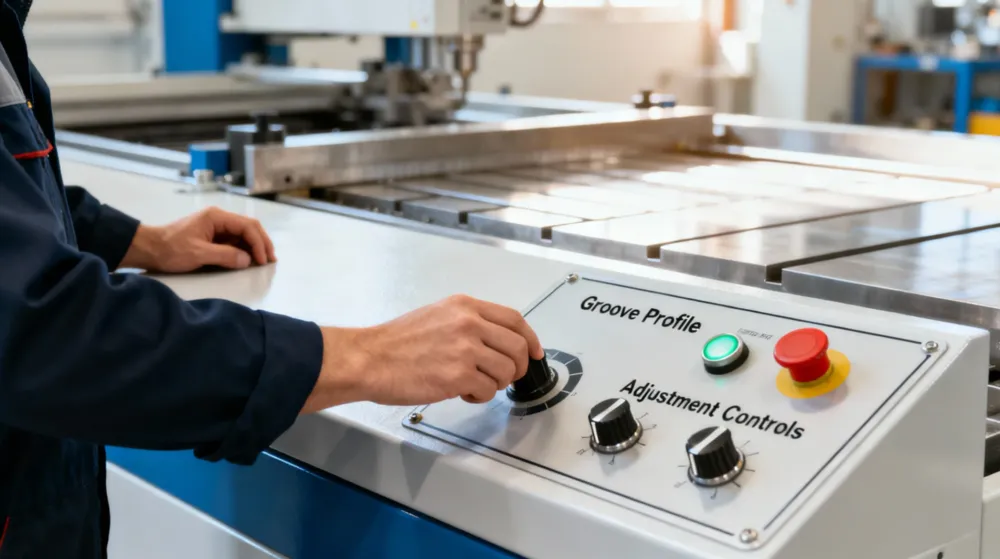
Precise control of groove depth and profile is critical. An inconsistent groove can affect duct connection strength and sealing performance. In automated systems, groove parameters are adjustable to match different duct sizes and specifications.
This controlled process allows duct grooving to be seamlessly integrated into modern HVAC duct making machines.
Types of Grooves Used in HVAC Ducts
Different HVAC applications may require different groove designs. Common groove types include:
Single Groove for Rectangular Ducts
Single grooves are the most common type used in standard rectangular duct systems. They provide sufficient strength for typical commercial HVAC installations.
Double Groove Applications
Double grooves may be used for larger ducts or systems requiring enhanced rigidity. This design improves load distribution along the duct edge.
Custom Groove Profiles in Automatic Lines
In advanced automatic duct lines, custom groove profiles can be formed to meet specific project or regional standards. These profiles are often designed to work with proprietary flange systems.
Duct Grooving vs Other Duct Connection Methods
Duct grooving is one of several methods used to prepare ducts for connection. Understanding how it compares with other techniques helps clarify its advantages.
Duct Grooving vs Flange Forming
Flange forming creates a flange directly on the duct edge, while duct grooving prepares the edge for connection with a separate flange component.Compared with direct flange creation using a flange forming machine, duct grooving offers greater flexibility in automated HVAC duct production. Grooving offers greater flexibility and is often preferred in high-speed automated production lines.
Duct Grooving vs Pittsburgh Lock Seam
The Pittsburgh lock seam is a traditional seam-locking method commonly used in manual or semi-automatic production.In automated production environments, seam finishing is often completed by a RAS seam closing machine after the grooving process. In contrast, duct grooving provides more consistent results and is better suited for large-scale HVAC duct manufacturing.
Where Duct Grooving Is Used in Automatic Duct Lines
In an automatic duct line, duct grooving is typically positioned after forming and before seam closing or flange installation. It works in coordination with other processes such as bending, seam closing, and cutting.In most high-capacity HVAC factories, duct grooving is integrated directly into an automatic duct line to support continuous and standardized duct production.
Because duct grooving is highly repeatable and easy to automate, it integrates naturally into complete HVAC duct making machines. This integration allows manufacturers to produce ducts continuously with minimal manual intervention.
Duct Grooving Machine Overview
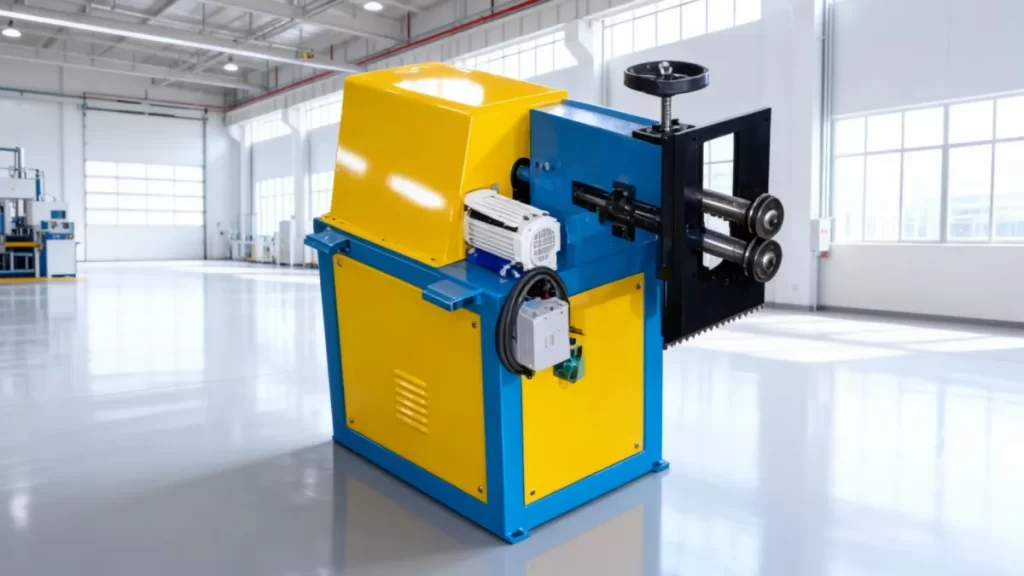
A duct grooving machine is designed specifically to form grooves along duct edges with precision and consistency. While configurations vary, most machines share several common features:
- Adjustable grooving depth and width
- Compatibility with multiple sheet metal materials
- Stable feeding and alignment systems
- Integration capability with automatic duct lines
These machines can operate as standalone units or as part of a fully automated production line, depending on factory requirements.
Common Applications of Duct Grooving in HVAC Projects
Duct grooving is widely applied in various HVAC projects, including:
- Commercial buildings such as offices and shopping centers
- Industrial HVAC systems with large duct networks
- Standardized rectangular duct systems for mass production
Its reliability and compatibility with automation make it a preferred choice for modern HVAC manufacturing environments.
Conclusion: The Role of Duct Grooving in Modern HVAC Manufacturing
As HVAC duct production continues to move toward automation and standardization, duct grooving remains a key process that supports efficiency, consistency, and quality. By enabling reliable duct connections and seamless integration into automatic duct lines, duct grooving plays an essential role in modern HVAC manufacturing.
For manufacturers and buyers evaluating HVAC duct making machines, understanding the duct grooving process provides valuable insight into overall production capability and long-term performance.
FAQs About Duct Grooving
Duct grooving is suitable for a wide range of duct sizes, although groove profiles may need adjustment for very large or heavy-duty ducts.
Yes. Duct grooving is commonly integrated into automatic duct lines and works seamlessly with forming, bending, and seam closing processes.
Common materials include galvanized steel, stainless steel, and aluminum, all of which respond well to controlled grooving processes.