Why Choosing the Right Duct Manufacturing Machines Matters
For many HVAC manufacturers, buying duct manufacturing machines is not just a purchase—it’s a long-term investment decision.
Choose the wrong setup, and you may face:
- Low production efficiency
- Inconsistent duct quality
- High labor costs
Choose the right one, and you can significantly improve productivity while reducing long-term operating costs.
That’s why machine selection should be based on your actual production needs—not just price or specifications.
What Machines Are Used in HVAC Duct Manufacturing?
Instead of looking at machines individually, it’s more useful to understand them as part of a production workflow:
Each step requires specific equipment:
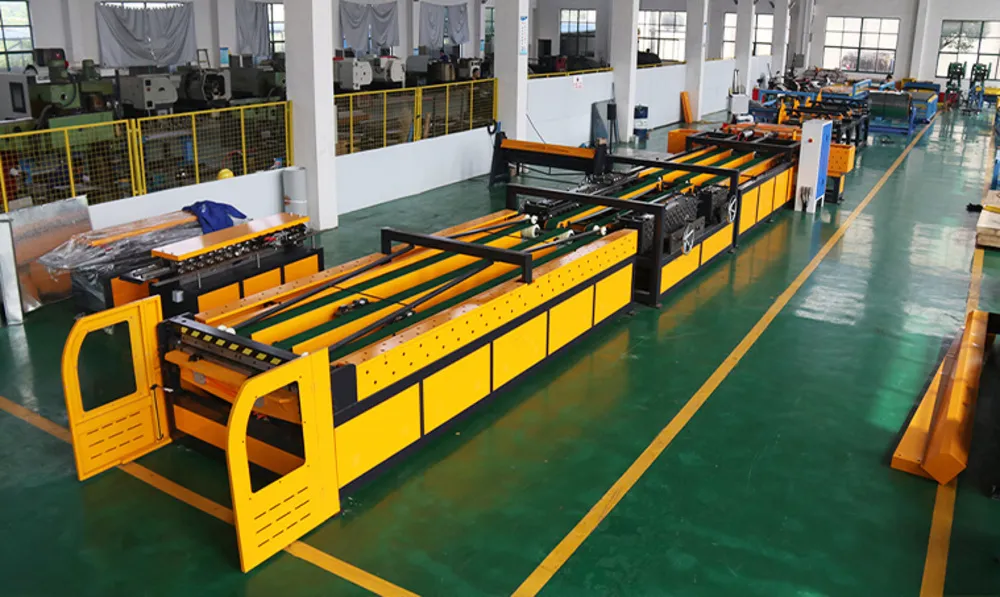
Duct Line (Cutting & Forming)
Used for cutting, beading, and initial shaping of duct sheets.
Ideal for improving efficiency in medium to large production.
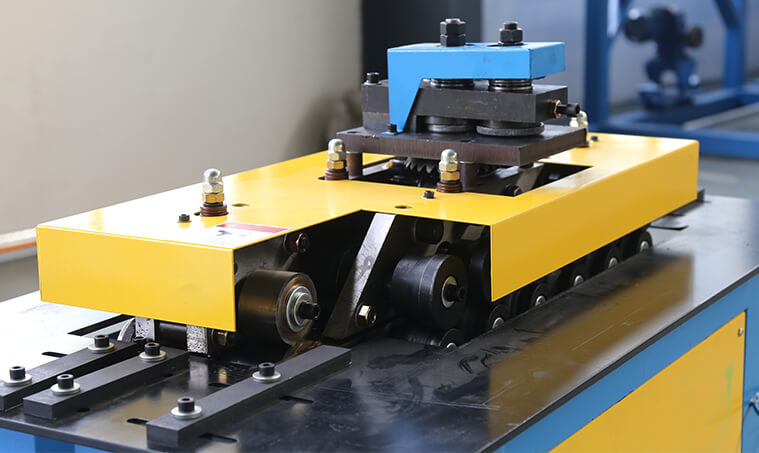
Lockformer Machine
Creates Pittsburgh seams for tight and reliable duct connections.
Essential for consistent seam quality.
Press Brake
Used for bending sheet metal into precise angles.
Critical for dimensional accuracy.
TDF/TDC Flange Machine
Forms flanges for duct connections.
Improves installation efficiency.
To better understand how these machines work together, see the HVAC duct fabrication process.
Key Factors to Consider Before Buying
Choosing the right machines depends on several practical factors.
1. Production Volume
This is the starting point for any decision.
- Low volume → Manual or semi-automatic machines
- Medium volume → Standard duct line + basic machines
- High volume → Fully automatic production line
Over-investing too early can hurt cash flow.
2. Product Type
Different ducts require different setups:
- Rectangular duct → Press brake + lockformer
- Spiral duct → Spiral machine
Make sure your machine matches your main product.
3. Budget vs ROI
Price alone should never be the deciding factor.
A higher upfront investment may deliver faster returns through:
- Labor savings
- Higher output
- Better quality
4. Labor Cost
In regions with high labor costs, automation becomes more valuable.
In low-cost labor markets, semi-automation may be more practical.
5. Factory Space
This is often overlooked.
- Compact workshops → standalone machines
- Large factories → full duct lines
Always plan layout before purchasing.
Recommended Machine Configurations
Instead of guessing, here are typical setups based on business size:
| Business Type | Recommended Setup |
|---|---|
| Small workshop | Lockformer + basic tools |
| Medium factory | Duct line + press brake |
| Large factory | Auto duct line + CNC system |
The goal is not to buy more machines—but to build the right combination.
Cost vs Efficiency: Finding the Right Balance
One of the most common mistakes is assuming:
“More expensive = better”
In reality:
- Low-cost machines → higher labor + lower efficiency
- High-end automation → high investment but lower operating cost
The best solution is the one that matches your production scale and growth plan.
Common Mistakes Buyers Should Avoid
1. Buying Over-Advanced Equipment
Too much automation without enough orders = wasted investment.
2. Focusing Only on Price
Cheap machines often lead to:
- Poor accuracy
- Frequent maintenance
- Higher long-term cost
3. Ignoring Future Expansion
Your setup should allow room for scaling.
4. Overlooking Quality Impact
Machine precision directly affects:
- Seam tightness
- Air leakage
- Installation fit
Learn more about Pittsburgh seam quality and duct leakage issues to understand why this matters.
How Machine Selection Affects Duct Quality
Machine choice is not just about productivity—it directly impacts product performance.
Seam Quality
Poor lockforming leads to loose seams and leakage.
Bending Accuracy
Inaccurate bending causes misalignment during installation.
Air Tightness
Even small errors in forming can reduce system efficiency.
This is why many manufacturers invest in high-precision equipment to ensure consistent results.
Trends in HVAC Duct Manufacturing Machines
The industry is shifting toward:
- Automation and CNC control
- Reduced labor dependency
- Integrated production lines
However, full automation is not always necessary—especially for smaller operations.
Conclusion
Choosing HVAC duct manufacturing machines is not about buying the most advanced equipment—it’s about selecting the right configuration for your production needs.
A well-planned setup can:
- Improve efficiency
- Reduce costs
- Ensure consistent duct quality
In the long run, the right machines are not an expense—they are a competitive advantage.
FAQ
1. What machines are needed for duct manufacturing?
Typically duct line, lockformer, press brake, and flange machine.
2. How to choose duct manufacturing machines?
Based on production volume, product type, budget, and factory conditions.
3. What is a duct line machine?
An automated system for cutting and forming duct sheets.
4. Is automation necessary?
Not always—it depends on production scale and labor cost.
5. How much do duct machines cost?
Costs vary widely depending on automation level and configuration.