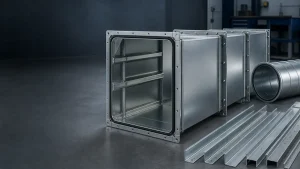
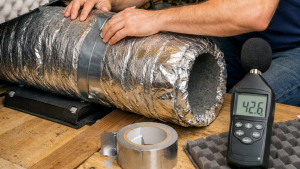
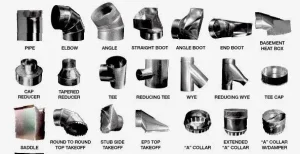
HVAC duct production is a precision-driven process where every minute of downtime and every millimeter of error adds up to real cost. Whether you run a small fabrication shop or a large-scale manufacturing facility, improving production efficiency is one of the most direct ways to increase output, reduce waste, and stay competitive. In this guide, we break down 10 proven strategies that help duct manufacturers streamline every stage of the process — from design and material handling to quality control and equipment maintenance. Explore our full range of HVAC duct fabrication machines to see how the right equipment supports every strategy on this list.
1.Invest in Automated Duct Fabrication Equipment
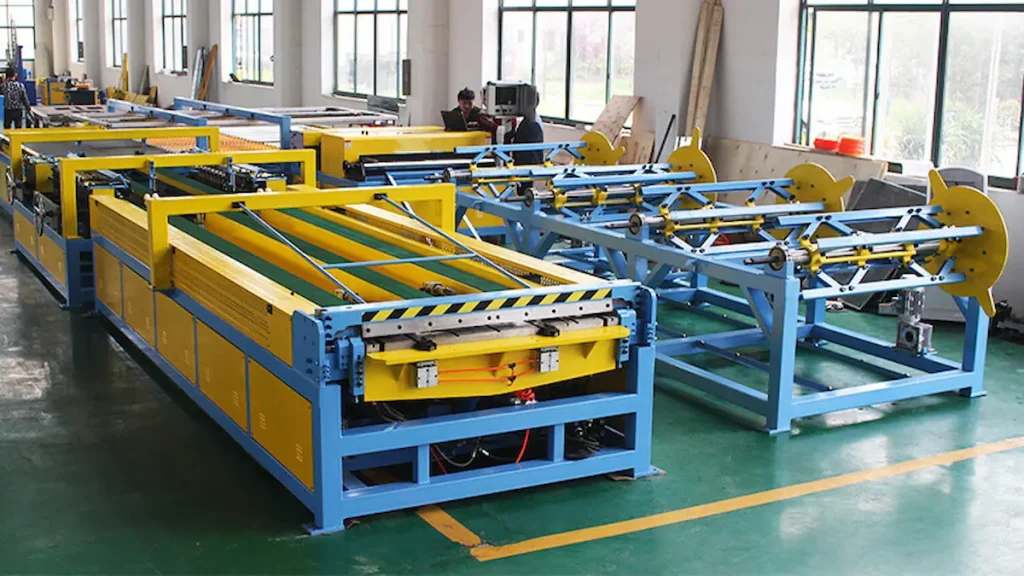
Automation is the single most impactful upgrade for any duct manufacturing operation. Modern automated equipment — including spiral duct machines, rectangular duct production lines, and plasma cutting systems — can operate with minimal manual intervention, dramatically reducing labor costs and human error. These machines maintain consistent tolerances across thousands of parts, something manual fabrication cannot match at scale.
Industry data shows companies integrating automated fabrication lines achieve a 30% increase in production speed and a 25% decrease in production costs. Beyond speed and cost, automation frees up your skilled workers to focus on tasks that genuinely require human judgment — such as system design, complex fitting assembly, and quality inspection.
2. Use Advanced CAD and CAM Software
The efficiency of your production floor starts long before any sheet metal is cut. CAD (Computer-Aided Design) and CAM (Computer-Aided Manufacturing) software allow your engineering team to design, simulate, and test duct layouts digitally before a single piece of material is committed. This catches errors early, eliminates costly redesigns, and creates a seamless handoff from design to fabrication.
Duct manufacturers using advanced CAD/CAM technologies report a 40% reduction in design time and a 20% reduction in material waste. Look for HVAC-specific tools that support automated nesting, direct CNC machine export, and integration with your inventory management system.
3. Implement Lean Manufacturing Principles
Lean manufacturing is a systematic methodology for eliminating waste — any activity that consumes resources without adding value. Originally developed by Toyota, lean thinking identifies seven core types of waste: overproduction, waiting, unnecessary transport, over-processing, excess inventory, unnecessary motion, and defects. Applying these principles to duct fabrication can transform your shop floor from reactive to proactive.
Companies implementing lean manufacturing report a 20% reduction in operational costs and a 15% increase in production output. Three lean practices that translate especially well to duct shops: 5S workplace organization (Sort, Set in Order, Shine, Standardize, Sustain), value stream mapping to visualize and cut non-value steps, and Kaizen continuous improvement cycles to embed efficiency gains permanently into your process.
4.Standardize Duct Components and Fittings
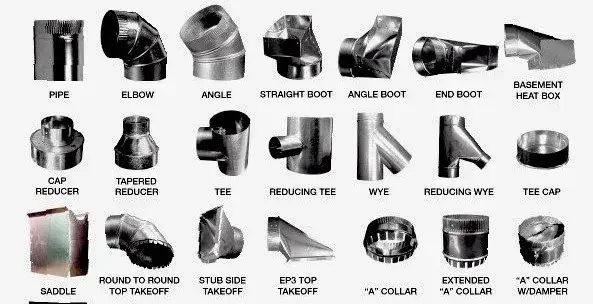
One of the simplest and highest-return efficiency improvements in duct fabrication is standardization. When your team works with a consistent set of duct sizes, fittings, connectors, and supports, the time savings accumulate quickly: less time measuring, less time searching for compatible parts, and fewer assembly errors.
Pair standardization with a modular design approach — breaking complex duct systems into repeatable prefabricated modules that can be fabricated in batch and assembled quickly on site. This is especially effective for large commercial or industrial projects where duct sections repeat throughout the building.
5.Optimize Material Selection and Handling
The materials you choose directly affect fabrication speed, finished product performance, and long-term operating costs. Galvanized steel remains the industry standard for most commercial ductwork due to its strength and cost-effectiveness. However, pre-insulated panels and fiberglass-reinforced plastic (FRP) ducts offer advantages where thermal performance, corrosion resistance, or installation speed are priorities.
Beyond material choice, optimize the physical flow of materials through your facility. Analyze your floor layout to minimize the distance raw materials travel between cutting, bending, and assembly stations. Implement conveyor systems or automated guided vehicles (AGVs) where volume justifies the investment. Manufacturers who optimized material handling saw a 15% reduction in production time and a 10% decrease in labor costs.
6.Adopt Just-in-Time (JIT) Inventory Management
The materials you choose directly affect fabrication speed, finished product performance, and long-term operating costs. Galvanized steel remains the industry standard for most commercial ductwork due to its strength and cost-effectiveness. However, pre-insulated panels and fiberglass-reinforced plastic (FRP) ducts offer advantages where thermal performance, corrosion resistance, or installation speed are priorities.
Beyond material choice, optimize the physical flow of materials through your facility. Analyze your floor layout to minimize the distance raw materials travel between cutting, bending, and assembly stations. Implement conveyor systems or automated guided vehicles (AGVs) where volume justifies the investment. Manufacturers who optimized material handling saw a 15% reduction in production time and a 10% decrease in labor costs.
7.Apply Sound Ductwork Design Principles from the Start

Efficient production begins with efficient design. Duct systems engineered correctly from the start require far less rework, fewer field modifications, and generate less material waste. Key principles: prioritize round ductwork where space allows (round ducts have the least surface area, minimizing friction and improving airflow), design smooth transitions rather than sharp 90-degree bends, and balance air pressure distribution across the entire system.
Duct systems designed with these principles are also faster to fabricate. Standardized bend radii, consistent fitting types, and logical section lengths all contribute to a smoother production workflow — whether you are producing round spiral duct or running a rectangular duct machine for square and rectangular sections.
8. Strengthen Quality Control Throughout Fabrication
Quality control is not a final step — it is a continuous process embedded at every stage of fabrication. Implementing inspection checkpoints at material receipt, during production, and at final assembly ensures defects are caught early, before they compound into costly rework or customer returns.
Two tools that work especially well together: automated inspection systems (cameras and sensors that flag dimensional errors in real time) and Statistical Process Control (SPC), which monitors production trends and catches systematic issues before they produce a batch of defective parts. Companies adopting these technologies reduced product defects by 50% and significantly improved customer satisfaction. Together, they reduce waste, protect your reputation, and lower your overall cost of quality.
9. Utilize Predictive Maintenance for Duct Machines

Unplanned equipment downtime is one of the most disruptive efficiency killers in any manufacturing environment. Traditional reactive maintenance — fixing machines after they break — results in unpredictable production stops, rush repair costs, and delayed orders. Predictive maintenance flips this model by using IoT sensors and data analytics to continuously monitor equipment health and schedule repairs before failures occur.
Start by instrumenting your highest-utilization machines — cutting lines, roll formers, and plasma cutters — with vibration, temperature, and cycle-count sensors. Predictive maintenance programs cut maintenance costs by 30% and improve equipment uptime by 20% compared to reactive approaches.
10. Invest in Operator Training and Skills Development
Technology upgrades deliver their full potential only when operators know how to use them effectively. Investing in structured training programs — covering equipment operation, CAD software, lean practices, and safety protocols — directly translates into fewer errors, less material waste, and faster output. Skilled operators also identify production problems earlier and troubleshoot more effectively, reducing the cost of both defects and downtime.
Companies with regular training programs report 25% higher employee productivity and 40% fewer production errors. Training should not be a one-time event — build a continuous learning culture with regular refreshers on new equipment features, updated safety standards, and emerging best practices. Cross-training operators across multiple stations also improves production flexibility and reduces bottlenecks when absences occur.
11.Conclusion
Improving HVAC duct production efficiency is not about a single upgrade — it is the result of optimizing equipment, processes, and people simultaneously. The 10 strategies above work best when implemented together, reinforcing each other to create a production environment that is faster, leaner, and more consistently high-quality.
Whether you are looking to upgrade to a fully automated production line or optimize your existing workflow, the right equipment foundation makes everything else easier. Explore our full range of HVAC duct fabrication equipment or contact our team to discuss your production requirements.