
In HVAC duct fabrication, TDC and TDF are the two dominant flange connection systems used for rectangular ductwork — and choosing between them affects your installation speed, system pressure performance, and production workflow. Both replaced traditional angle iron flanges decades ago, but they work differently and suit different project needs.
This article explains what TDC and TDF flanges are, how they differ structurally, and how to decide which connection method fits your project.
1.What Are TDC and TDF Flange Connections?
Both TDC and TDF belong to the thin-plate flange category for rectangular ductwork. They were developed in North America in the early 1980s to overcome the inefficiencies of traditional angle steel flange systems, which required cutting, drilling, welding, and grinding — a labor-intensive process prone to flatness and sealing issues.
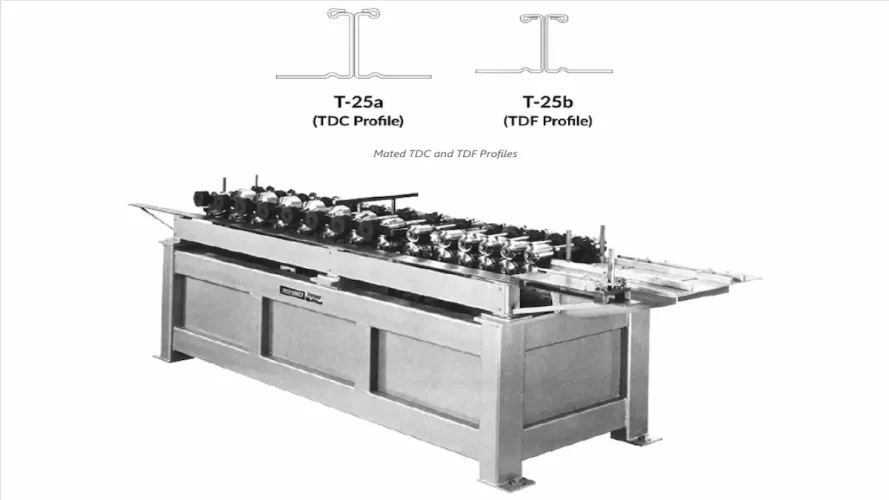
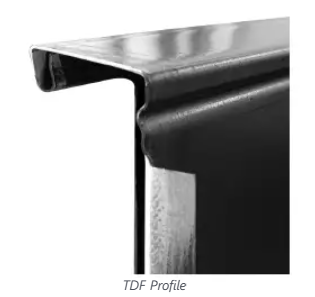
TDF (Transverse Duct Flange) — classified as T-25B under SMACNA standards — is a connection system where the flange is roll-formed directly from the duct’s own sheet metal. The edge of the duct is bent inward, creating an integral, smooth-edged flange as part of the duct body itself. No separate flange components are needed.
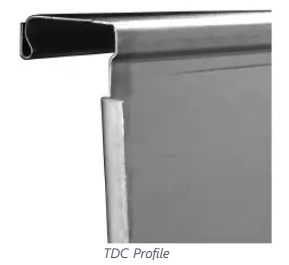
TDC (Transverse Duct Connector) — classified as T-25A under SMACNA standards — uses separate pre-formed flange strips that are mechanically attached to the ends of each duct section. The sheet metal edge is bent outward, and the flange pieces are fastened using bolts, screws, or rivets.
In short: TDF = built-in flange / TDC = add-on flange
2. TDC vs TDF: Structural Differences
2.1 Flange Orientation
The most visible structural difference is the direction of the hem:
- TDF bends the sheet metal edge inward, producing a smooth outer surface and a safer handling profile. This inward fold also adds extra rigidity to the flange joint.
- TDC bends the sheet metal edge outward, leaving a raw cut edge exposed on the outside of the flange. Handlers need to exercise more caution to avoid injury.
2.2 Component Count
TDF joints consist of the duct section itself plus a gasket and corner cleat — no separate flange pieces. TDC joints require the duct section, separate flange strips, and fasteners, making the assembly more complex but also more modular.
3. TDC vs TDF: Performance Comparison
3.1 Mechanical Strength & Pressure Rating
TDC connections offer superior mechanical strength. The separate metal flange is bolted directly to the duct panel, creating a rigid joint that performs well under high static pressure. This makes TDC the preferred choice for high-pressure HVAC systems, boiler flues, and clean room applications.
TDF connections provide reliable strength for medium and standard-pressure systems. Because the flange is integral to the duct, the joint depends on the duct material itself, which may offer slightly less resistance under extreme pressure — but is more than adequate for the majority of commercial HVAC installations.
3.2 Airtightness & Sealing
Both systems achieve good airtightness when correctly installed. TDF’s integral design, combined with a compression gasket, provides consistent sealing across the entire flange. TDC’s bolted configuration allows for tighter mechanical compression at the joint, which can be an advantage in leak-sensitive environments.
3.3 Installation Speed
TDF is significantly faster to install on-site. With no separate flanges to position and bolt, workers only need to align sections and secure corner cleats. This reduces labor time and dependency on skilled installers.
TDC installation is more time-consuming due to the additional steps of attaching flange strips and fastening bolts. However, damaged TDC flanges can be replaced independently on-site without replacing the entire duct section.
3.4 Cost
TDF eliminates the cost of purchasing and handling separate flange angles, resulting in lower material and labor costs per joint. TDC involves additional material costs (flange strips and fasteners) and longer installation time, making it more expensive overall — though justified for high-performance applications.
4.How TDC and TDF Flanges Are Formed
4.1 TDF Formation TDF
TDF flanges are produced by a roll-forming machine that progressively bends the duct sheet metal into the flange profile in a single continuous operation. Double-sided TDF machines form flanges on both edges of the duct simultaneously, maximizing production speed. The result is a clean, integral flange with no additional assembly required before installation.
TDF machines typically use around 16 forming stations to achieve the inward-hem profile accurately.
4.2 TDC Formation
TDC flange strips are formed separately from the duct itself. A TDC roll-forming machine processes galvanized steel coil into the required flange angle profile, then cuts it to length. These pre-formed strips are subsequently attached to each duct end using bolts or mechanical fasteners at the fabrication stage.
TDC machines are typically simpler, requiring around 12 forming stations.
5.How to Choose: TDC or TDF?
There is no universal answer — the right choice depends on your project’s pressure requirements, installation schedule, budget, and production setup.
Choose TDF when you:
- Need faster installation and lower labor costs
- Are working on standard or medium-pressure commercial HVAC systems
- Want to reduce the number of components handled on-site
- Prioritize worker safety (smooth, inward hem)
Choose TDC when you:
- Are working on high-pressure systems or special environments (clean rooms, boiler flues)
- Need the ability to replace flanges independently on-site
- Require maximum joint strength and airtightness
In practice, many HVAC fabricators use TDF for standard duct runs and reserve TDC for critical sections where maximum pressure performance is needed.
6.Durmahvac TDC and TDF Flange Machines Durmahvac
Durmahvac manufactures both TDC and TDF flange forming machines designed for high-volume rectangular duct production. Our machines deliver consistent flange profiles that meet SMACNA standards, with options to suit different sheet thicknesses and production volumes.
If you’re not sure which system fits your workflow, our team can help you evaluate based on your duct specifications and production requirements.
→ [Contact Us]