1. Introduction
Duct pressure is a key HVAC measurement that determines whether a system delivers proper airflow. When it’s off, you get stuffy rooms, loud equipment, high energy bills, and even leaking or collapsing ducts.
In this guide, you’ll learn:
- what duct pressure and static pressure mean
- normal duct static pressure ranges by system type
- how to measure duct static pressure correctly
- how to fix high or low static pressure problems
- how duct design and fabrication quality affect pressure performance
Whether you’re diagnosing a comfort complaint or designing ductwork that must hold its rated pressure, this article gives you the practical answers most sources skip.
2. What Is Duct Pressure?
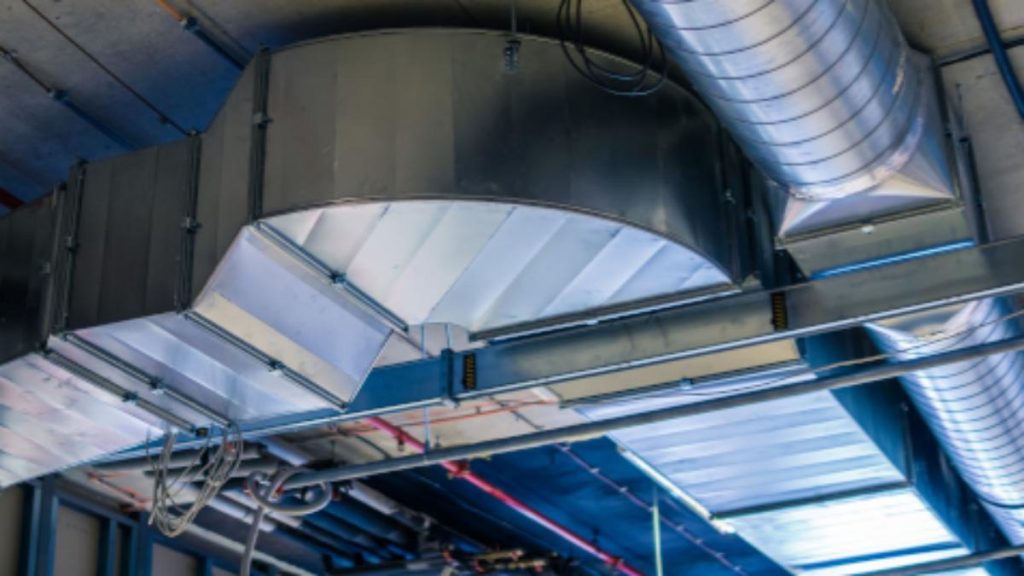
Duct pressure is the pressure air exerts inside an air distribution system as the fan pushes and pulls it through the ductwork. It reflects how much resistance the system’s components — ducts, fittings, filters, coils, dampers and grilles — impose on the blower.
Two points are worth fixing early:
- Pressure and airflow are related but not the same. Pressure is measured in pascals (Pa) or inches of water gauge (in. w.g.); airflow is measured in CFM or m³/h. You need both to judge a system.
- The fan must produce more pressure than the system’s resistance, or it cannot deliver the design airflow.
Get this relationship wrong and every later diagnosis will be wrong too.
3.Types of Duct Pressure
Before measuring anything, you need the vocabulary. Duct pressure is not a single value — it has several components.
| Pressure Type | What It Represents | Main Use |
|---|---|---|
| Static pressure | Pressure pushing outward on the duct walls | Diagnosing system resistance |
| Velocity pressure | Pressure created by air movement | Calculating air speed and volume |
| Total pressure | Static + velocity pressure combined | Fan and system analysis |
3.1 Static, Velocity, and Total Pressure
Static pressure acts against the duct walls and is the value technicians use most for diagnosis. Velocity pressure relates to the speed of the moving air stream. Total pressure is the sum of the two. Because each is measured differently, using the wrong probe or port gives misleading numbers — a static probe and a pitot tube are not interchangeable.
3.2 Positive and Negative Pressure
Duct pressure also has a direction:
- Positive-pressure ducts (supply side) push air outward through any leak.
- Negative-pressure ducts (return and exhaust side) pull surrounding air inward through leaks.
Negative-pressure ducts must be stiff enough to resist collapsing inward, which is why return and exhaust ducts often need proper gauge selection and reinforcement. If you fabricate ducts for high negative pressure, proper sheet thickness and stiffening matter as much as sizing.
4. How Duct Pressure Affects HVAC Performance
Duct pressure drives the outcomes users actually care about:
- Airflow and comfort: excess resistance starves rooms of air, creating hot and cold spots.
- Fan workload, noise, and energy: the harder the blower fights resistance, the more power it draws and the louder it runs.
- Heating and cooling capacity: low airflow hurts dehumidification and can even freeze a coil.
- Filtration and indoor air quality: unbalanced pressure disrupts ventilation, critical in schools, offices and industrial spaces.
- Leakage and imbalance: pressure differences between zones push conditioned air where you don’t want it.
The key rule: interpret pressure together with airflow and fan performance data, never in isolation.
5.What Is Normal Duct Static Pressure in HVAC?
This is the most-searched question about duct pressure. The honest answer: there is no single number that fits every system — but there are typical ranges you can use as a starting point.
5.1 Typical Duct Static Pressure Ranges
| System Type | Typical Total External Static Pressure |
|---|---|
| Residential HVAC | 0.5 in. w.g. or lower |
| Commercial HVAC | ~0.5 – 2.0 in. w.g. |
| Industrial / process systems | Higher, depending on design |
Always verify against the equipment manufacturer’s blower performance data. These ranges are general references, not design values.
Acceptable pressure depends on the rated blower capacity, system type, target airflow, and where the reading is taken. A single duct reading is also not the same as Total External Static Pressure (TESP), which combines supply and return resistance across the whole external system.
Two cautions most articles skip:
- A low reading is not automatically “good” — it can signal a disconnected duct or a fan running too slowly.
- A high reading is not proof of a specific fault by itself.
(Unit tip: 1 in. w.g. ≈ 249 Pa, useful when comparing datasheets in different units.)
6.How to Measure Duct Static Pressure
Guessing is not measuring. A proper reading uses a manometer with a static pressure probe; permanently installed pressure sensors make sense where continuous monitoring is justified (large or critical systems).
Basic process:
- Run the system in its normal operating mode.
- Insert the probe at the correct supply and return locations.
- Record the positive supply reading and the negative return reading.
- Combine the absolute values to estimate TESP.
- Compare the result against equipment data and the required airflow.
Probe position and test conditions strongly affect the numbers — a probe facing the airstream picks up velocity pressure and distorts the reading.
6.1 Measuring Component Pressure Drop
To find where resistance hides, measure before and after individual components — the filter, coil, or damper. The difference between the two readings is that component’s pressure drop. This is how professionals separate an equipment restriction (dirty filter, plugged coil) from a ductwork restriction — and the latter often points back to sizing or fabrication.
7. Common Duct Pressure Problems
Move from symptoms to likely causes with a quick diagnostic map.
| Reading Pattern | Possible Cause | Next Check |
|---|---|---|
| Large negative return reading | Undersized return, restrictive filter/grille | Filter drop, return size |
| High positive supply reading | Supply restriction, coil or closed damper | Coil drop, dampers, branches |
| High pressure + low airflow | Excessive total system resistance | Whole duct system + sizing |
| Low pressure + low airflow | Leakage, low fan speed, disconnection | Blower, leaks, connections |
| Low pressure + normal airflow | Genuinely low-resistance system | Confirm with equipment data |
7.1 Causes of High Static Pressure
- Undersized supply or return ducts
- Dirty or overly restrictive filters and coils
- Closed dampers or blocked grilles
- Sharp elbows, poor transitions, and crushed or sagging flex duct
- Equipment oversized for the duct system
Many of these trace back to duct sizing and fabrication. Ducts formed with correct duct sizing and airflow principles avoid a large share of high-pressure problems before installation.
7.2 Causes of Low Static Pressure
- Low fan speed or a failing blower
- Duct leakage or disconnected sections
- Incorrect measurement location
- Genuinely low system airflow
- Or simply a well-designed, low-resistance system
The lesson: a low number is not automatically a problem — verify it against airflow.
8. Duct Pressure vs. Duct Pressure Class
Now that you understand real-world readings, it’s worth separating a measurement from a construction rating:
- Duct pressure is what you measure while the system runs.
- Duct pressure class is the pressure a duct system is designed and built to withstand — it dictates joint type, sealing, sheet thickness, reinforcement, and accessory ratings.
Pressure class should follow the applicable project standard for your region, not an unsourced universal table. When a project specifies a higher pressure class, your fabrication process must reliably deliver the required seams, flanges and rigidity — which leads directly to the next point.
9. How to Correct Duct Pressure Problems
Once you’ve located the cause, the fixes are practical:
- Replace or upsize restrictive filters; keep filter drop low.
- Clean coils and remove airflow obstructions.
- Seal leaks and reconnect loose sections.
- Pull flex duct taut, or replace long flex runs with rigid sheet-metal duct.
- Improve return-air paths and resize undersized sections when testing supports it.
- Replace sharp 90° elbows with smoother transitions to cut fitting losses.
- Adjust blower settings only after checking equipment limits.
- Retest pressure and airflow after every modification.
10.How Duct Fabrication Quality Affects Pressure Performance
Field fixes only go so far. Many chronic pressure problems are built into the ductwork before it ever reaches the site — which is why fabrication quality matters as much as sizing.
- Leakage: loose or poorly sealed seams bleed pressure and airflow. Tight, machine-formed seams hold the system’s rated pressure.
- Seam and joint quality: consistent lock seams and flanges reduce turbulence and leakage far better than hand-assembled joints.
- Reinforcement: ducts running at higher positive or negative pressure need adequate stiffening to avoid deformation and noise.
- Pressure class: meeting a specified pressure class depends on repeatable sheet thickness, seam type and sealing — hard to achieve by hand at scale.
This is where equipment makes the difference. Round spiral duct, in particular, offers high strength and low leakage for demanding systems, and rigid rectangular duct produced on modern lines outperforms long flex runs on friction and tightness. If you produce ductwork to spec, a spiral duct production setup and an automatic duct forming line let you deliver tight, high-pressure-rated duct efficiently.
11. FAQ
1.What is normal duct static pressure?
For most residential systems, TESP is around 0.5 in. w.g. or lower; commercial systems often run higher. Always confirm the acceptable value against the equipment manufacturer’s blower data.
2.What causes high static pressure in HVAC?
Undersized ducts, dirty filters or coils, closed dampers, blocked grilles, sharp fittings, and crushed flex duct. Check components before assuming the ducts are too small.
3.How do I check (test) duct static pressure?
Run the system normally, insert a static pressure probe at the supply and return, read the positive and negative values on a manometer, and add the absolute values to estimate TESP.
4.What is a good static pressure reading?
One that stays within the equipment manufacturer’s rated external static pressure while delivering the required airflow — a reading is only “good” when airflow is also correct.
5.Is static pressure the same as airflow?
No. Pressure (Pa or in. w.g.) and airflow (CFM) are separate measurements and must be interpreted together.
6.Can oversized ducts cause low pressure?
Yes — oversized ducts reduce resistance, but so can leakage, low fan speed, or a disconnected section, so verify against airflow before acting.
7.Can duct leakage affect pressure readings?
Yes. Leaks in positive-pressure duct lose conditioned air outward; leaks in negative-pressure duct draw in unconditioned air. Both distort performance and readings.
8.How often should duct pressure be tested?
At commissioning, when comfort or airflow complaints appear, after major filter or duct changes, and before replacing equipment.
12.Conclusion
Duct pressure only makes sense when read alongside airflow, equipment data, and measurement location. Proper testing separates component restrictions from duct-design faults and blower issues — and prevents costly, unnecessary equipment replacement. Ultimately, reliable airflow and efficiency start with ductwork that is correctly sized, sealed, reinforced, and fabricated.
If you build duct systems that must hold their rated pressure, the equipment behind the duct matters. Explore our HVAC duct manufacturing equipment to produce tight, high-performance ductwork at scale.