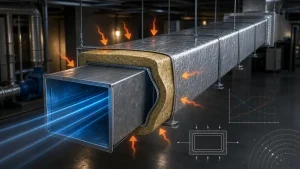
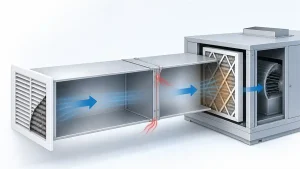

Choosing the right HVAC duct seam is not only a fabrication detail. It affects duct strength, assembly speed, leakage control, transportation, and the type of machinery required in the workshop.
For many duct fabrication shops, the main comparison is between Pittsburgh Lock and Snap Lock. Both are widely used in sheet metal ductwork, but they are not suitable for every project in the same way. Pittsburgh Lock is often selected when a stronger mechanical seam is required, while Snap Lock is valued for faster assembly and easier handling in suitable applications.
This guide explains how these duct seam types work, how they differ from transverse duct connections such as TDF and slip-and-drive, and how to choose the right seam and forming equipment for your production needs.
1. What Are HVAC Duct Seams?
An HVAC duct seam is the formed connection that joins sheet metal edges to create the body of a duct section. It is different from a simple fold because the seam must hold the duct shape, support the structure, and work together with the sealing method required by the project.
A duct seam influences:
- The rigidity of the finished duct
- The accuracy of the duct shape
- The ease of shop or site assembly
- The amount of finishing work required
- The risk of leakage if the seam is poorly formed or sealed
In duct fabrication, it is important to separate two different connection functions.
Longitudinal seams run along the length of the duct body. Pittsburgh Lock and Snap Lock are common examples.
Transverse connections join one finished duct section to another at the ends. TDF, TDC, and slip-and-drive are examples of transverse duct connection systems.
This distinction matters because Pittsburgh Lock and TDF are not direct replacements for each other. A rectangular duct may use a Pittsburgh Lock or Snap Lock along the body and still use a TDF flange or slip-and-drive connection at the ends.
A mechanically closed seam also should not be confused with a fully sealed duct. Depending on the project requirement, sealant, mastic, gasket, or approved duct tape may still be needed to meet leakage performance.
2. Pittsburgh Lock vs Snap Lock
Pittsburgh Lock and Snap Lock are both used to close sheet metal duct sections, but their forming and assembly methods are different.
Pittsburgh Lock uses a folded pocket and a mating flange that are inserted and closed together. Snap Lock uses matching profiles that engage when pressed together. Because of this difference, they behave differently in production, installation, and long-term duct performance.
2.1 How a Pittsburgh Lock Works
A Pittsburgh Lock seam is formed with two matching edges.
One side of the sheet metal is formed into a pocket profile. The other side is formed into a mating flange or locking edge. During assembly, the flange is inserted into the pocket, and the outside lip of the pocket is closed over the flange to create a mechanical lock.
The process usually includes three steps:
- Form the Pittsburgh pocket and mating edge with a lock forming machine.
- Insert the mating edge into the pocket.
- Close the seam using hand tools, a pneumatic closer, or a powered seam closing device.
Pittsburgh Lock is widely used for rectangular ductwork, especially where the duct requires better rigidity or where fittings and complex shapes need stronger edge engagement. It is commonly seen in commercial HVAC duct fabrication, duct fittings, transitions, elbows, and rectangular duct sections.
Its main advantage is the positive mechanical lock created after closing. This helps the duct hold its shape and resist movement during handling and installation.
However, Pittsburgh Lock also requires a separate closing operation. This means more labor, more handling, and suitable space for closing the seam. If the profile is not formed correctly, or if the material thickness is outside the machine’s suitable range, the seam may become difficult to close or may distort the duct section.
2.2 How a Snap Lock Works
A Snap Lock seam uses two matching profiles that are designed to engage with each other when pressed together. Depending on the machine and profile design, the seam may include button-punch features or other locking details to improve engagement.
Instead of inserting one edge and then closing a folded lip, Snap Lock is assembled by aligning the two sides and pressing them together. This can reduce closing work and make assembly faster in suitable duct applications.
Snap Lock is often used where fast assembly and efficient handling are important. It can be useful for straight duct sections, lighter-duty ductwork, and applications where ducts are shipped or stored in a knocked-down form before final assembly.
However, not all Snap Lock seams are the same. Round duct snap lock and rectangular duct snap lock may use different profiles and tooling. Button-punch snap lock also has a specific locking structure that should be confirmed with the machine supplier.
Snap Lock should be selected based on actual project requirements, material type, duct dimensions, and profile quality. If the profile is poorly formed, damaged, or repeatedly opened and closed, the engagement may become weaker.
2.3 Key Differences at a Glance
The table below summarizes the practical differences between Pittsburgh Lock and Snap Lock.
| Factor | Pittsburgh Lock | Snap Lock |
|---|---|---|
| Seam structure | Pocket and mating flange closed together | Matching profiles pressed together |
| Assembly method | Requires a closing operation | Designed for faster engagement |
| Typical use | Rectangular ducts, fittings, commercial ductwork | Straight duct sections, lighter-duty or fast assembly work |
| Strength | Strong mechanical engagement when properly closed | Depends heavily on profile accuracy and application |
| Labor requirement | Higher because closing is required | Lower in suitable applications |
| Transport efficiency | Can be shipped flat, but closing work remains | Often suitable for knocked-down handling |
| Sealing | May still require sealant or mastic | May still require sealant or mastic |
| Equipment | Lock forming machine plus closing tools or closer | Snap lock forming tooling, sometimes button-punch station |
| Main advantage | Rigidity and secure mechanical lock | Fast assembly and handling efficiency |
| Main limitation | More closing labor | Not suitable for every pressure or structural requirement |
The best choice is not based on seam name alone. It should be based on the duct specification, pressure requirement, material thickness, duct size, installation method, and available equipment.
3. Other Duct Seams and Connections
Pittsburgh Lock and Snap Lock are important, but they are not the only profiles used in duct fabrication. Some profiles are longitudinal seams, while others are transverse connection systems.
Understanding the difference helps avoid incorrect machine selection.
3.1 Other Longitudinal Seam Profiles
Some ductwork or sheet metal products may use other longitudinal seam profiles depending on the application.
A standing seam creates a raised connection along the duct or panel. It can provide additional rigidity, but it requires space around the seam and may not be suitable for every duct layout.
A grooved seam or related grooving process may be used to add stiffness or support to sheet metal sections. However, not every groove is a joining seam. Some grooves are mainly reinforcement features rather than connection profiles.
A pipe seam is often used for round duct or cylindrical sheet metal products. Its profile and tooling are different from rectangular duct seams.
Because profile names vary between manufacturers, buyers should always request actual seam drawings, sample profiles, and machine configuration details before confirming equipment.
3.2 TDF and TDC Flanges
TDF and TDC are transverse duct connection systems. They are used to connect the ends of finished duct sections, not to close the long body seam of the duct.
A TDF or TDC system typically includes:
- A roll-formed flange on the duct end
- Corner pieces
- Cleats or clamps
- Gasket, sealant, or other sealing materials where required
These systems are common in rectangular duct production because they can improve assembly efficiency and create a standardized connection method. They are often used with automated duct production lines.
However, TDF and TDC forming require accurate dimensions. If the flange profile, corner pieces, or cleats do not match properly, the duct connection may be difficult to assemble or may have leakage issues.
3.3 Slip-and-Drive Connections
Slip-and-drive is another transverse connection method used to join duct sections. It usually uses slip pieces and drive cleats to connect the duct ends.
This method is relatively simple and can be practical for certain rectangular duct applications. It may require less equipment than a fully integrated flange system, but installation accuracy, duct size, and project requirements still matter.
Slip-and-drive should not be confused with longitudinal seams like Pittsburgh Lock or Snap Lock. It solves a different connection problem.
4. How to Choose the Right Duct Seam
Choosing the right duct seam should start with the project, not the machine catalog.
A duct shop may prefer one seam because it is faster or easier to produce, but the final decision must match the construction requirement, duct size, material, sealing demand, and installation conditions.
4.1 Check the Project Requirements
Before choosing Pittsburgh Lock, Snap Lock, or another seam, review the project information carefully.
Key factors include:
-
Project drawings and specifications
The approved design may already define acceptable seam and connection methods. -
Pressure and leakage requirements
Higher performance requirements may require stronger seams, better sealing, or specific connection systems. -
Duct shape and size
Large rectangular ducts, fittings, and complex shapes may need more rigidity than smaller straight sections. -
Material and thickness
Galvanized steel, stainless steel, aluminum, and other sheet metals behave differently during forming. -
Straight duct vs fittings
A production shop may use different seam profiles for straight duct sections and fittings, but this must still comply with the project requirement. -
Shop assembly vs site assembly
Some seams support easier knocked-down handling, while others may be better for shop-assembled ductwork.
Do not rely on a general statement such as “Snap Lock is for light-duty work” or “Pittsburgh is always stronger.” These may be useful starting points, but the actual choice depends on the complete duct design and forming quality.
4.2 Compare Assembly and Total Cost
The cheapest seam is not always the one with the lowest machine cost.
When comparing duct seam types, consider the total production and installation cost:
- Profile forming time
- Seam closing time
- Operator skill requirements
- Material waste and scrap rate
- Sealing work
- Transport volume
- Site labor
- Rework risk
- Maintenance and tooling cost
Pittsburgh Lock may require more closing work, but it can provide better rigidity in suitable applications. Snap Lock may reduce assembly time, but it must be formed accurately and used within the right project conditions.
For some duct fabrication shops, the best solution is a mixed production strategy. For example, one seam type may be used for straight duct sections, while another is used for fittings. However, this should only be done after confirming that each seam type meets the project and quality requirements.
5. Machines Used for Duct Seam Fabrication
Different duct seams require different forming and support equipment. A common mistake is to focus only on the seam profile while ignoring the full production process.
A duct seam production workflow may include cutting, notching, profile forming, folding, closing, sealing, and inspection.
5.1 Forming vs Closing Equipment
Forming equipment creates the seam profile. Closing equipment completes the mechanical engagement where required.
| Process | Equipment Type | Function |
|---|---|---|
| Profile forming | Lock forming machine or roll former | Forms Pittsburgh, Snap Lock, pipe seam, or other profiles |
| Button-punch feature | Button-punch station or tooling | Creates locking features for some snap lock profiles |
| Pittsburgh closing | Hand tools, pneumatic closer, or powered closer | Closes the Pittsburgh pocket over the mating edge |
| TDF/TDC forming | Flange forming machine | Forms transverse duct end flanges |
| Preparation work | Shear, plasma cutter, notcher, folder | Prepares blanks and edges for accurate assembly |
Button-punch tooling should not be confused with the equipment used to close an entire duct seam. It creates locking features in the profile, while the final assembly still depends on correct edge preparation and engagement.When evaluating an automatic duct production line, check how cutting, notching, profile forming, folding, and closing are coordinated.
5.2 What Buyers Should Verify
Before buying a duct seam forming machine, buyers should verify more than the machine name.
Important checks include:
- Actual seam profile drawings
- Sample profiles formed with the buyer’s material
- Verified material and thickness range
- Whether the machine has fixed stations, optional stations, or replaceable roller sets
- Tooling changeover time
- Profile consistency after continuous operation
- Compatibility with downstream folding or closing equipment
- Spare parts availability
- Operator training and after-sales support
- Real production output, not only rated forming speed
A lock forming machine may be described as “multi-profile,” but that does not always mean every profile is available at the same time. Some machines require roller replacement or extra tooling. Buyers should confirm the configuration before ordering.
6.Common Duct Seam Problems
Even with the correct seam type, poor forming or assembly can cause quality problems. Most seam issues are related to material preparation, machine setup, tooling condition, or closing method.
| Problem | Possible Causes | What to Check |
|---|---|---|
| Loose seam | Incorrect profile size, worn rollers, poor engagement | Check roller condition, profile dimensions, and material thickness |
| Edges do not fit | Wrong mating profile, damaged edge, inaccurate blank size | Verify matching profiles and cutting accuracy |
| Twisted duct section | Uneven blank, poor feeding, unbalanced forming or closing | Check sheet squareness, feed guides, and closing sequence |
| Deformed seam | Material too thick or unsuitable for setup | Confirm machine capacity and adjust forming settings |
| Seam opens after assembly | Incomplete engagement or poor closing | Inspect the full seam length and closing force |
| Air leakage | Incomplete mechanical closure, missing sealant, dirty surface | Check seam engagement, surface cleaning, and sealing method |
These problems should be diagnosed step by step. Do not assume the seam type is wrong before checking the machine setup and material condition.
When adjusting equipment, operators should follow the machine manual and safety procedures. Roller clearance, guide alignment, and closing force should be adjusted carefully to avoid damaging the profile or the machine.
7.FAQ
Q1:Is Snap Lock the Same for Round and Rectangular Ducts?
No. The name may be similar, but the actual profile, tooling, and assembly method can be different. Always confirm the seam drawing and sample profile with the machine supplier.
Q2:Can Pittsburgh Seams Be Used with TDF Flanges?
Yes. Pittsburgh Lock is a longitudinal seam, while TDF is a transverse duct connection. A rectangular duct section can use a Pittsburgh seam along the body and a TDF flange at the ends.
Q3:Does Every Duct Seam Need Sealant?
It depends on the project requirements. Many duct systems require approved sealant, mastic, gasket, or tape to meet leakage requirements. The mechanical seam alone should not be assumed to be fully airtight.
Q4:Can One Machine Make Pittsburgh and Snap Lock Profiles?
Some lock forming machines can produce multiple profiles, but it depends on the machine configuration, roller sets, and optional stations. Buyers should confirm the exact profiles before purchasing.
Q5:Can a Closed Duct Seam Be Reopened?
Some seams may be opened for rework, but reopening can damage the profile or reduce engagement quality. Repeated opening and closing should not be treated as normal use unless the design allows it.
Q6:What Should I Send a Supplier for a Machine Recommendation?
Send the material type, thickness range, duct shape, required seam profiles, sample drawings, expected production volume, and whether the duct will be assembled in the shop or on site.
7.Conclusion: Match the Seam to the Job
Pittsburgh Lock and Snap Lock are both useful HVAC duct seam types, but they solve different production needs.
Pittsburgh Lock is usually chosen when mechanical engagement and duct rigidity are important. Snap Lock is often selected when faster assembly and easier handling are priorities. TDF, TDC, and slip-and-drive should be understood separately because they are transverse duct connection systems, not direct replacements for longitudinal seams.
The right choice depends on project specifications, duct size, material, sealing requirements, production workflow, and available machinery.
For duct fabrication shops, the safest approach is to evaluate the full process: cutting, notching, profile forming, folding, closing, sealing, and inspection. If you are planning a new duct production line or upgrading your seam forming equipment, provide your material, thickness range, duct dimensions, required profiles, and output target. A supplier can then recommend a machine configuration that fits your real production needs instead of a generic seam-forming solution.