Duct leakage is one of the most common performance problems in commercial HVAC systems—and one of the least often confirmed before repair work begins. Air that escapes a supply or return duct before reaching its intended zone is a direct loss of system capacity, not just an energy inefficiency. Fans run harder, equipment cycles longer, and zone comfort complaints accumulate without a clear cause.
Commercial HVAC duct sealing addresses this by closing unintended air paths throughout the distribution network. Done correctly, it improves delivered airflow, reduces equipment workload, and can be verified with the same pressure-testing equipment used to establish the baseline. Done incorrectly—or applied to the wrong problem—it wastes budget and leaves the underlying issue unresolved.
This guide covers how to identify duct leakage, select the right sealing method, define a professional scope of work, and verify that the work has actually performed.
1.What Is Commercial HVAC Duct Sealing?
Commercial HVAC duct sealing is the process of closing unintended air paths in a building’s duct distribution system—at longitudinal seams, transverse joints, branch takeoffs, access door frames, plenum connections, register boots, and any interface where conditioned air can escape the intended airstream.
The same principles apply to industrial HVAC and process ventilation systems, though industrial applications may involve additional material compatibility considerations.
It is worth being precise about what duct sealing is not. Duct cleaning removes contaminant buildup from duct surfaces but does not close air leaks. Insulation reduces conductive heat transfer through duct walls but does not stop pressurized air from escaping through gaps. Air balancing redistributes airflow to meet zone targets but cannot compensate for large leakage losses upstream of the terminals. These are distinct scopes that are often confused—or inadvertently bundled together.
Sealing has the greatest operational impact when ducts run through spaces outside the conditioned zone: roof voids, ceiling plenums, service shafts, plant rooms, and unconditioned mechanical spaces. Air that leaks into those areas is lost from the distribution system entirely. The HVAC plant must compensate at every cycle.
Duct sealing is also not a universal fix. Persistent hot or cold zones, weak terminal airflows, and unexplained energy increases can equally result from duct sizing errors, failed dampers, fan performance degradation, or control faults. Distinguishing leakage from those other causes requires testing—not assumptions.
2.How Duct Leakage Affects HVAC Performance
Air losses in a duct network produce compounding effects across the system. The direct consequence is reduced delivered airflow: terminals receive less conditioned air than the design specifies, producing persistent temperature inconsistency between zones.
The secondary effect is increased equipment load. A supply fan operating against duct leakage runs at a less efficient duty point. The HVAC plant cycles more frequently to maintain setpoints, and components—compressors, heating elements, fan motors—experience greater wear over time.
Return-side leakage introduces a different problem. Unconditioned air drawn into return ducts before it reaches the AHU carries whatever is in the surrounding space: dust, humidity, odors, or outdoor contaminants. In manufacturing environments, server rooms, laboratories, or healthcare facilities, this directly affects air quality in ways that cannot be resolved by filter upgrades alone.
The operational pattern this creates typically includes:
- Comfort complaints concentrated in zones served by long runs or ducts in unconditioned space
- Energy consumption that tracks above expected values for the occupancy and weather
- Filtration and maintenance costs that run higher than the system’s design baseline
- Increased frequency of equipment servicing relative to the installed system age
Actual energy savings from duct sealing vary with leakage severity, duct location, climate, operating hours, energy pricing, and controls configuration. They are real but site-specific. Published residential benchmark figures should not be used to estimate commercial project economics.
3.How to Identify Duct Leakage Before Sealing
No symptom by itself confirms that leakage is causing an HVAC problem. Several presentations, however, warrant a leakage assessment.
Operational indicators:
- Persistent hot or cold zones that do not respond proportionally to setpoint adjustments
- Terminal airflows consistently weaker than the original commissioning records
- Heating or cooling energy consumption that has increased without a corresponding change in occupancy or building use
- Dust or debris accumulation in supply registers that does not correspond to filter condition
- Localized odors, humidity problems, or air quality complaints in specific zones
Physical indicators:
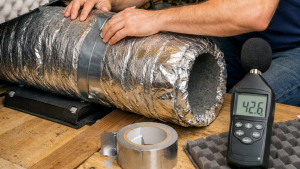
- Duct insulation that inflates, ripples, or moves when the system runs—a reliable sign of pressurized air escaping beneath the insulation jacket
- Visible joint separations, disconnected flexible duct connections, missing access-door gaskets, or cracked and pulled-away sealant
- Evidence of moisture or pest intrusion at duct connections in crawl spaces, floor voids, or service areas
High-priority locations include long trunk runs in unconditioned roof voids, return plenums relying on ceiling tiles as the return air boundary, ducts passing through multi-story shafts, and older systems originally assembled with cloth-backed tape.
These same symptoms are also produced by duct sizing problems, failed dampers, fan degradation, and control faults. A leakage test is required to isolate the cause—visual inspection alone is not sufficient.
Before starting any sealing work, establish a baseline leakage measurement. Without it, there is no objective method to define the scope, compare sealing options, or confirm that the completed work has performed. A survey limited to accessible seams will also miss a significant portion of leakage in most commercial systems. The inspection scope should include:
- Supply and return plenums and AHU connections
- Equipment cabinet joints, filter section frames, and access door perimeters
- Branch takeoffs, elbows, and field-assembled fittings
- Duct-to-terminal connections (VAV boxes, fan coils, diffusers)
- Register boots and building surface penetrations
- Return air pathways in ceiling plenum systems
4.Common HVAC Duct Sealing Methods
The right sealing method depends on the actual conditions of the duct system—not on a product preference. Key factors include physical access to the duct surface, leak size and type, duct material, surface condition, available outage window, and whether quantified before-and-after results are required.
Before any sealant is applied, physically damaged ductwork must be addressed. Crushed sections, disconnected runs, severely corroded duct walls, or missing panels require repair or replacement. Sealant is not a structural material and should not be applied as one.
4.1 Mastic Sealant
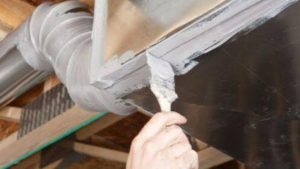
Duct mastic is a fiber-reinforced, water-based compound that is brushed or hand-applied to duct seams, joints, and connections. It conforms to irregular surfaces and cures to a flexible, durable seal capable of withstanding the temperature cycling and internal pressures typical of commercial HVAC systems. It is widely used because it performs reliably across a broad range of applications and duct materials.
Mastic is appropriate for:
- Longitudinal and transverse joints on sheet metal and duct board
- Branch takeoff connections and elbow seams
- Supply and return plenum-to-AHU connections
- Any repaired section following physical patching
For gaps that require reinforcement, embed fiberglass mesh tape within the mastic before the final coat. Larger structural openings should be closed with a sheet metal patch before mastic is used. The substrate must be clean, dry, and free of oil, corrosion scale, old adhesive residue, and loose material—mastic will not maintain adhesion over contaminated surfaces under operating conditions.
Applicable duct-sealing products should meet UL 181 requirements for the duct material and application type. Confirm product compatibility with the duct substrate before specifying.
4.2 HVAC Foil Tape and Metal-Backed Tape
Pressure-sensitive aluminum foil tape and butyl-backed metal tape are suitable for clean, accessible, localized applications—register boots, flat duct seams in serviceable condition, and joints where mastic application is impractical.
For tape to perform reliably:
- Use only products listed to applicable UL 181 requirements for the specific duct type and application
- The substrate must be clean, dry, and free of dust, oil, and debris
- Apply with firm, even pressure across the full tape width to ensure full adhesive contact on both sides of the joint
Ordinary cloth-backed duct tape is not suitable for duct sealing. It is not rated for sustained HVAC temperature and pressure cycling, and the adhesive typically fails within months of installation. Using it in a professional sealing scope is not acceptable.
Foil tape also has practical limitations at high-pressure joints and wide seams. For those applications, mastic with reinforcement provides more consistent long-term performance.
4.3 Aerosol Duct Sealing
Internal aerosol sealing injects fine adhesive particles into a pressurized duct system. The particles remain airborne within the duct and deposit preferentially at leak edges—where local air velocity is highest as air exits through the gap—gradually building a seal from the inside.
This technique addresses a fundamental limitation of manual methods: ducts embedded in building structure, concealed beneath insulation, or located in inaccessible ceiling voids cannot be physically reached. For those sections, internal sealing is the practical alternative to opening the building fabric.
A typical commercial aerosol sealing process involves:
- Blocking all supply registers and return grilles with foam plugs to contain the sealant within the duct network
- Isolating the AHU coil, fan section, and connected equipment to prevent sealant contact
- Connecting injection equipment to the supply or return plenum
- Running a monitored sealing cycle that records system pressure and leakage in real time
- Generating a before-and-after leakage report as a standard deliverable
Field studies in commercial buildings have demonstrated substantial leakage reductions with aerosol sealing, particularly in systems with significant inaccessible duct runs. Manual sealing typically remains more cost-effective where most leakage is at accessible joints, plenums, and terminal connections.
Internal sealing has defined boundaries. Guidance for injected sealant systems generally recommends that gaps around 5/8 inch (approximately 15–16 mm) or larger be repaired manually first; the sealant is not intended to bridge large openings, reconnect physically separated ducts, or substitute for structural repair. Any major defects should be addressed manually before the internal sealing process begins.
5.Manual vs. Aerosol Duct Sealing: How to Choose
Neither method is universally better. The table below summarizes the key differences for project planning and contractor selection.
| Factor | Manual Sealing (Mastic / Tape) | Aerosol Duct Sealing |
|---|---|---|
| Access requirement | Direct physical access to duct surface required | No surface access needed; duct system must be isolable |
| Concealed duct runs | Limited to accessible sections | Can seal inaccessible, insulated, and concealed runs |
| Physical repair capability | Can patch and seal structural defects | Cannot repair physical damage or bridge large openings |
| Setup requirements | Moderate — per section or zone | Higher — full system isolation and equipment blocking |
| Outage window | Shorter for localized work | Typically a full-day event per system |
| Leakage verification | Requires separate test equipment | Before-and-after leakage data generated during process |
| Best application | Accessible defects: joints, plenums, boots, access doors | Concealed or inaccessible runs with confirmed leakage |
Most commercial duct sealing projects use both methods in combination. Accessible defects—plenum connections, boot perimeters, field-assembled joints, access door frames—are repaired and sealed manually. Aerosol sealing is then applied to address remaining leakage in sections that cannot be reached. This hybrid approach is standard practice in commercial retrofit work.
A scope of work that specifies only “seal the ductwork” provides no basis for contractor comparison, material verification, or results acceptance. Define which method applies to which sections, and require before-and-after measurement for both.
6. When Ductwork Should Be Repaired or Replaced, Not Sealed
Sealant—including both mastic and internal aerosol systems—cannot substitute for structural repair. The following conditions require physical repair or section replacement before any sealing work proceeds:
- Crushed or collapsed duct — Aerosol sealing cannot restore airflow through a physically blocked section
- Disconnected runs — Sections that have separated at joints or pulled free from fittings require mechanical reconnection before sealing
- Severe corrosion — Duct walls that have lost structural integrity will not hold sealant under pressure and may fail further during operation
- Pest or moisture damage — Sections compromised by sustained moisture infiltration or pest intrusion should be assessed for replacement
- Oversized gaps — Physical openings that exceed the effective bridging capability of the sealant system must be patched before application
A leakage survey that documents defect type alongside location makes it straightforward to separate the repair scope from the sealing scope. Skipping this step results in sealant applied over conditions that will not hold.
7. How to Test and Verify Duct Sealing Results
Sealing without measurement produces no defensible outcome. The baseline leakage test, conducted before any work begins, is the reference point that makes post-work verification meaningful.
Before sealing:
- Conduct a system leakage measurement using appropriate diagnostic equipment, with results documented by system and zone boundary
- Complete a visual inspection covering plenums, access doors, terminal connections, and field-assembled fittings
- Map findings by zone so repair priorities reflect operational impact, not access convenience
During the work:
- Repair physical defects before applying any sealant
- Seal accessible sections first (mastic / tape), then proceed to aerosol if required for concealed runs
- Do not reinstate insulation until all sealing is complete and accepted — insulating before sealing is finished conceals unresolved leakage and complicates any future access
After sealing:
- Repeat the leakage test using the same equipment, method, and system boundary as the baseline
- Check terminal airflows at zones that had complaints or measured shortfalls
- Inspect and document repaired areas, restored insulation, and any sections excluded due to access limitations
Post-work results drive the next decision. If leakage is substantially reduced but comfort problems persist, the remaining cause is likely air balancing, controls, or damper operation. If the leakage reduction is less than expected, review whether significant leakage paths were excluded or missed during the survey.
Projects requiring LEED documentation, utility incentive compliance, or energy audit verification should confirm the required test format and reporting standard with the contractor before work begins.
8. What to Include in a Commercial Duct Sealing Scope of Work
A clearly defined scope protects the building owner, creates a basis for comparing contractors, and gives the sealing team the information it needs to price and execute the work correctly.
| Section | What to Specify |
|---|---|
| Inspection & baseline | Test method, system boundaries, pre-work leakage measurement, access plan, known exclusions |
| Repair specification | Physical repair method by defect type; materials and standards for patching |
| Sealing specification | Sealing method by zone/section; materials with applicable UL 181 designation; surface prep requirements |
| Execution | System isolation procedure; equipment protection plan; insulation reinstatement sequence; cleanup and access restoration |
| Deliverables | Pre- and post-sealing leakage test results; zone airflow or pressure data where required; photo documentation of accessible repairs; outstanding defect record |
| Coordination | Interface with insulation contractor, TAB contractor, and controls work |
Scopes that omit the baseline requirement or leave the sealing method unspecified give no objective standard for accepting the completed work. This is the most common contractual gap in commercial duct sealing projects.
9.How Duct Fabrication Quality Affects Sealing Performance
Duct sealing corrects leakage in installed systems—but a significant share of leakage in commercial buildings originates from fabrication and assembly quality at the point of manufacture or installation.
Ductwork with inaccurate cross-section dimensions, inconsistent flange geometry, or irregular seam profiles creates connections that are difficult to seal reliably regardless of the product applied. Flanges that do not seat flat, joints with variable gap widths, and branch collars with misaligned openings all require more material, more application time, and more verification to achieve an acceptable seal. In some cases, the connection geometry requires physical correction before any sealant will hold.
Common fabrication-related factors that increase sealing difficulty include:
- Dimensional variation in duct cross-section that prevents consistent flange contact
- Longitudinal seams with irregular profiles or incomplete lock formation
- Branch collars and fittings that are not concentric with the duct opening
- Rolled or formed flanges with surface irregularities that compromise tape adhesion
- Joints between mismatched duct gauges at transitions
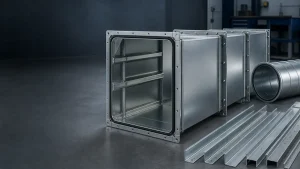
Ductwork produced on auto duct production line equipment with consistent dimensional control reduces connection irregularities before the duct reaches site. Consistent seam geometry, accurate flange profiles, and repeatable fitting dimensions reduce both the sealing labor required and the probability of early sealant failure at joints that were never well-fitted to begin with.
When evaluating persistent leakage in a system that has already been sealed, it is worth assessing whether duct fabrication quality problems are making durable sealing difficult to achieve at a system level.
10.FAQ
Q1: What is the best way to seal commercial HVAC ductwork?
Answer: Mastic sealant applied to accessible seams, joints, plenum connections, and register boots is the standard approach for most commercial duct sealing work. For systems with significant leakage in concealed or inaccessible duct sections, aerosol sealing can address those areas without requiring structural access. Most commercial projects use both: manual sealing on accessible defects, aerosol on concealed runs where physical access would be impractical.
Q2: Is mastic or foil tape better for duct sealing?
Answer: Mastic is generally more durable at seams, joints, and connections subject to air pressure and thermal cycling. It conforms to irregular surfaces and maintains adhesion over time. Foil tape rated to applicable UL 181 requirements is a practical choice for clean, accessible, localized applications such as boot connections or flat seams in good condition. Ordinary cloth-backed duct tape is not suitable for either use.
Q3: Can aerosol sealing fix inaccessible duct leaks?
Answer: Yes—that is its primary application. The process pressurizes the duct system and introduces adhesive particles that deposit at leak edges from inside the duct, sealing gaps in runs that are embedded in walls, concealed above inaccessible ceilings, or insulated without access panels. Large openings and physically damaged sections still require manual repair before the process begins.
Q4: How is commercial duct leakage measured?
Answer: Duct leakage is typically measured using a calibrated fan and pressure measurement equipment. The duct system is isolated—all terminals blocked—and the fan pressurizes the duct to a standard test pressure. The airflow required to maintain that pressure represents the system leakage. This test is conducted before and after sealing to quantify the improvement. Some aerosol sealing systems measure leakage as an integrated part of the application process.
Q5: How do you know if duct sealing worked?
Answer: Repeat the same leakage test used before the work began. A confirmed reduction in measured leakage is the primary indicator. Supplementary checks include terminal airflow measurements in previously underperforming zones and inspection of sealed surfaces after cure. Post-work comfort improvement alone is not a reliable acceptance criterion—leakage reduction should be quantified.
Q6: When should ductwork be replaced instead of sealed?
Answer: Replacement or physical repair is necessary when sections are crushed, structurally collapsed, disconnected, severely corroded, or have openings too large for sealant to bridge. Sections with sustained moisture damage or significant pest intrusion should be assessed for replacement. Sealant applied over these conditions will not hold. A pre-work inspection that documents defect type—not just location—makes this determination straightforward.
11.Duct Sealing as a Measurable Performance Outcome
Duct sealing is most effective when treated as a measured HVAC performance project rather than a maintenance call. That means quantifying leakage before specifying a method, separating physical repair from sealing in the scope, selecting the right technique for the access conditions, and requiring post-work evidence that the improvement was achieved.
The workflow is consistent: survey and measure, repair physical defects, seal according to access and system conditions, restore insulation, then retest. What varies is the complexity of each step—and the quality of the contractor who executes it.
For facilities teams dealing with persistent leakage in a system that has already been sealed once, it is worth examining whether the ductwork itself has the dimensional consistency and joint geometry that supports durable sealing. Duct fabrication quality plays a direct role in how effectively a distribution system can be sealed and maintained over its service life.