1. What Is HVAC Duct Leakage Testing?
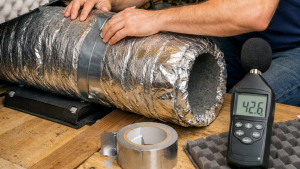
HVAC duct leakage testing is a diagnostic process used to measure how much conditioned air escapes from a duct system before reaching its intended supply points. Using a calibrated fan device known as a duct blaster, technicians pressurize the duct network to 25 Pascals and record airflow in cubic feet per minute (CFM25). The result reveals how airtight — or how leaky — the system truly is.
For HVAC contractors, engineers, and duct fabricators, understanding leakage testing is not just about passing inspections. It is about delivering systems that perform efficiently over their full service life.
2. Why Duct Leakage Testing Matters
The numbers are significant. Studies consistently show that typical duct systems lose between 20% and 30% of conditioned air through leaks. In commercial buildings with extensive duct networks, the cumulative energy waste can be substantial — driving up operating costs and reducing occupant comfort.
Beyond energy loss, leaky ducts create additional problems:
- Uneven temperatures across zones, leading to occupant complaints
- Increased equipment wear, as HVAC units run longer to compensate for lost airflow
- Moisture intrusion, which promotes mold growth inside ductwork
- Degraded indoor air quality, as unconditioned air from attics or crawlspaces enters the supply stream
For duct fabricators and contractors, leakage performance is directly tied to the quality of the duct sections produced. Poorly fabricated joints, inconsistent seam sealing, and dimensional inaccuracies all contribute to leakage rates that fail compliance thresholds.
3. Leakage Standards You Need to Know
Duct leakage compliance is governed by several widely adopted codes and certification programs:
| Standard | Leakage Limit | Application |
|---|---|---|
| IECC (new construction) | ≤ 4 CFM25 per 100 ft² | Residential, rough-in or final |
| IECC (completed building) | ≤ 6-8 CFM25 per 100 ft² | Residential, post-occupancy |
| ASHRAE 90.1 | Varies by climate zone | Commercial buildings |
| Energy Star New Homes | ≤ 4 CFM25 per 100 ft² | Certified residential program |
| SMACNA | Leakage Class 3-48 | Industrial and commercial duct |
SMACNA (Sheet Metal and Air Conditioning Contractors’ National Association) classifies ductwork into leakage classes based on operating pressure. Higher-pressure systems require tighter fabrication tolerances and more rigorous sealing practices to achieve compliance.
4. How Duct Leakage Testing Is Performed
There are two primary test methods used in the field:
Duct Pressure Testing (DP)
A technician seals all supply and return registers, then connects a duct blaster fan to the system through a central return grille. The fan pressurizes the duct network to 25 Pa above ambient pressure. The airflow required to maintain that pressure — measured in CFM25 — represents the leakage rate. Higher CFM readings indicate greater leakage.
This test can be performed at two stages:
- At rough-in: ducts installed but building not yet enclosed — easiest point for repairs
- At final: building complete but before occupancy — required by most codes
Leakage to Outside Testing (LTO)
LTO testing adds blower door equipment to pressurize the entire building envelope simultaneously. This method distinguishes between leakage to conditioned space (less critical) and leakage to outside (more critical for energy loss). It provides a more precise picture of where energy is actually escaping.
5.How Duct Fabrication Quality Affects Leakage Results
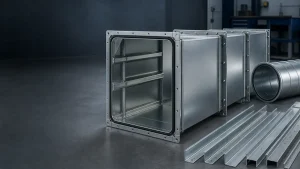
Leakage testing reveals the outcome, but leakage performance is determined much earlier — during duct fabrication. The quality of joints, seams, and connections produced on the shop floor directly determines how a duct system will perform on test day.
Key fabrication factors that influence leakage rates include:
Joint and seam integrity: Duct sections that are formed with precise Pittsburgh seams or snaplock profiles hold tighter tolerances and require less field sealant to achieve compliance. Equipment that produces consistent, repeatable seam geometry reduces the variability that leads to leakage failures.
Dimensional accuracy: Flanges and connectors that do not match specified dimensions create gaps at connection points — one of the most common sources of field leakage. CNC-controlled duct fabrication lines maintain dimensional consistency across high-volume production runs.
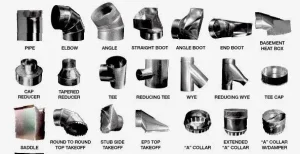
Fitting fabrication: Elbows, transitions, and offsets are higher-risk leak points than straight duct runs. Automated fitting production ensures geometry accuracy that hand-fabricated fittings cannot consistently achieve.
For duct fabrication shops looking to help their contractor customers meet leakage standards consistently, investing in equipment that delivers dimensional precision and seam integrity is the most direct path to better test results.
6.When Should Duct Leakage Testing Be Performed?
Testing requirements vary depending on the project type:
- New construction: Required at rough-in or final stage under IECC and most state energy codes
- HVAC system replacement: Recommended before new equipment installation to assess existing duct condition
- Renovation projects: Required when ductwork is substantially modified or extended
- Pre-purchase inspections: Valuable for commercial property buyers assessing building envelope performance
- Routine maintenance: Periodic testing helps detect leakage that develops over time from joint deterioration or physical damage
Early-stage testing — particularly at rough-in — gives contractors the opportunity to locate and seal leaks before walls are closed, significantly reducing repair costs and re-test delays.
7. Build Ducts That Pass — Before the Tester Arrives
Duct leakage testing is a quality verification step, but the real work happens during fabrication. Systems built with precision equipment, consistent seam profiles, and accurate fitting geometry arrive on the job site closer to compliance — reducing sealant costs, labor time, and the risk of failed inspections.
Durmahvac designs and manufactures duct fabrication equipment built for the precision demands of today’s energy codes. Whether you produce spiral duct, rectangular duct, or complete fittings packages, our machines are engineered to help your duct systems meet leakage standards from the first section to the last.
Contact our team to learn how Durmahvac equipment can help your operation build tighter, more compliant duct systems.