Rectangular ducts are the backbone of most HVAC air distribution systems. The machines used to fabricate them — cutting, forming, folding, and seaming sheet metal — directly determine the quality and efficiency of the entire production process.
1. What Is a Rectangular Duct Machine?
A rectangular duct machine is industrial equipment used to process sheet metal into finished rectangular air duct sections. These machines typically handle galvanized steel (0.5–1.5 mm), stainless steel, and aluminum sheet across multiple fabrication stages.
2. Types of Rectangular Duct Machines
2.1 Lock Forming Machine
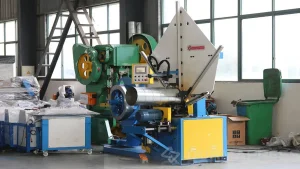
Roll-forms the Pittsburgh seam — the longitudinal joint that closes a duct panel into a box shape. Hardened steel rollers deliver consistent seam profiles at production speed without welding.
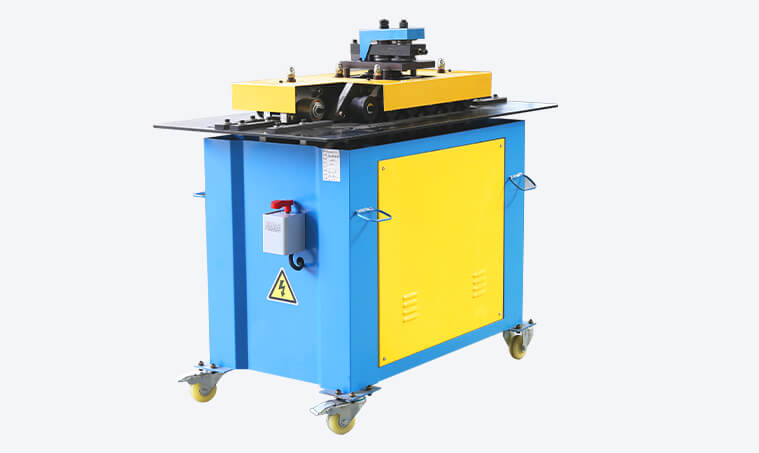
Roll-forms flanges directly onto duct panel ends, creating built-in connection points for joining duct sections with corner clips. Eliminates separate angle iron frames and speeds up both fabrication and on-site installation.
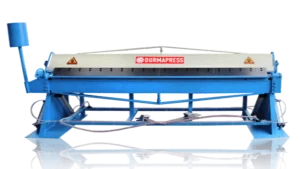
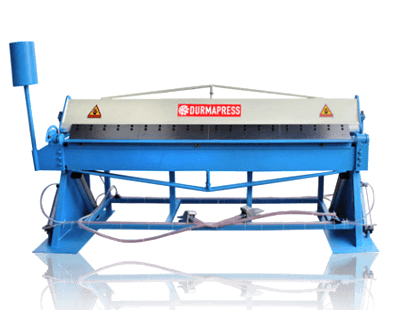
2.3 Folding Machines
Fold pre-cut duct blanks into their final rectangular shape. Durmapress offers three configurations:
- Pneumatic TDF Folding Machine — Fast pneumatic cycles for high-volume TDF duct production
- Pneumatic Folding Machine — Versatile pneumatic folder for mid-volume environments
- Enhanced Manual Folding Machine — Precise mechanical control for custom or small-batch work
2.4 Cutting & Shearing Machines
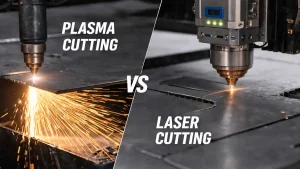
- CNC Plasma Cutting Machine — Precision cutting of complex profiles, notches, and holes across multiple materials. CNC control supports batch programming for mixed duct sizes.
- Electrical Shearing Machine — Efficient straight-line cutting for standard duct blanks, with clean burr-free edges at consistent feed speeds.
Applies hydraulic pressure to fully press and seal the Pittsburgh seam after folding, ensuring an airtight finish along the duct length. A critical step for preventing air leakage in pressurized duct systems.
2.6 Supporting Equipment
- Pneumatic Corner Mounting Machine — Rapidly drives corner clips into TDF flange joints for fast duct assembly.
- Variable Hydraulic Angle Cutting Machine — Cuts angle iron to precise lengths for duct reinforcement frames, with variable hydraulic control for different profiles.
3.Key Features to Compare
| Feature | What to Look For |
|---|---|
| Processing capacity | Sheet width range, material thickness, compatible materials |
| Drive system | Manual / pneumatic / hydraulic — matched to your output volume |
| Control system | PLC for standard production; CNC for fast size changeovers |
| Build quality | Hardened rollers, precision guide rails, robust welded frame |
| After-sales support | Spare parts availability, technical training, remote diagnostics |
3.Frequently Asked Questions (FAQ)
Q1: What materials can these machines process?
Most machines are optimized for galvanized steel (0.5–1.5 mm). Higher-spec models also handle stainless steel and aluminum. Confirm compatibility with the manufacturer before purchasing.
Q2: What is the difference between a lock forming machine and a TDF flange forming machine?
The lock former creates the longitudinal seam that closes the duct body. The TDF machine forms the transverse flanges at duct ends used to connect sections together. Both are needed in a complete fabrication setup.
Q3: Do I need both a plasma cutter and a shearing machine?
Not necessarily. A shearing machine handles most straight-line cutting efficiently. A plasma cutter is better when complex profiles or hole patterns are required. For standard duct work, a shearing machine alone is usually sufficient.
4.Conclusion
Each stage of rectangular duct fabrication — cutting, forming, folding, seaming, and assembly — requires purpose-built equipment. Durmapress manufactures a complete range of rectangular duct machines to cover every step of the process.
Contact our team to discuss the right configuration for your production requirements.