Duct forming machines are not a single piece of equipment — they are a category of specialized forming tools, each designed to handle a specific stage of HVAC duct fabrication. From shaping flanges and closing seams to producing spiral round ducts and reinforcing duct panels, each machine type plays a distinct role in transforming flat sheet metal into ready-to-install ductwork.
This guide covers 10 types of duct forming machines used in HVAC manufacturing, what each one does, where it fits in the production workflow, and how to choose the right equipment for your fabrication operation.
1.Quick Reference: 10 Types of Duct Forming Machines
| Machine Type | Primary Function | Typical Application | |
|---|---|---|---|
| 1 | Duct Plasma Cutting Machine | CNC-controlled cutting of sheet metal into duct shapes | All duct types |
| 2 | Folding Machine | Bends metal panels to precise angles | Rectangular duct fabrication |
| 3 | Sheet Metal Plate Rolling Machine | Rolls flat sheets into cylindrical shapes | Round duct body production |
| 4 | Duct Lock Forming Machine | Forms lock seam profiles for weld-free duct joining | Rectangular & round ducts |
| 5 | Seam Closing Machine | Mechanically locks duct seams for airtight joints | Round, rectangular ducts & elbows |
| 6 | Flange Forming Machine | Forms TDC/TDF flanges on rectangular duct edges | Commercial & industrial HVAC |
| 7 | Spiral Round Tube Making Machine | Continuously forms spiral round ducts from coil stock | Airports, warehouses, industrial HVAC |
| 8 | Elbow Making Machine | Produces elbows of various angles automatically | Airflow direction changes |
| 9 | Duct Beading Machine | Rolls reinforcement ribs onto duct panels | Structural reinforcement, noise reduction |
| 10 | Punch Press Machine | Creates holes, slots, and connector components | Duct assembly connectors |
2.1. Duct Plasma Cutting Machine
2.1 Duct Plasma Cutting Machine
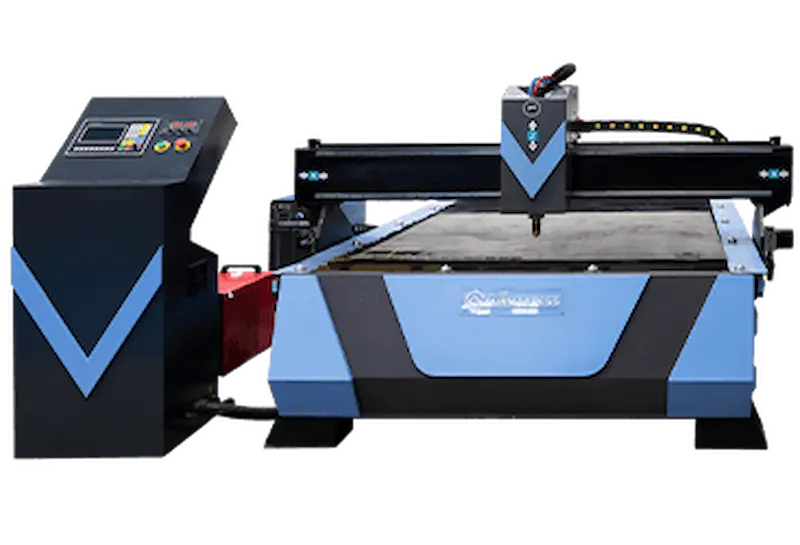
Before any forming can take place, sheet metal needs to be cut into the correct flat patterns. A duct plasma cutting machine uses a CNC control system to precisely cut flat metal sheets into the shapes required for duct fabrication — straight sections, elbows, tees, and reducers — based on design files such as CAD drawings. These cut pieces then move on to folding, rolling, and forming operations.
Plasma cutting is well-suited to the thin and medium-thickness sheet metal commonly used in duct fabrication. It produces clean cut edges with minimal thermal deformation and virtually no large heat-affected zone, reducing the need for post-cut grinding and cleanup. By adjusting cutting parameters — current, air pressure, and cutting speed — the machine can handle different materials and thickness ranges without changing the fundamental setup.
Applications : Cutting flat sheet metal for all duct types — rectangular, round, spiral, and fittings — across commercial and industrial HVAC projects.
Product Recommendations:
Plasma Cutting Machine
2.2 Folding Machine
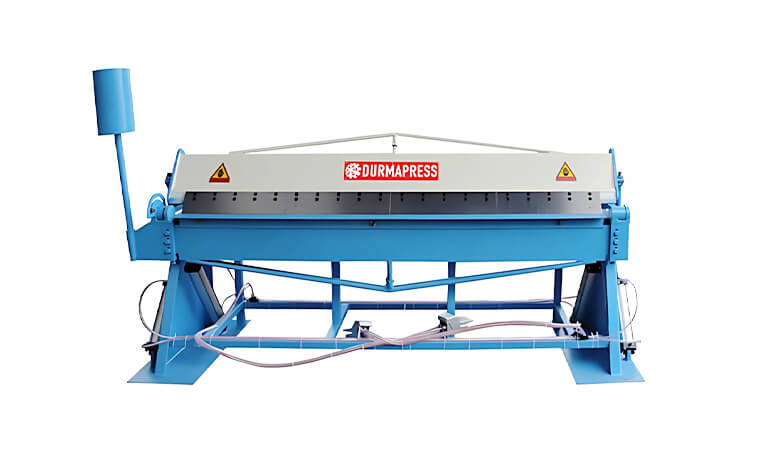
A folding machine bends flat metal sheets into the precise angles and dimensions required for rectangular duct panels. In duct fabrication, dimensional accuracy at the folding stage directly determines whether panels fit together cleanly during assembly — panels that are even slightly out of square create corner gaps that leak air and slow down installation on site.
What sets duct folding machines apart from standard press brakes is the folding mechanism itself. Rather than pressing a punch down onto the sheet, the folding beam swings up to form the bend. This eliminates relative sliding motion between the tooling and the sheet surface, which is critical when working with galvanized or pre-painted duct material — the coating stays intact and the surface finish is preserved.
Applications : Rectangular duct panel fabrication in manual, semi-automatic, and automated production lines.
Product Recommendations:
Pneumatic Folding Machine
2.3 Sheet Metal Plate Rolling Machine
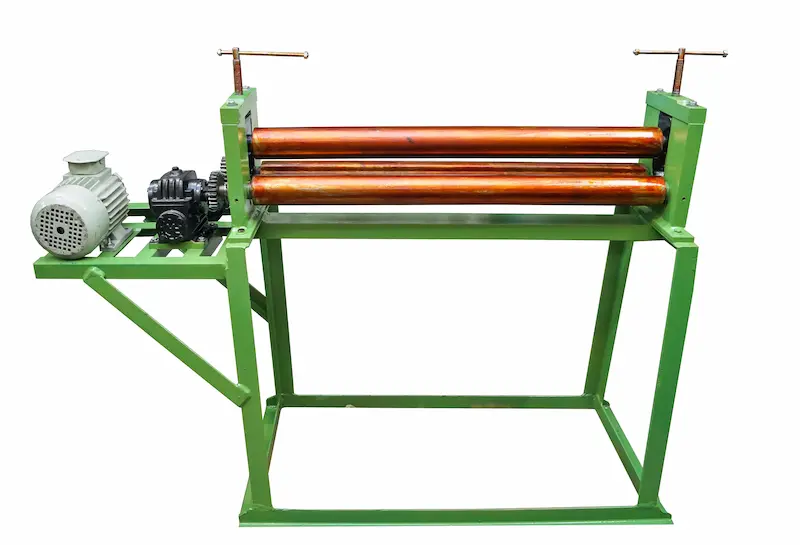
A sheet metal plate rolling machine uses multiple sets of rollers to progressively apply pressure to flat metal sheets, gradually bending them into cylindrical or curved shapes. The resulting cylinder forms the body of a round duct section. By adjusting roller spacing and feed angle, the same machine can produce tapered reducers for connecting ducts of different diameters.
Unlike single-point bending, the rolling process distributes forming stress evenly across the entire sheet surface. This preserves the original mechanical properties of the metal and minimises surface work hardening, resulting in a more consistent and structurally sound duct body. The high forming speed of rolling machines also makes them practical for mass production of standard-diameter round ducts.
Applications : Round duct body production, tapered reducers, curved fittings, and custom-diameter duct sections.
Product Recommendations:
Roller Bending Machine
2.4 Duct Lock Forming Machine
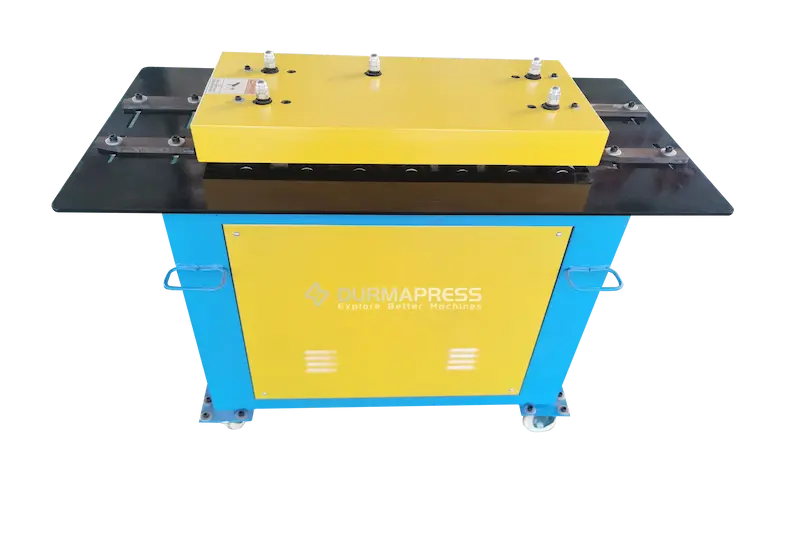
A duct lock forming machine creates lock seam profiles along the edges of sheet metal, enabling duct sections to be joined mechanically without welding, riveting, or fasteners. Common lock seam profiles include the Pittsburgh female lock, right-angle male lock, and standing seam — each suited to different duct assembly requirements.
The lock seam is one of the most important structural features of a fabricated duct. A well-formed lock seam creates a permanent, airtight connection that holds under both positive and negative system pressure. The machine works by progressively rolling the sheet edge through a series of forming stations, each step bringing the profile closer to its final geometry without overstressing the material.
Applications: Seam forming on rectangular and round ducts; used at the edge-preparation stage before seam closing.
Product Recommendations:
Round Duct Lock Forming Machine
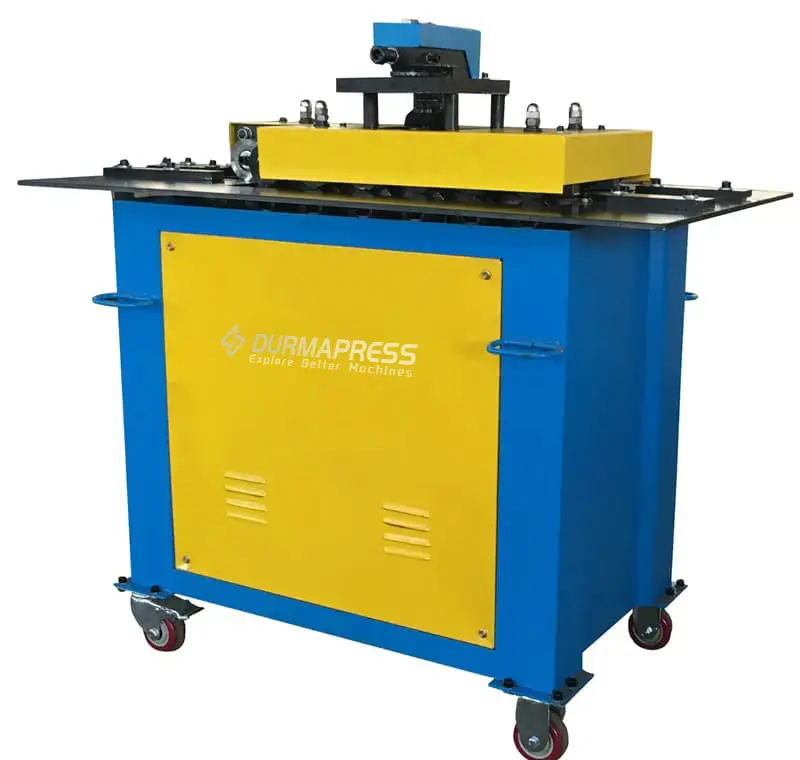
Pittsburgh Lock Former Machine
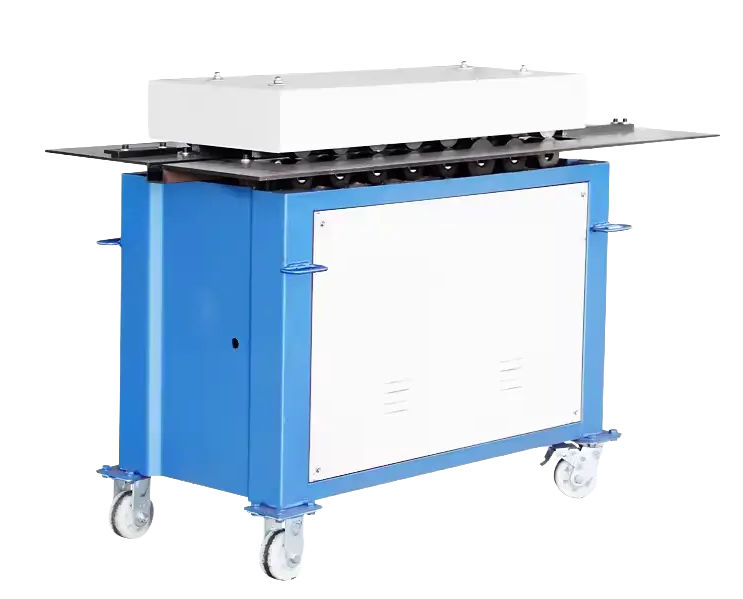
S Lock Forming Machine
2.5 Seam Closing Machine
A seam closing machine is the final forming step before a duct section is ready for assembly. It mechanically folds and compresses the formed lock seam edges together, creating a tight, permanent joint that improves both structural strength and airtightness. Unlike manual hammering — the traditional method — seam closing machines use mechanical power (electric, hydraulic, or pneumatic) to apply consistent, controlled closing force across the full length of the seam.
Seam closing machines are available in configurations suited to different duct types — round ducts, rectangular ducts, elbows, and fittings each have their own closing requirements. The choice between hydraulic, pneumatic, and electric drive depends on production volume, available utilities, and the material thickness range being processed.
Applications: Seam closing on round ducts, rectangular ducts, elbows, and fittings across all HVAC fabrication workflows.
Product Recommendations:
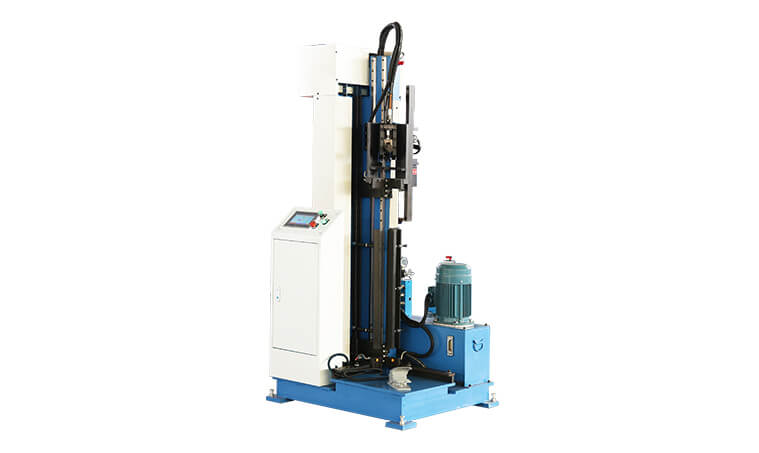
Hydraulic Seam Closing Machine
2.6 Flange Forming Machine
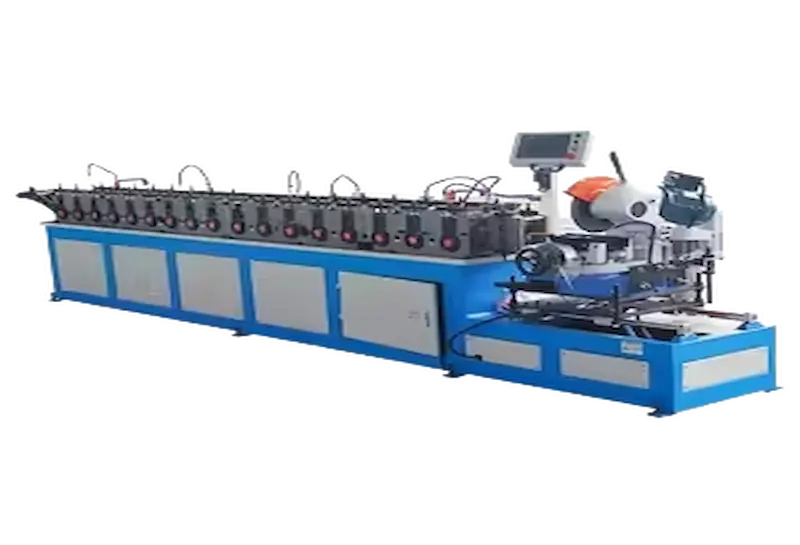
A flange forming machine rolls reinforced connection edges — TDC or TDF flanges — directly onto the perimeter of rectangular duct panels. These flanges serve as the mechanical interface between duct sections, allowing bolt-together assembly with gaskets or sealant to create airtight connections across the full duct system.
TDF flanges produced by flange forming machines offer clear advantages over traditional angle steel flanges. The roll-forming process creates flanges directly on the duct panel — no separate flange fabrication, no welding, no separate attachment step. The resulting flange is an integral part of the duct panel, making it structurally more reliable and significantly lighter than bolted-on angle iron. For large commercial projects, this weight reduction meaningfully reduces structural load on building ceilings and supports.
Applications : Rectangular duct connection flanges for commercial buildings, factories, hospitals, and large-scale HVAC installations.
Product Recommendations:
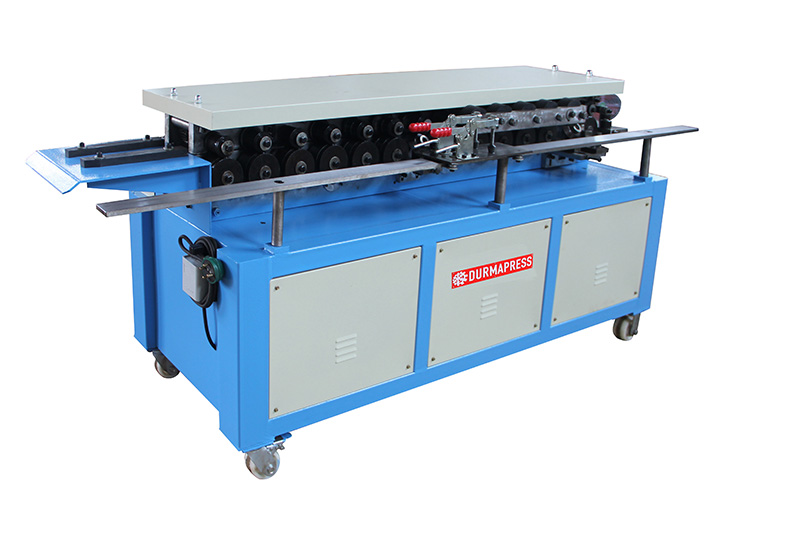
TDF Flange Forming Machine
TDC Flange Forming Machine
2.7 Spiral Round Tube Making Machine
A spiral round tube making machine takes metal strip from a coil and continuously forms it into a round tube by bending the strip and interlocking the edges in a continuous spiral pattern. The process integrates unwinding, forming, interlocking, and cutting into a single uninterrupted workflow — raw coil stock enters one end and finished round duct sections exit the other.
The spiral interlocking structure gives this type of duct distinct performance advantages. The helical seam distributes mechanical stress evenly around the circumference, providing high resistance to both internal pressure and external loads. Airtightness is excellent — the continuous spiral lock leaves no straight seam runs that could open under pressure cycling. PLC control and modular machine design make operation straightforward and maintenance manageable even in high-throughput production environments.
Applications : Airports, shopping malls, warehouses, data centers, and industrial ventilation systems requiring long runs of round duct with consistent diameter and high airtightness.
2.8 Elbow Making Machine
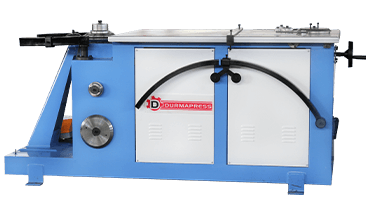
An elbow making machine automatically produces elbows at specified angles — typically 30°, 45°, 60°, and 90° — for use wherever a duct system needs to change direction. The machine handles both the forming and seam locking steps in one operation, producing finished elbows that are dimensionally consistent and ready for installation without further adjustment.
The key advantage over manual elbow fabrication is consistency. Hand-formed elbows vary in angle, curvature radius, and seam quality — variations that show up as misalignment and leakage in the installed system. A dedicated elbow machine eliminates these variables by applying the same controlled forming force to every piece. The resulting elbows fit standard duct connections without shimming, sealing, or rework.
Applications : Direction changes in round and rectangular duct systems; standard fittings in all commercial and industrial HVAC installations.
Product Recommendations:
Elextric Elbow Making Machine
2.9 Duct Beading Machine
A duct beading machine uses matched roller dies to press one or more continuous raised ribs — beads — into the surface of duct panels. These beads serve as integrated reinforcement, increasing the panel’s resistance to deflection under system pressure without adding external reinforcement frames or additional material.
In many modern duct systems, beading partially or completely replaces welded or riveted external angle reinforcement. This produces a cleaner duct exterior, eliminates the labor and material cost of attaching separate reinforcement, and speeds up the production process. Beyond structural performance, beaded panels are measurably better at resisting the low-frequency pressure fluctuation noise — the drumming or booming sound — that unbraced sheet metal ducts generate under variable airflow conditions. The ribs can also act as positioning guides during duct section assembly, improving installation speed and alignment accuracy.
Applications : Medium and large rectangular ducts with high pressure ratings; HVAC systems in noise-sensitive environments such as offices, hotels, and hospitals.
2.10 Punch Press Machine
A punch press machine uses interchangeable dies to create holes, slots, cutouts, and shaped connector components in sheet metal. In duct fabrication, punch presses are used to produce the assembly hardware that holds duct systems together — corner codes, brackets, and connection plates that reinforce joints and allow modular duct sections to be bolted or clipped into a complete system.
The versatility of the punch press comes from its tooling system. Changing dies allows the same machine to produce different hole patterns, connector profiles, and cutout shapes without reconfiguring the machine itself. This makes it practical for both standard production runs and custom connector requirements. High precision across repeated operations ensures consistent connector quality — critical for duct systems where connection hardware must align accurately across hundreds of identical joints.
Applications : Production of corner codes, mounting brackets, connection plates, and other assembly hardware for rectangular duct systems.
3.Duct Forming Machines by Duct Type
Different duct shapes require different combinations of forming equipment. Use the table below to identify the key machines needed for your specific production requirements.
| Duct Type | Key Machines Required |
|---|---|
| Rectangular Duct | Plasma cutting machine, folding machine, duct lock forming machine, flange forming machine, seam closing machine, punch press machine |
| Spiral Round Duct | Spiral round tube making machine(self-contained) |
| Round Duct | Plasma cutting machine, plate rolling machine, duct lock forming machine, seam closing machine, elbow making machine |
| Reinforced Duct | Above machines + duct beading machine |
4. How to Choose the Right Duct Forming Machine
Selecting duct forming equipment depends on three primary factors: production volume, duct type, and whether future automation is planned. Matching equipment to actual production needs avoids both underinvestment and overinvestment.
| Production Situation | Recommended Equipment | Key Reason |
|---|---|---|
| Small batch / custom fabrication | Standalone forming machines | Lower investment, flexible operation |
| Medium volume, budget-conscious | Semi-automatic forming line | Balance of output and cost |
| High-volume manufacturing | Full automatic duct line | High speed, consistent quality, lower labor cost |
| Mixed duct types and sizes | Combination of standalone machines | Adaptable to different profiles and dimensions |
5.FAQ
They handle two sequential steps in the same process. The duct lock forming machine creates the seam profile — pressing the edge of the sheet metal into the correct lock geometry. The seam closing machine then compresses those formed edges together to complete the mechanical lock. Both machines are required; one prepares the seam, the other closes it.
No. Rectangular, round, and spiral ducts each require different forming operations. A spiral round tube making machine, for example, is purpose-built for spiral duct and cannot be used for rectangular duct fabrication. Building a production line requires selecting the right combination of machines for your specific duct type and output requirements.
Most duct forming machines are designed primarily for galvanized steel, the standard material in HVAC duct fabrication. Depending on the model, stainless steel and aluminum are also processable. Standard material thickness for rectangular duct production typically ranges from 0.5mm to 1.5mm, though this varies by machine specification and duct pressure class.
A standalone duct forming machine performs one specific operation. An automatic duct line integrates multiple machines — feeding, cutting, grooving, forming, and locking — into a single continuous workflow. Standalone machines offer flexibility for smaller or custom operations with lower upfront investment; automatic duct lines deliver higher throughput and lower labor cost per unit at scale.
A complete rectangular duct production line typically requires a plasma cutting machine, folding machine, duct lock forming machine, flange forming machine, seam closing machine, and punch press machine. For high-volume production, these are integrated into an automatic duct line running all operations in sequence.
6.Conclusion
Each of the 10 duct forming machines covered in this guide plays a specific, non-interchangeable role in HVAC duct fabrication. Plasma cutting prepares the raw material; folding, rolling, and lock forming shape it; seam closing and flange forming prepare it for assembly; spiral forming, elbow making, beading, and punch pressing handle specialized production needs. No single machine covers the full process — effective duct fabrication requires selecting the right combination for your duct type and production volume.
If you are configuring a new duct production line or upgrading existing equipment, contact our team for machine selection advice tailored to your production profile and output requirements.
View our full range of HVAC duct forming machines | Contact us for equipment selection advice.