1. What Is Static Pressure in HVAC Systems?
Static pressure is the resistance that air encounters as it moves through ductwork, filters, coils, dampers, and other system components. It acts as a measure of how hard your HVAC blower fan must work to push or pull air through the entire system. Unlike airflow, which describes air in motion, static pressure describes the force air exerts against duct walls in all directions — even when the system is at rest.
In HVAC applications, static pressure is measured in inches of water column (in. WC). A well-balanced system typically operates between 0.1 and 0.5 in. WC for residential applications and up to 2.0 in. WC for commercial systems.
1.1 Static Pressure vs Airflow
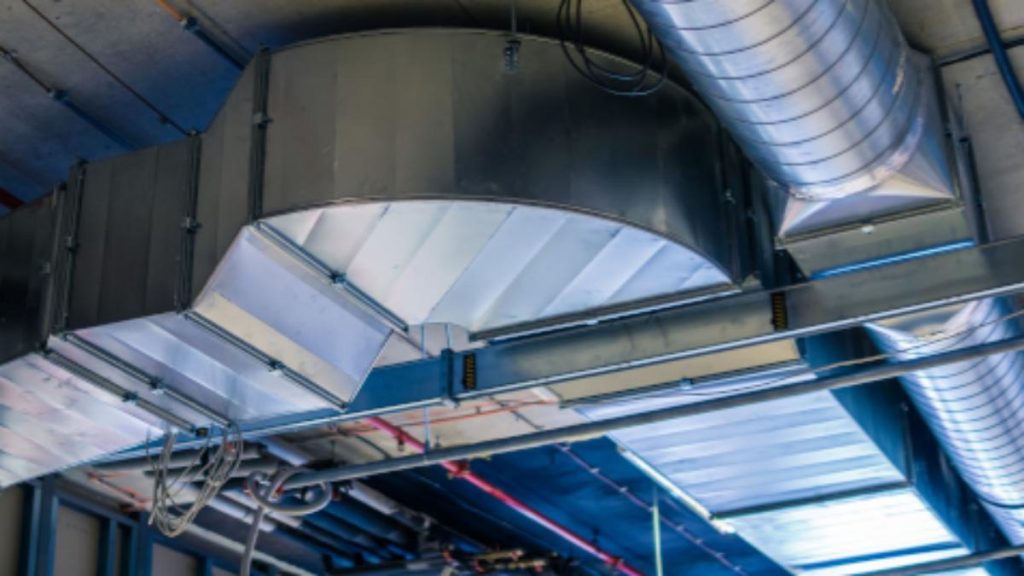
Static pressure and airflow have an inverse relationship: as static pressure increases, airflow decreases. When ductwork becomes more restrictive — due to clogs, undersized ducts, or excessive bends — the system resistance rises, and less air reaches the supply vents. A blower fan operating against high static pressure delivers significantly lower CFM (cubic feet per minute) than its rated capacity.
1.2 Static Pressure vs Dynamic Pressure
| Type | Definition | Unit | Impact on System |
|---|---|---|---|
| Static Pressure | Force air exerts on duct walls in all directions; exists due to system resistance | in. WC / Pa | Determines blower workload; affects airflow volume |
| Dynamic Pressure | Pressure created by air movement in the direction of flow; zero when air is still | in. WC / Pa | Represents kinetic energy of airflow; increases with velocity |
2.Why Is Static Pressure Important in HVAC Systems?
Getting static pressure right is not optional — it directly determines whether your HVAC system delivers the comfort, efficiency, and lifespan it was designed for. Problems at either extreme carry real costs.
2.1 Impact on Airflow Performance
When static pressure is too high, air cannot move freely through the duct system. Supply vents nearest to the air handling unit receive adequate airflow, while rooms further down the duct run suffer from weak or uneven distribution. The result is hot and cold spots, inadequate ventilation, and a system that runs longer without achieving the set temperature.
2.2 Impact on Energy Consumption
Both high and low static pressure increase energy consumption. High static pressure forces the blower motor to run at higher RPMs or for longer periods. Low static pressure often indicates air leakage, meaning conditioned air escapes before reaching its destination, and the unit compensates by running longer. Either way, the energy bill rises.
2.3 Impact on Indoor Comfort
Static pressure imbalances create humidity problems alongside temperature issues. When airflow is insufficient, air conditioning coils cannot remove moisture effectively, leaving rooms feeling sticky in summer. In pressurized environments such as cleanrooms or hospital operating rooms, maintaining precise static pressure is not simply a comfort matter — it is a contamination control requirement.
3.What Causes Static Pressure in Ductwork?
Most articles list the causes without explaining the physics behind them. Here is what is actually happening inside your duct system.
3.1 Duct Length
Every meter of ductwork adds friction resistance. The longer the air must travel, the more energy it loses to friction along the duct walls. This is why long duct runs — especially those serving distant zones — require careful sizing to compensate for accumulated pressure loss.
3.2 Duct Fittings and Elbows
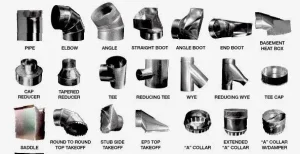
Bends, tees, reducers, and transitions all create turbulence that adds to system resistance. A 90° elbow can add the equivalent pressure drop of several meters of straight duct. Minimizing unnecessary fittings — or using 45° elbows where possible — noticeably reduces static pressure.
3.3 Air Filters
A clogged or overly restrictive filter is one of the most common — and most overlooked — causes of high static pressure. A standard 1-inch filter rated MERV 8 adds roughly 0.1 in. WC under clean conditions. A heavily soiled filter can multiply that resistance several times over, effectively starving the blower of return air.
3.4 Dampers and Grilles
Partially closed or improperly sized dampers restrict the cross-sectional area available for airflow, increasing local resistance. Grilles and diffusers with high face velocity also contribute. In multi-zone systems, balancing damper positions across all branches is critical to maintaining consistent static pressure throughout the network.
3.5 Duct Size
Undersized ductwork is the structural cause of chronically high static pressure. When a duct is too small for the CFM it carries, air velocity rises sharply, and so does resistance. Oversized ductwork has the opposite effect: low velocity, low static pressure, and potential for inadequate air delivery. Correct sizing from the start — guided by a Manual D calculation — prevents both extremes.
4. How to Measure HVAC Duct Static Pressure
Measuring static pressure is a standard diagnostic step before any ductwork modification or equipment change. Done correctly, it tells you exactly where the system is underperforming.
4.1 Tools Required
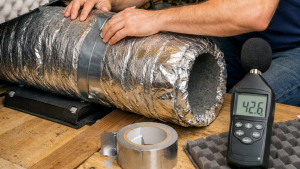
- Manometer: The primary instrument for measuring static pressure. Digital manometers offer readouts in in. WC or Pa and are preferred for field testing. Analog versions remain common in commercial applications.
- Pressure Gauge / Magnehelic Gauge: Used for continuous monitoring at fixed points in the system, such as across air handling units or filter banks.
- Drill and Test Port Plugs: Small holes (typically 3/8 inch) are drilled into the duct to insert the pressure probes.
4.2 Where to Measure Static Pressure
The standard measurement points are:
- Return side (negative pressure): Drill a test port approximately 6 inches upstream of the blower or air handler inlet.
- Supply side (positive pressure): Drill a test port approximately 6 inches downstream of the blower outlet, after the coil.
Adding the absolute values of both readings gives you the Total External Static Pressure (TESP).
4.3 Step-by-Step Measurement Process
- Turn the HVAC system on and allow it to reach normal operating conditions (at least 10 minutes).
- Drill a 3/8-inch test port on the return side, 6 inches before the blower inlet.
- Insert the manometer probe into the return-side port. Record the negative pressure reading.
- Drill a second test port on the supply side, 6 inches after the blower outlet.
- Insert the probe into the supply-side port. Record the positive pressure reading.
- Add the absolute values of both readings to calculate Total External Static Pressure.
- Seal both test ports with plugs after measurement.
- Compare the result against the air handler’s rated ESP specification on its data plate.
5.Understanding Static Pressure Readings
A pressure reading only becomes useful when you know what it means. Here is how to interpret what the manometer tells you.
5.1 Typical Residential Static Pressure Range
For residential forced-air systems, the acceptable Total External Static Pressure range is 0.1 to 0.5 in. WC. Most equipment manufacturers rate their units at 0.5 in. WC. Readings consistently above this threshold indicate restriction; readings significantly below may point to duct leakage or oversizing.
5.2 Typical Commercial HVAC Static Pressure Range
Commercial systems, particularly Variable Air Volume (VAV) and high-velocity systems, operate at higher static pressures — typically 0.5 to 2.0 in. WC, with some industrial applications exceeding 3.0 in. WC. The design static pressure is specified by the mechanical engineer based on the system type and duct layout.
5.3 Warning Signs of Abnormal Readings
| Reading | Condition | Recommended Action |
|---|---|---|
| > 0.5 in. WC (residential) | High static pressure | Inspect filters, check duct sizing, look for closed dampers |
| < 0.1 in. WC (residential) | Low static pressure | Check for duct leaks, inspect blower, verify duct sizing |
| Fluctuating readings | Unstable pressure | Check for loose duct connections, inspect VAV dampers |
| Return >> Supply | Blower overworked | Inspect return duct sizing and filter condition |
6.High Static Pressure: Causes and Solutions
High static pressure is the more common of the two problems, and its consequences compound over time if left unaddressed.
6.1 Undersized Ductwork
When duct cross-sections are smaller than the design requires, air velocity climbs and friction resistance spikes. This is especially common in older buildings where ductwork was sized for earlier, lower-capacity equipment.
6.2 Dirty Air Filters
A filter loaded with dust restricts return airflow, forcing the blower to work against a shrinking inlet opening. Static pressure rises on the return side, and total system performance drops. Replacing filters every 30–90 days (depending on the environment) is the simplest preventive measure.
6.3 Closed Dampers
Partially or fully closed dampers block airflow at specific branches, concentrating the system’s pressure where it cannot escape. In multi-zone systems, this is a common result of poorly balanced commissioning.
6.4 Excessive Elbows and Fittings
Each fitting adds local resistance. In tightly routed mechanical rooms or between structural members, duct runs often accumulate multiple 90° elbows in quick succession — each one adding equivalent resistance of several feet of straight duct.
6.5 Solutions for High Static Pressure
- Upsize supply or return duct sections to reduce air velocity
- Replace clogged filters immediately; increase filter change frequency
- Open and rebalance zone dampers
- Substitute 90° elbows with 45° elbows or swept elbows where space allows
- Add a return air duct if the return side is undersized
- Have an HVAC engineer perform a Manual D recalculation if structural changes have altered the building layout
7. Low Static Pressure: Causes and Solutions
Low static pressure receives less attention but causes equally serious performance issues.
7.1 Duct Leakage
Gaps at joints, unsealed penetrations, and damaged insulation all allow conditioned air to escape into unconditioned spaces. The system loses pressure before air reaches the supply vents, resulting in weak delivery and wasted energy.
7.2 Oversized Ductwork
Ductwork that is too large for the system’s CFM output results in very low air velocity and correspondingly low static pressure. While this sounds benign, it can cause poor air distribution, inadequate mixing, and condensation problems on duct surfaces.
7.3 Fan Problems
A failing blower motor, worn belts, dirty blower wheel, or incorrect fan speed setting reduces the fan’s ability to generate adequate pressure. This is diagnosable by comparing the measured static pressure against the fan’s rated performance curve.
7.4 Solutions for Low Static Pressure
- Seal all duct joints with mastic sealant or foil tape; conduct a duct leakage test
- Resize oversized duct sections to increase air velocity
- Inspect and service the blower: clean the wheel, check belts, verify motor speed settings
- Verify that all zone dampers are appropriately open and not obstructed
8. Static Pressure vs Pressure Drop
These two terms are related but not interchangeable. Confusing them leads to measurement errors and misdiagnosed problems.
| Factor | Static Pressure | Pressure Drop |
|---|---|---|
| Definition | Total resistance force air exerts on duct walls at a given point | Difference in pressure between two points across a component or duct segment |
| What it measures | System-wide resistance level | Local resistance of a specific component (filter, coil, fitting) |
| Measurement point | Single location in the duct | Two locations — upstream and downstream of a component |
| Typical use | System sizing, fan selection, overall diagnostics | Component performance evaluation, filter change indicators |
| Unit | in. WC or Pa | in. WC or Pa (differential) |
9. How to Reduce Excessive Static Pressure in HVAC Duct Systems
If your system is consistently reading above 0.5 in. WC on a residential installation — or above its rated ESP — these are the practical steps to bring it back into range.
9.1 Increase Duct Size
Enlarging a supply trunk from 16×8 inches to 18×8 or 20×8 inches meaningfully reduces air velocity and system resistance without requiring a complete ductwork redesign. Even replacing just the first few meters of an oversized duct run can shift the pressure balance favorably.
9.2 Optimize Duct Layout
Enlarging a supply trunk from 16×8 inches to 18×8 or 20×8 inches meaningfully reduces air velocity and system resistance without requiring a complete ductwork redesign. Even replacing just the first few meters of an oversized duct run can shift the pressure balance favorably.
9.3 Reduce Unnecessary Fittings
Every transition, reducer, and offset adds resistance. When a fitting can be avoided through better routing, remove it. Where fittings are unavoidable, use long-radius elbows and gradual transitions rather than abrupt changes in direction or cross-section.
9.4 Use Proper Duct Fabrication Techniques
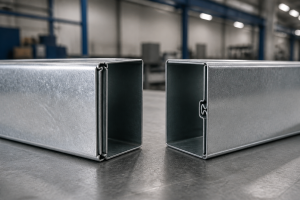
Duct quality directly affects long-term static pressure performance. Poorly fabricated seams leak air; undersized cross-sections restrict flow; incorrectly formed fittings generate turbulence. Precision fabrication — Precision fabrication — using Auto Duct Line equipment that holds dimensional tolerances — produces ductwork that performs to its rated specifications throughout its service life.
10.FAQ
Q1: What is a good static pressure in HVAC?
For residential systems, a Total External Static Pressure between 0.1 and 0.5 in. WC is considered acceptable, with 0.5 in. WC being the standard rated value for most residential air handlers. Commercial systems vary by design, typically ranging from 0.5 to 2.0 in. WC. Always compare your measurement against the equipment manufacturer’s specification rather than a generic benchmark.
Q2: Can high static pressure damage HVAC equipment?
Yes. Prolonged high static pressure causes blower motor overheating, shortened motor and belt lifespan, cracked heat exchangers, coil freezing, and compressor damage. It also places stress on duct joints, accelerating leak development. Addressing high static pressure promptly extends equipment life and prevents costly repairs.
Q3:How often should static pressure be checked?
Static pressure should be measured during initial commissioning, after any ductwork modification, and as part of annual HVAC maintenance. If occupants report uneven temperatures, increased noise, or higher-than-expected energy bills, an immediate static pressure test is warranted.
Q4:Is static pressure the same as airflow?
No. Static pressure and airflow are related but opposite in nature: higher static pressure results in lower airflow, and vice versa. Airflow (CFM) measures how much air moves through the system per minute; static pressure measures the resistance that air must overcome to move. A healthy HVAC system achieves both its design CFM and its rated static pressure simultaneously.
11. Conclusion
Static pressure is the single measurement that most accurately reflects the overall health of an HVAC duct system. It connects duct sizing, filter condition, fitting layout, fan performance, and indoor comfort into one diagnostic number. Understanding it — how to measure it, what causes it to rise or fall, and how to correct it — is the foundation of effective duct system design and maintenance.
For duct fabrication equipment that produces the dimensional accuracy required for consistent static pressure performance, explore Durmahvac’s duct fabrication solutions.