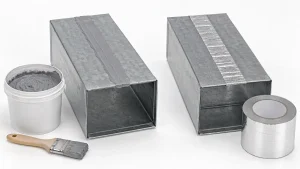
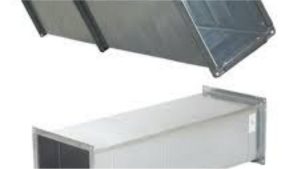

Leaking ductwork is one of the most common and costly faults in an air distribution system. Conditioned air escapes before reaching the space, equipment runs longer than designed, and unfiltered air is drawn in from attics, crawlspaces, and mechanical rooms.
Fixing it is straightforward. Choosing the right sealing product is where most people get stuck — largely because the phrase “duct tape” is used to describe at least three different products with very different performance.
This guide clarifies the terminology first, then compares the two materials that actually compete in professional duct sealing.
Duct Mastic vs Duct Tape: The Quick Answer
For permanent air duct sealing, duct mastic is generally better for irregular joints, collars, and gaps, while UL 181-rated foil tape performs well on clean, smooth seams. Ordinary cloth-backed duct tape should not be used as a permanent duct seal.
If you are choosing a permanent duct-sealing method, the practical comparison is usually duct mastic vs UL 181-rated foil tape — not mastic vs ordinary cloth-backed duct tape. The hardware-store product that shares the name is a general-purpose repair tape, not a duct closure system.
| Factor | Duct Mastic | UL 181-Rated Foil Tape | Ordinary Duct Tape |
|---|---|---|---|
| Best for | Irregular joints, gaps | Clean, smooth seams | Temporary repairs |
| Durability | High | Good | Poor for permanent sealing |
| Application | Brush / knife | Peel and press | Peel and press |
| Cure time | Yes | No | No |
| Gap filling | Excellent | Limited | Poor |
| Surface preparation | Important | Critical | Important |
| Permanent duct sealing | Yes | Yes, when listed | No |
| Typical use | Joints, collars, transitions | Straight seams, flat surfaces | Temporary repairs |
1.Why Air Duct Sealing Matters
Leakage occurs wherever two components meet — longitudinal seams, transverse joints, collars, register boots, plenums, and equipment transitions. Small openings compound across a full system, and the effects show up quickly:
- Reduced airflow to the zones that need it most
- Uneven temperatures between rooms or zones
- Longer equipment runtime and higher energy consumption
- Dust, humidity, and unconditioned air drawn into the system
Sealing addresses leakage, but it does not correct undersized ducts, crushed flex runs, disconnected sections, or poor system design. If you want to know how much air the system is actually losing before buying materials, duct leakage testing gives you a measured baseline instead of a visual guess.
2.What Is Duct Mastic?
Duct mastic is a thick, spreadable sealant formulated for HVAC ductwork, applied with a brush, putty knife, gloved hand, or caulking tool depending on viscosity and packaging.
Unlike tape, it does not depend on a thin pressure-sensitive adhesive film. It fills and bridges the seam, then cures into a continuous air barrier that follows the actual geometry of the joint. That behavior is why it handles flanges, round collars, and irregular transitions where flat tape struggles to make full contact.
Key characteristics:
- Conforms to complex and uneven joint geometry
- Cures to a durable, continuous seal
- Requires cure time before the joint is disturbed or insulated
- Wider gaps and duct board seams typically require compatible fiberglass mesh reinforcement
- Messy to apply; needs gloves, drop cloths, and physical access to the joint
Mastics also fall within the UL 181 closure system framework — products listed under UL 181A-M are intended for rigid ducts and UL 181B-M for flexible ducts. Certification is not exclusive to tape. Confirm the product is intended for HVAC duct sealing rather than general construction use, and check compatibility with your duct material.
3.What Is Duct Tape?
Judge a tape by its listing and technical data sheet, not by its silver appearance or its name. Three distinct products commonly get called “duct tape.”
3.1 Ordinary Cloth-Backed Duct Tape
The general-purpose fabric-reinforced tape sold in every hardware store. It is strong, tears by hand, and is genuinely useful for temporary repairs, bundling, and protection.
It is a poor permanent duct sealant. Heat cycling, dust, and surface oils degrade the adhesive over time, and it commonly loosens, curls at the edges, and falls off — usually in an attic or crawlspace where nobody notices. Easy application is not the same as a lasting airtight seal.
3.2 UL 181-Rated Foil HVAC Tape
Foil HVAC tape uses a metal foil backing with an adhesive engineered for duct service conditions. This is the tape that deserves a fair comparison with mastic.
UL 181 splits closure systems by duct type: UL 181A covers rigid air ducts, UL 181B covers flexible ducts. Pressure-sensitive foil tapes are listed as 181A-P, heat-activated tapes as 181A-H, and flexible duct tapes as 181B-FX. When you specify HVAC foil sealing tape, matching the listing to the duct type matters more than brand preference.
Strengths:
- Fast to apply with no cure time
- Clean, with no drop cloths or cleanup
- Conforms well to smooth, flat, and gently curved surfaces
- Immediate coverage that is easy to inspect visually
Limitations:
- Performance depends heavily on surface preparation and firm applied pressure
- Wrinkles, bridging, and lifted edges create leak paths
- Adhesion can suffer on dusty, oily, cold, or damp surfaces
- Quality varies significantly between products
3.3 Mastic Tape
Mastic tape is a roll product carrying a thick, highly conformable sealing compound rather than a thin adhesive film. It combines the convenience of tape with better gap-filling behavior around irregular joints, and is useful where brush-applied mastic is hard to control — confined corners, overhead connections, tight equipment transitions.
Formulations and approved uses vary by manufacturer, so verify the technical data sheet rather than assuming the word “mastic” guarantees mastic-level performance.
4.Duct Mastic vs Foil Tape: Key Differences
4.1 Seal Durability
A continuous mastic layer seals the full seam profile rather than covering it, which is why properly applied mastic tends to hold up well over time on accessible joints. Tape performance depends on adhesive chemistry, substrate compatibility, applied pressure, and edge integrity — get any of those wrong and the seal fails early.
Duct movement matters as well. Systems that shift or vibrate can crack a rigid cured coating or stress a taped seam, so secure joints mechanically before sealing. Neither material is universally more durable; results depend on the specific product, substrate, and installation conditions.
4.2 Application Speed
Tape is faster and cleaner, but demands precise cutting, alignment, and firm pressure across the full contact area. Mastic takes longer, requires cure time, and creates cleanup work, yet handles complex geometry with far less technique-dependent risk.
4.3 Gap and Joint Compatibility
- Sheet metal ducts: both work; mastic preferred on collars and flanges
- Duct board: mastic with compatible fiberglass mesh at seams
- Flex duct connections: seal the inner liner to the collar; mechanical draw bands are normally required
- Plenums and equipment transitions: mastic for irregular profiles, tape for clean flat panels
4.4 Surface Preparation
Dusty, oily, corroded, or damp surfaces can reduce adhesion and compromise sealing performance, depending on the product. Pressure-sensitive tapes are the most sensitive to contamination; mastics tolerate slightly more variation but still require a sound, dry substrate. Always follow the temperature and substrate requirements printed on the technical data sheet.
4.5 Cost and Long-Term Value
Compare cost per completed, durable joint — not price per bucket or roll. Include material, tools, protective supplies, labor time, cure delays, and the probability of rework. A cheaper product that fails in two years and requires a return trip into an attic is the more expensive option.
5. What Is the Best Sealant for Air Ducts?
Duct mastic is generally the preferred sealant for irregular joints, gaps, collars, plenums, and other connections where a continuous, gap-filling seal is needed.
By duct type:
- Sheet metal ducts: mastic on transverse joints, collars, and flanges after mechanical fastening
- Duct board: mastic with compatible mesh, applied per the closure system listing
- Flex duct connections: mastic at the liner-to-collar interface, combined with an approved clamp or draw band
- Plenums: mastic across irregular corners and transitions
- Equipment transitions: mastic where geometry is complex, provided service access is preserved
Because coverage rate, cure time, and approved substrates vary between formulations, compare the duct mastic sealant options against your actual duct materials before ordering in volume.
5.1 Which Duct Sealing Method Should You Use?
| Duct condition | Recommended option |
|---|---|
| Irregular joint | Duct mastic |
| Gap requiring reinforcement | Mastic + fiberglass mesh |
| Clean straight seam | UL 181-rated foil tape |
| Tight access | Foil tape / mastic tape |
| Duct board seam | Mastic + compatible mesh |
| Flex duct to collar | Mastic + mechanical clamp |
| Service access panel | Approved removable tape |
| Temporary repair | Temporary repair tape |
| Permanent HVAC sealing | Mastic or UL 181-rated tape |
6.What Is the Best Tape for Ductwork?
6.1 UL 181-Rated Foil Tape
The default choice for taped duct sealing. Select the listing that matches the duct type — 181A-P or 181A-H for rigid ducts, 181B-FX for flexible ducts — and apply it to a clean, dry surface with firm pressure across the full contact area.
6.2 Mastic Tape
Best where a conformable, gap-tolerant seal is needed but brush application is impractical. Verify the product’s listing and approved substrates before specifying it.
6.3 Why Ordinary Duct Tape Is Not Recommended
It is not a listed duct closure system, its adhesive is not designed for sustained duct service temperatures, and field experience consistently shows edge lift and adhesive failure over time. Use it for temporary holds only.
7. When to Use Duct Mastic
- Joints are accessible and mechanically secured
- Seams are irregular, round, flanged, or awkwardly shaped
- Long-term durability is the priority
- Gaps require mesh reinforcement
- The connection will not need to be opened for service
Do not use mastic as a substitute for mechanical repair, and avoid permanently sealing access panels that require inspection.
7.1 When to Use Foil HVAC Tape
- Surfaces are clean, dry, smooth, and compatible
- Seams are narrow and can be fully covered with firm pressure
- Space is too tight for brush application
- A connection may need to be reopened later, where the equipment manufacturer permits tape
- Fast turnaround matters and cure time is unacceptable
Apply it wrinkle-free, with full contact and no lifted edges.
7.2 When to Use Mastic and Tape Together
The strongest results usually come from combining products deliberately:
- Fasten and repair the joint mechanically
- Reinforce wider gaps or duct board seams with compatible fiberglass mesh
- Apply mastic over the reinforced or irregular areas
- Use UL 181-rated tape on clean flat details and serviceable panels
Reinforcing mesh, mastic tape, and foil tape are three different products with three different roles. Verify compatibility between layers and follow each manufacturer’s instructions.
8. How to Seal Air Ducts Correctly
8.1 Inspect
Look for disconnected joints, loose fasteners, crushed or torn flex duct, corrosion, and wet insulation. Identify components that must remain accessible for service. If a section is damaged rather than leaking, repair or replace it — sealant will not fix it.
8.2 Clean
Remove dust, oil, deteriorated tape, and moisture, and let the surface dry fully. Check the product’s temperature and substrate requirements before starting.
8.3 Mechanically Secure
Fasten loose joints with sheet metal screws, clamps, or draw bands as appropriate. Sealants are closure materials, not structural connectors.
8.4 Apply Mastic or Tape
For mastic, apply a continuous layer across the full seam rather than dabbing the visible opening, and use mesh where the listing requires it. For tape, cut adequate length, press across the entire contact area, and eliminate wrinkles and bridging. Avoid pushing excess material into the airstream.
8.5 Inspect and Test
Check for pinholes, cracks, uncoated areas, and lifted edges after curing and after the system has run. Visual inspection has limits — where whole-system airtightness matters, use measured leakage testing to confirm results.
9. Common Duct-Sealing Mistakes
- Using ordinary duct tape because of its name
- Applying tape to dusty, oily, cold, or damp surfaces
- Spreading mastic too thin or leaving breaks in the coating
- Sealing a loose joint without mechanical fasteners
- Trying to bridge a large opening with sealant alone
- Covering damaged ductwork instead of repairing it
- Permanently sealing panels that require service access
- Insulating over the repair before it cures
- Assuming one visible patch means the system is tight
10.DIY Duct Sealing vs Professional Service
Accessible, minor leaks on sound ductwork are reasonable to handle in-house with the right materials. Professional duct sealing services make more sense when the system sits in a difficult attic or crawlspace, leakage is widespread, ducts are damaged or disconnected, or the work involves equipment connections and code-sensitive installations. Contractors also bring diagnostic testing, which turns “it looks sealed” into measured performance — the difference that matters when energy cost is the reason for the project.
11.Frequently Asked Questions
Q1:Can you use regular duct tape on air ducts?
No. Ordinary cloth-backed duct tape is a general-purpose repair product, not a listed duct closure system. Heat, dust, and time break down its adhesive, and it commonly peels away from seams. Use a product listed for HVAC duct sealing.
Q2:What is the best tape to seal air ducts?
A UL 181-rated foil tape matched to your duct type — 181A-P or 181A-H for rigid ducts, 181B-FX for flexible ducts. Mastic tape is a good alternative where the joint is irregular or access is tight.
Q3:Is foil tape better than duct mastic?
Neither is universally better. Foil tape wins on clean, smooth surfaces, tight spaces, and speed. Mastic wins on irregular joints, wider gaps, and continuous coverage. Match the product to the joint and access conditions.
Q4:What is better for duct sealing, mastic or foil tape?
For most permanent sealing work, mastic is the stronger default on joints, collars, and transitions, with UL 181-rated foil tape used on clean straight seams and serviceable panels. Many professional installations use both.
Q4:Is mastic tape the same as duct mastic?
No. Duct mastic is a spreadable sealant applied with a brush or knife; mastic tape is a roll product with a thick conformable sealing layer. They overlap in purpose but differ in application method, coverage, and approved uses.
Q5:Does duct mastic need mesh tape?
Wider gaps, irregular joints, and duct board seams typically require compatible fiberglass mesh reinforcement. Narrow, tight seams often do not. Follow the sealant manufacturer’s stated gap threshold rather than a universal rule.
Q6:How long does duct mastic take to dry?
Cure time varies with product, layer thickness, temperature, humidity, and airflow. Surface drying occurs well before full cure. Use the technical data sheet as the controlling source, and avoid insulating over an uncured seal.
Q7:Can duct mastic be used on flex duct?
Yes, for sealing the inner liner to the metal collar, combined with an approved clamp or draw band. Do not coat the outer jacket indiscriminately. Products listed under UL 181B-M are intended for flexible duct closure.
12.Choosing the Right Duct Sealing Product
The duct mastic vs duct tape question resolves quickly once the terminology is clear. Ordinary cloth-backed duct tape does not belong in a permanent HVAC seal. Properly applied duct mastic generally delivers a more durable seal on irregular joints and gaps, while UL 181-rated foil tape performs well on clean, smooth seams and connections that may need to be reopened.
Three rules prevent most failures:
- Repair and fasten the joint before sealing it
- Prepare the surface properly — preparation often affects performance more than brand
- Verify the finished seal instead of assuming it worked
If you are standardizing materials across multiple installations, our technical team can help you match duct sealing products to your duct materials, joint types, and operating conditions. Contact us for technical data sheets and application recommendations.
Technical References
- UL 181A — Closure Systems for Use with Rigid Air Ducts (Parts P, H, M)
- UL 181B — Closure Systems for Use with Flexible Air Ducts (Parts FX, M)
- SMACNA duct construction and sealing guidance
- Manufacturer technical data sheets for the specific sealant or tape selected