Quick Answer: A whistling return air vent is almost always caused by a dirty or ill-fitting filter, a blocked return grille, or closed supply registers. Start by turning the system off, checking the filter size, orientation, and fit, then clear any obstructions around the grilles. If the whistle persists after those checks, the problem likely requires professional static-pressure diagnosis.
1.Why Is My Return Air Vent Whistling?
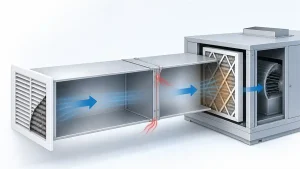
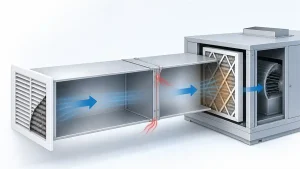
A return air vent whistles when air is forced through a restriction or gap faster than that opening was designed to handle. The blower pulls a fixed volume of air through the return path — grille, filter, duct, and air handler — and when anything narrows that path, air velocity rises through the remaining space. Fast-moving air passing a grille fin, filter frame edge, or duct seam creates turbulence that registers as a whistle.
The sound is not a mechanical failure. It is a pressure symptom that points to a specific restriction somewhere in the return-air pathway.
1.1 How Airflow Restrictions Cause Whistling
HVAC technicians measure resistance to airflow through a system as static pressure. Every component in the return path contributes some resistance. When that resistance increases — due to a dirty filter, a blocked grille, or an undersized duct — the air has to squeeze through whatever opening remains, and its velocity climbs.
In systems with single-speed blowers, the motor continues drawing the same current against the elevated resistance, working harder to maintain output. In systems with variable-speed or ECM motors, the blower may adjust its operating point to compensate, though this does not eliminate the restriction or the noise. The whistle is the acoustic result of high-velocity air at the point of restriction — regardless of motor type.
1.2 Whistling vs. Hissing vs. Mechanical Squealing
Not every high-pitched HVAC noise has the same cause. Before checking the filter, identify which sound you are actually hearing.
Whistle: Starts and stops with the indoor blower. Pitch may change with fan speed. Often gets louder when a door closes or a register is shut. This is an airflow problem.
Hiss: Softer, more sustained, resembling air escaping from a slow leak. If it continues after the blower stops, or appears to come from the indoor coil cabinet, refrigerant lines, or outdoor unit, contact an HVAC technician — particularly if it is accompanied by ice on the lines, reduced cooling, or other system abnormalities. A brief whoosh or soft hiss at shutdown is usually normal pressure equalization.
Squeal or screech: Harsh and mechanical, worst at startup, unaffected by filter changes or door position. This points to a blower motor bearing, worn belt, or condenser fan motor — a separate problem from airflow restriction.
Identifying the correct sound category prevents unnecessary checks and avoids unsafe DIY attempts on unrelated systems.
2. 6 Common Causes of a Whistling Return Vent
The causes below run from most common and easiest to check, to structural issues that require professional assessment. More than one restriction may be present at the same time.
2.1 Dirty or Restrictive Air Filters
A dirty filter is the most frequent single cause. As the media accumulates dust, pet dander, and debris over weeks of operation, resistance increases gradually. What starts as a faint rush can become a persistent whistle before the filter looks obviously clogged.
A clean filter can produce the same result if it is denser than the system was designed to accommodate. Air filter efficiency is graded on the MERV scale, and higher-rated filters capture finer particles by using tighter media — which also increases resistance to airflow. Whether a specific filter causes a problem depends not just on the MERV rating, but also on filter thickness, face area, the blower’s design capacity, and the return duct’s cross-section. A filter rated MERV 13 may work fine in one installation and restrict airflow significantly in another.
As a general guide, most standard residential systems are documented by the equipment manufacturer for a specific filter efficiency range. Check the equipment documentation rather than selecting the highest available rating by default.
| MERV Range | Typical Application | General Airflow Resistance |
|---|---|---|
| MERV 1–4 | Basic fiberglass filters | Very low — minimal filtration benefit |
| MERV 5–8 | Standard residential pleated | Moderate — balanced for most standard systems |
| MERV 9–12 | Improved allergen capture | Higher — verify compatibility with the installed equipment |
| MERV 13+ | Fine particles, allergy and premium filters | Higher still — may require a larger filter cabinet; confirm with equipment specifications |
Actual pressure drop varies with filter construction, thickness, face velocity, and installation. These are general resistance trends, not absolute ratings. Consult equipment manufacturer specifications for your system.
If you are considering upgrading filter efficiency, an HVAC technician can measure static pressure before and after to confirm whether the system can handle the additional resistance without adverse effects.
2.2 Incorrect Filter Size or Installation
This cause is particularly relevant when the whistle starts immediately after a filter change.
A filter that is slightly undersized for its slot leaves a narrow gap around the frame. Air accelerates through that gap, creating a concentrated, sharp whistle at the filter cabinet even when the filter media is clean. Nominal dimensions printed on a filter label may differ slightly from actual dimensions — comparing the new filter against the old one is a reliable check.
Other installation issues to check:
- Backward installation: The airflow arrow on the filter frame should point toward the blower or air handler. Correct this if it is reversed.
- Packaging not removed: Clear plastic wrapping is easy to miss in a dim utility space. A fully wrapped filter blocks most of the return airflow.
- Filter not seated flat: The filter should sit evenly in the rack without gaps along the edges. If the access panel does not close and latch securely, air bypasses the filter through the gap around the panel.
- Filter bowing inward: A filter flexing toward the blower during operation may indicate elevated return-side suction. It can also expose a gap along one edge and worsen the noise. Persistent bowing with a correctly sized, standard-efficiency filter warrants further diagnosis — the filter may be exposing an underlying return-capacity limitation rather than being the root cause.
2.3 Blocked Return Grilles and Restricted Room Airflow
Return grilles need clear space to draw room air. Furniture pushed against a wall grille, an area rug covering a floor return, drapes across a hallway grille, or a buildup of lint on the grille face all reduce effective intake area.
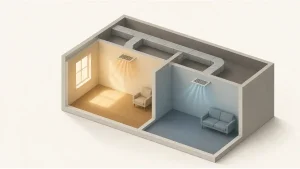
Room air pathways matter as well. In rooms with a supply register but no dedicated return grille, air must find its way back through door undercuts, transfer grilles, or open doorways. When bedroom doors are kept closed and no adequate transfer path exists, those rooms pressurize slightly, and the main return grille elsewhere in the system has to work harder against the imbalance. Opening interior doors is a useful diagnostic step — if the whistle changes noticeably, room pressurization is part of the problem.
2.4 Closed Supply Registers or Damper Problems
Closing supply registers in unused rooms is widely believed to redirect airflow and save energy. In most ducted systems with single-speed blowers, it does neither. The blower continues moving the same volume of air; closing registers reduces the number of outlets available for that air to exit, which raises supply-side pressure. That pressure imbalance affects the return side as well, and whistling can appear at open registers, grille seams, or duct joints.
The degree of pressure increase depends on the number of closed registers, the duct system design, blower type, and any system controls — there is no single threshold that applies to all installations. As a practical rule, keep all supply registers open unless a technician has specifically assessed and adjusted the system for zone control.
Stuck or partially closed balancing dampers in branch ducts can create a similar effect in a specific zone. In systems with motorized zone dampers, a damper stuck partway closed will produce a whistle that appears and disappears with zone calls.
2.5 Undersized Return Grilles or Ducts
If the whistle persists after checking filters, grilles, and registers, the restriction may be structural. A return grille or return duct that cannot supply the volume of air the blower needs will drive air velocity at the available opening to the point of noise — and no filter or grille adjustment will resolve it.
This problem frequently surfaces when HVAC equipment is replaced. A modern high-efficiency furnace or heat pump may move more air than the original system, particularly in cooling mode. Ductwork that was sized for an older, lower-capacity installation may become a permanent bottleneck. The new equipment is not at fault; the existing duct capacity was not evaluated against its airflow requirements.
Physical signs that suggest an undersized return rather than a simple blockage:
- Loud rushing air at the return grille even with a clean filter and no visible obstructions
- Filter bowing inward consistently across different filter types
- Interior doors noticeably moved by pressure when the system starts
- Persistent temperature differences between rooms, particularly those farthest from the return
Confirming this requires static-pressure measurement — not replacement of filters or grilles.
2.6 Damaged, Kinked, or Leaking Ductwork
Flexible ductwork can be compressed under stored items, kinked around structural framing, or allowed to sag into tight bends over years of service. A partially collapsed run restricts that specific branch, producing a whistle at that register and comfort problems in the room it serves.
Return-side duct leaks create a different pattern. A joint that has pulled apart, or tape that has failed at a connection, can whistle as the blower draws air through the gap under suction. That air is also unfiltered and often unconditioned — pulling in attic or crawl-space air along with the noise. Supply-side leaks under pressure tend to be loudest in the attic, basement, or mechanical closet rather than at any register.
See signs your air ducts are leaking for a broader look at duct leak detection and its effect on system efficiency.
3.How to Stop a Return Air Vent from Whistling
3.1 Safe Checks You Can Perform Yourself
Work through this sequence before booking a service call. Each step can independently resolve the problem, and together they eliminate the most common causes.
- Turn the system off at the thermostat before handling any part of the return-air assembly.
- Inspect the filter. Pull it out and check: Is it visibly loaded with dust? Is the size correct? Is the airflow arrow pointing toward the blower? Has all packaging been removed?
- Check the fit. The filter should sit flat in the rack without gaps along the edges. The access panel should close and latch fully.
- Restart the system and listen. If the whistle stops or significantly reduces, the filter was the primary cause. Monitor over the next few days.
- Open all supply registers throughout the home, including rooms that are unused. Move furniture, rugs, and drapes away from return grilles.
- Open interior bedroom and hallway doors to check whether the whistle changes. A noticeable difference points to a room-pressurization issue.
- Inspect accessible ductwork from an attic hatch or crawl-space entry — without entering equipment compartments. Note any crushed flex runs, pulled duct joints, or failed tape for a technician to address.
- Document the sound’s location and timing — which grille is loudest, whether it worsens with fan speed, and what recently changed. This reduces diagnostic time when a technician arrives.
3.2 What Not to Do
Some common responses make the underlying problem worse or introduce new risks.
- Do not operate the system without a filter as a test or short-term workaround. Dust and debris drawn directly into the blower wheel and indoor coil can cause damage that far exceeds the cost of a correct filter.
- Do not open the furnace or air-handler cabinet panels, or remove filter-cabinet covers, while the system is running to test the noise. Accessing electrical components, the blower compartment, or the gas section of a furnace requires the system to be off and, in most cases, a qualified technician.
- Do not close additional registers to redirect airflow. This typically worsens duct pressure and may increase the whistle.
- Do not apply tape over grilles, register faces, or duct seams as a noise fix without understanding the airflow balance. Sealing parts of the return path without diagnosis can increase blower strain.
- Do not adjust blower wiring, motor speed settings, or electrical connections. These require professional instruments and carry both equipment and personal safety risks.
4.Why Did the Whistling Start After a Filter Change or HVAC Upgrade?
After a filter change, the most common reasons are a denser filter than the system was designed for, an undersized filter leaving a gap in the slot, backward installation, or packaging that was not fully removed. Run through the filter fit and orientation checks before assuming a deeper problem exists. If a new filter bows inward immediately or the whistle persists with a correctly installed standard-efficiency filter, the filter change may have exposed a pre-existing return-air limitation rather than causing it.
After an HVAC upgrade, the situation is different. A new furnace, heat pump, or variable-speed air handler may move a different volume of air than the equipment it replaced — particularly in cooling mode. Ductwork sized and balanced for an older system may not accommodate the new airflow profile. This is not a fault in the new equipment; it reflects a duct capacity that was never evaluated against the replacement system’s requirements.
If a system was quiet for years and developed a persistent whistle within days of a new installation, ask the installing contractor to measure static pressure and confirm whether the existing ductwork meets the equipment manufacturer’s airflow specifications.
5. Does Duct Cleaning Fix a Whistling Return Vent?
Rarely on its own, and it is worth being clear about why.
A whistle is a velocity and pressure symptom. Dust lying along the floor of a sheet-metal trunk does not meaningfully reduce that trunk’s cross-section. Cleaning it out produces cleaner ductwork — a legitimate benefit for indoor air quality — but does not resize an undersized return, reseat an ill-fitting filter, or repair a pulled duct joint. If the restriction is a blocked grille, a closed damper, or an undersized return drop, duct cleaning will not change those conditions.
The exception is a system that operated for an extended period without a filter, or with a filter that had fallen out of position. In those cases, debris can accumulate on the blower wheel and indoor coil — both airflow-critical surfaces. A coil matted with dust genuinely restricts airflow and can produce whistling along with reduced system efficiency. Cleaning the blower assembly and coil addresses a real restriction. But that is a targeted equipment-cleaning procedure, not a routine duct cleaning.
The appropriate order: filter and grille checks first, static-pressure measurement second, then targeted cleaning or duct repair based on what the measurement identifies. Booking a duct cleaning as the opening response to a whistle often leaves the system with clean ducts and the same noise.
6. When to Call an HVAC Technician
If the whistle remains after replacing or correctly refitting the filter, opening all supply registers, clearing return grilles, and opening interior doors, the remaining causes are structural or inside the equipment. At that point, further trial and error is unlikely to be efficient.
6.1 What a Static Pressure Test Can Reveal
A qualified HVAC technician diagnoses persistent airflow problems by measuring Total External Static Pressure (TESP) using a manometer — taking readings across the filter, indoor coil, supply ductwork, and return ductwork, then comparing them against the equipment manufacturer’s specified operating range. This identifies where the restriction is occurring, rather than applying the most probable fix and observing the result.
Based on those measurements, professional diagnosis may address:
- Return duct capacity relative to the blower’s airflow requirements
- Filter rack integrity, cabinet sizing, and access panel sealing
- Indoor coil condition and restriction from debris
- Duct sizing, branch-run capacity, and balancing damper positions
- Whether additional return capacity, duct modification, or blower adjustment is warranted
Static-pressure measurement is the practical difference between a permanent fix and a problem that recurs with the next filter change or seasonal adjustment.
6.2 Warning Signs That Need Prompt Attention
Contact an HVAC technician — and in some cases stop using the system — when the whistle is accompanied by any of the following:
- Weak airflow at multiple registers throughout the home — suggests a return system, blower wheel, or indoor coil issue
- Ice or frost on refrigerant lines or the indoor coil — restricted airflow is driving coil temperatures below freezing; turn the system off and arrange service
- Furnace shutting itself off and restarting repeatedly — may indicate the high-limit safety switch tripping due to restricted airflow; stop running the system and schedule an inspection
- Burning smell, gas smell, or carbon monoxide alarm — turn the system off immediately, evacuate the building, and contact emergency services or the gas utility before re-entering
- Refrigerant line hissing that continues after the blower stops, accompanied by reduced cooling capacity or visible frost — contact an HVAC technician; refrigerant work is regulated and requires certified personnel
- New grinding, squealing, or strong vibration from the air handler or outdoor unit — motor, bearing, or compressor issue, separate from airflow restriction
7. Frequently Asked Questions
Q1: Why does my return vent whistle after changing the filter?
Answer: The most common reasons are a filter denser than the system was designed for, a slightly undersized filter leaving a gap at the frame, backward installation, or packaging left on the filter. Check size, orientation, and fit before assuming a structural problem. If a new, correctly installed standard-efficiency filter still causes bowing or persistent noise, the filter change may have revealed a pre-existing return-air limitation.
Q2: Can a high-efficiency filter cause a whistling noise even when it is clean?
Answer: Yes, depending on the system. A clean high-MERV filter increases airflow resistance compared to standard media. Whether that causes a problem depends on filter construction, face area, blower capacity, and duct design. Check the equipment documentation for the manufacturer’s recommended filter efficiency range before upgrading significantly.
Q3: Why is my air filter bending or getting sucked inward?
Answer: A filter bowing toward the blower indicates elevated return-side suction — the blower is pulling harder than the return pathway can comfortably supply. A dirty filter or overly dense filter is the most common cause. If the bowing continues with a clean, correctly sized, standard-efficiency filter, the issue is likely an undersized return duct or grille, which requires static-pressure measurement to confirm.
Q4: Can closing supply registers make the system whistle?
Answer: Yes, in many cases. Reducing the number of open outlets raises pressure in the supply ducts, and the blower continues moving air through fewer paths. This can push air through seams and gaps and create pressure imbalances that affect the return side. Open all registers as a baseline troubleshooting step. The extent of the effect depends on how many registers are closed and the specific system design.
Q5: Does a whistling return vent mean I need new ductwork?
Answer: Not necessarily. Many cases resolve with a filter correction or by clearing an obstruction. Duct modification should only be considered after static-pressure measurement has identified a return-capacity or duct-design deficiency — not based on noise alone.
Q6: Why does the whistle only happen at high fan speed?
Answer: A restriction that is marginal at lower airflow produces detectable velocity and turbulence only when the blower ramps up. This pattern typically points to a return path that is slightly undersized for the equipment, or a filter slightly denser than the system handles well at maximum airflow. A technician can confirm by measuring static pressure at both fan speeds.
Q7: Is it safe to keep running the system while it whistles?
Answer: The whistle itself is not an immediate hazard, but the underlying restriction places additional demand on the blower and, in cooling mode, can contribute to indoor coil icing if airflow is reduced significantly. Treat it as a maintenance issue worth resolving promptly. If the whistle is accompanied by weak airflow, ice on the lines, repeated system shutdowns, or unusual smells, stop using the system and arrange professional service.
8. Conclusion
A whistling return air vent almost always points to restricted airflow — a filter issue, a blocked grille, a closed register, or a return path that cannot match the blower’s demand. The correct starting point is the filter: size, fit, density, and installation direction. Clear return grilles and supply registers, and open interior doors to check for room-pressurization effects.
If those checks do not resolve the noise, static-pressure measurement is the reliable next step. It identifies the actual restriction — whether that is at the filter rack, return duct, indoor coil, or elsewhere — and guides a targeted fix rather than a sequence of replacements. A whistle that recurs across multiple filter changes or seasons is usually telling you the same thing each time: the return pathway needs to be properly assessed, not just adjusted around.