Return air duct problems most commonly involve blocked grilles, clogged filters, leaking duct joints, undersized return pathways, and damaged or poorly routed ducts. Warning signs include weak airflow at supply registers, uneven room temperatures, noisy return grilles, and persistent dust or odors. Start by checking the filter and return grille; if the problem persists, measure static pressure, verify airflow, and inspect the return duct for leakage or damage.
The sections below walk through each fault type, how to confirm it with field measurements, and how to match the repair to the confirmed cause.
1.What Is a Return Air Duct and Why Does It Matter?
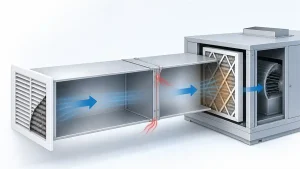
An HVAC system moves air in a closed loop. Conditioned supply air enters occupied spaces through registers and diffusers; return air travels back to the air handler through return grilles, ducts, and the return plenum, where it passes through filtration and re-enters the conditioning equipment.
The return path is not passive. It determines how much air the blower can actually move, how effectively the filter captures particulates, how well the coil or heat exchanger performs, and whether pressure relationships between rooms stay within a comfortable and safe range.
The practical principle is direct: a system cannot deliver more air than it can receive back. When the return side is restricted, leaking, or inadequately sized, the consequences affect comfort, equipment operation, and indoor air quality at the same time.
2. Common Symptoms of Return Air Duct Problems
The following signs—particularly when they appear together, or when basic maintenance has not resolved them—are worth investigating:
- Weak airflow at supply registers, even with a clean filter and a functioning blower
- Hot or cold rooms, especially rooms that improve noticeably when interior doors are left open
- Longer-than-expected HVAC run times or difficulty maintaining the set temperature
- Whistling, rumbling, or unusually loud return grilles, which can indicate restricted or high-velocity return airflow
- Filters that load heavily, bend inward, or need unusually frequent replacement
- Excess dust, persistent odors, or humidity complaints that do not respond to standard maintenance
- Reduced cooling effectiveness or poor moisture removal in humid conditions
2.1 Symptoms That Warrant Prompt Investigation
Some presentations indicate a more serious or urgent fault:
- Recurring equipment shutdowns, evaporator coil freezing, or furnace overheating
- Musty, attic-like, crawlspace-like, or garage-like odors entering occupied spaces
- Visible crushed, wet, or separated ductwork found during routine inspection
- Doors moving or seals flexing when interior doors are closed and the system is running
- Comfort complaints that are zone-wide rather than isolated to a single outlet
These conditions often indicate return leakage drawing air from unconditioned or contaminated spaces, significant airflow restriction, or both—situations where continued operation can accelerate equipment wear or introduce health and safety risks.
3. The Four Main Types of Return Air Duct Problems
Symptoms alone cannot confirm which fault is present. Understanding the fault categories first makes it easier to choose the right measurement approach and repair path.
3.1 Blocked or Restricted Return Airflow
This is the most common category and the most straightforward to assess. Typical sources include:
- Clogged or collapsed air filters—particularly high-MERV filters installed without verifying that the blower can maintain design airflow against the increased resistance
- Return grilles obstructed by furniture, stored materials, or accumulated debris
- Dirty return covers that restrict face velocity even when the filter itself is clean
- Closed or stuck zone dampers reducing return capacity in part of a multi-zone system
Restriction raises the resistance the blower works against, reducing the volume of air it can move. Over time, this strains the motor and reduces the system’s ability to maintain comfort or remove latent heat.
3.2 Leaking or Disconnected Return Ducts
Return-side leaks introduce air from outside the intended return path. Unlike supply leaks, which lose conditioned air into unconditioned spaces, return leaks actively pull unfiltered, unconditioned air into the HVAC system—from attics, crawlspaces, wall cavities, garages, or mechanical rooms that may contain dust, moisture, combustion byproducts, or biological contaminants.
Common leak points include loose duct joints, disconnected boot connections at grilles, failed or missing seals around plenums, and improperly sealed access panels. Returns in attics or crawlspaces are particularly vulnerable because they are difficult to inspect and may be disturbed by other trades during construction or renovation.
3.3 Undersized or Inadequate Return-Air Pathways
A return grille that is present and unobstructed can still be too small to support required system airflow. This is common in older buildings, post-renovation spaces, and systems that have been extended without a corresponding return-capacity assessment.
A subtler version occurs when rooms have supply registers but no direct return path. When an interior door closes and isolates a room from the rest of the return system, pressure can build in that space. This is a contributing factor—alongside supply airflow, duct balance, and room load—that can reduce comfort and increase static pressure on the return side.
Addressing this requires verifying the room’s pressure relationship and return-air pathway adequacy before selecting a solution. Options include dedicated return grilles, transfer grilles, jump ducts, or door undercuts, each with different implications for fire-rated assemblies, acoustic separation, and local code requirements. The right choice depends on the specific building construction and applicable standards.
3.4 Damaged, Poorly Routed, or High-Resistance Ductwork
Flexible duct introduces measurable resistance even when correctly installed. That resistance increases substantially with excess length, sharp bends, compression, sagging, or an inner liner that has not been pulled taut. Systems modified during renovations or extended informally often have sections performing far below their nominal capacity.
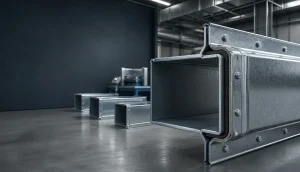
Sheet metal duct failures include physical damage, separated sections, and corrosion at joints in high-moisture environments. For either material, the question is not just whether air is moving, but whether the duct is delivering close to design airflow at acceptable pressure loss. When duct sections require replacement , rectangular duct making machine equipment allows custom-fabricated sheet metal components to be matched precisely to system geometry and airflow requirements.
4.How to Distinguish a Return Air Problem From Other HVAC Faults
The same symptoms—weak airflow, uneven temperatures, high run times—are also consistent with supply-duct leakage, a dirty evaporator coil, blower motor degradation, refrigerant undercharge, or equipment that was never correctly sized for the load. Attributing symptoms to the return side without measurement creates the risk of the wrong repair.
A useful field distinction: if return-side static pressure is elevated relative to the expected value for the system at design airflow, but supply-side static is within range, the restriction is more likely on the return side. If both sides are elevated, the problem may be system-wide restriction, blower performance, or a dirty coil. If static pressure appears within range but airflow is still insufficient, supply-side leakage or equipment undersizing may be the primary issue.
These interpretations depend on comparing measured values against the specific equipment’s rated external static pressure and blower performance data at the actual operating condition—not against generic thresholds.
4.1 Symptom-to-Cause Diagnostic Matrix
Use this as a starting reference. Confirm findings with field measurements before selecting a repair path.
| Symptom | First checks | Broader investigation if unresolved |
|---|---|---|
| Weak airflow at registers | Filter condition, grille obstruction, return-side static pressure | Blower performance, supply leakage, coil condition |
| Dust or attic/crawlspace odors | Accessible return joints, plenum seals, access panels | Duct leakage test, return-plenum integrity |
| One uncomfortable room, worse with door closed | Supply delivery, return-air pathway, door undercut | Room pressure measurement, zoning, load |
| High indoor humidity | Evaporator airflow, system runtime vs. latent load | Return leakage from humid space, equipment capacity |
| Noisy return grille | Grille face velocity, obstruction, filter resistance | Duct velocity upstream, grille sizing vs. airflow |
| Filters loading faster than expected | Filter type vs. system capability, airflow adequacy | Return leakage pulling in contaminated air |
5.Field Tests That Confirm Return Air Duct Problems
Measurement changes the conversation from symptom management to cause confirmation. These tests form the foundation of a professional return-air diagnosis.
5.1 External Static Pressure Testing
External static pressure (ESP) is the total resistance the blower operates against, measured across the return and supply plenums using a digital manometer with test ports at each location. Return-side static pressure is read separately at the return plenum inlet, with the installed filter in place, since filter resistance is part of the return-side load.
The reading should be compared against the specific equipment manufacturer’s rated external static pressure and blower performance data at the design airflow condition—not against a generic industry value. What constitutes an elevated return-side reading depends on the equipment rated curve, the test location relative to the air handler, filter type, and coil condition at the time of measurement. A reading that appears high in isolation may be within specification when reviewed against the actual blower performance data for that unit at that airflow.
5.2 Airflow and Room-Pressure Testing
Total system airflow can be verified at the air handler using a flow hood, a duct traverse, or a calibrated measurement device at the return or supply side. Individual register airflow checks identify whether specific spaces receive adequate delivery.
Room pressure testing identifies inadequate return pathways at the room level. With a digital pressure gauge and a test port through the door, measure the pressure difference between the room and the adjacent corridor or return-accessible space, with the interior door closed and the system running. A positive room pressure relative to the return zone is a useful indicator—but it is one piece of evidence, not a standalone diagnosis. The result should be considered alongside supply airflow volume, return-air pathway sizing, and any observed changes when the door is opened. Some pressure differential in a well-supplied room is expected; the question is whether the pathway is adequate to prevent meaningful comfort or airflow loss.
5.3 Duct Leakage Testing
Visual inspection identifies accessible joint failures, disconnected boots, damaged flex sections, wet insulation, and improperly sealed access panels. Inspection should cover the full return path: grilles, duct runs, fittings, plenums, and the air handler cabinet.
When hidden return leakage is suspected, duct leakage testing provides a quantified measurement. A duct blower pressurizes the duct system at a specified test pressure (commonly 25 Pa) while supply and return openings are temporarily sealed; measured airflow at the blower quantifies total system leakage. Some test protocols distinguish total leakage (all system leakage) from leakage to outside (leakage to unconditioned or exterior spaces), which is the more actionable figure for energy performance and contamination risk. The specific test pressure, sealing scope, and acceptance criteria should follow the applicable project specification, equipment manufacturer guidance, or relevant testing standard rather than a single default procedure.
6. Return Air Duct Repairs: Match the Fix to the Confirmed Cause
A repair is only as effective as the diagnosis that precedes it.
6.1 Low-Disruption Maintenance Fixes
These actions should precede any more invasive work and resolve a meaningful share of return-air complaints:
- Replace the air filter with the correct type and MERV rating for the installed equipment—verify that the blower can maintain design airflow against the chosen filter’s resistance at the selected rating.
- Clear return grilles and confirm that furniture, stored equipment, or building materials are not restricting face area.
- Clean return covers and inspect behind them for debris accumulation.
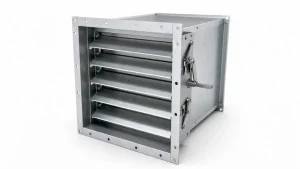
- Confirm that zone dampers, fire dampers, and any manual balancing dampers are correctly positioned and operating freely.
- Verify that access panels to the air handler cabinet and return plenum are fully closed and properly gasketed.
6.2 Duct Sealing and Reconnection
For accessible joint leaks and disconnected duct sections, sequence matters:
- Reconnect the duct section mechanically first. The appropriate fastening method depends on the duct material, joint type, and system pressure class—sheet metal screws for rigid metal-to-metal connections, draw bands or zip ties with sufficient overlap for flex-to-fitting connections. Confirm that the connection method is suitable for the specific duct system.
- Seal reconnected joints and leaking seams. Mastic sealant is generally preferred for durability. UL 181-listed foil tape may be appropriate for certain applications. Standard fabric-backed duct tape degrades under thermal cycling and is not appropriate for permanent duct sealing.
- Insulate repaired sections where ducts pass through unconditioned spaces, based on temperature differential and condensation risk.
- Verify the repair by retesting static pressure or leakage before restoring normal operation.
Do not seal over a joint that has not been mechanically secured first. Tape alone will not sustain a connection under the pressure variation and thermal cycling that duct systems experience in service.
6.3 Return-Air Pathway Upgrades
When testing confirms that the return side is undersized—system-wide or for specific rooms—physical changes are required:
- Grille resizing increases face area and reduces face velocity, lowering pressure loss at the grille. Calculate the required neck size and face area against the verified airflow requirement before specifying a new grille.
- Transfer grilles allow room air to reach a return grille through an adjacent space without routing back through a main corridor—commonly used in commercial offices.
- Jump ducts route a short duct section from a pressurized room, over or through a partition, to an adjacent return-accessible space. Whether this involves a fire-rated wall assembly, and what the applicable requirements are, depends on the specific wall construction and local building and fire codes. Do not assume a jump duct is code-compliant without confirming the wall type, occupancy classification, and relevant requirements with the project authority having jurisdiction.
- Door undercuts are the lowest-cost option but provide limited airflow relief. In well-sealed construction, an undercut alone is generally not sufficient as the primary return path.
6.4 Duct Replacement and Redesign
When inspection reveals ductwork that is mechanically failed, physically collapsed, contaminated, or so poorly routed that sealing and reconnection cannot restore adequate performance, replacement is the more defensible choice.
Replacement sections should restore correct duct geometry: appropriate sizing, adequate bend radii, properly tensioned flex liner, and secured and sealed connections at both ends. For custom geometries—non-standard rectangular sections, complex fittings, or large-scale duct system replacements—auto duct production line equipment can fabricate sheet metal components to precise dimensions, reducing field fit issues and improving joint quality at scale.
After replacement, retest static pressure and airflow to confirm the new section performs as expected before closing the work.
7. When Duct Cleaning Helps—and When It Does Not
Duct cleaning is sometimes recommended as a first response to return-air complaints, particularly when dust or odors are involved. The decision warrants scrutiny.
Cleaning may be appropriate when:
- Inspection shows meaningful debris accumulation inside the return duct or plenum
- A confirmed return leak from a dusty or construction-affected space has introduced contamination into the system
- Renovation work has left visible particulate contamination inside accessible duct sections
Cleaning will not correct:
- Undersized or restricted returns—debris removal does not change duct cross-section or system static pressure
- Disconnected or leaking joints—cleaning a leaking duct without sealing it leaves the contamination pathway open
- Crushed, kinked, or poorly routed flex duct—duct geometry is a structural problem
- Room pressure imbalance—return-air pathway design cannot be cleaned into existence
Require any cleaning contractor to specify the diagnosed condition the cleaning addresses, and confirm with before-and-after airflow or static pressure measurements that the work produced a measurable performance outcome.
8.Return Air Problems in Commercial and Occupied Buildings
Commercial HVAC systems introduce considerations largely absent from residential work.
Tenant comfort complaints often present as thermostat issues but reflect airflow imbalance—rooms receiving adequate supply but lacking a usable return path, or return-side restriction that has reduced system airflow below the design condition.
Return leaks in commercial spaces carry additional risk. Returns near loading docks, parking structures, mechanical rooms, or service corridors can pull in vehicle exhaust, cleaning chemicals, or other contaminants. Returns in warehouse or manufacturing environments may draw in process dust, fumes, or humidity. Identifying and sealing these pathways is a health and safety issue, not simply a comfort one.
Renovation and tenant fit-out work regularly disrupts existing ductwork. Partition walls installed after the original duct design can isolate rooms from their return path; flex ducts kinked or compressed during construction may never be restored to acceptable condition. Post-construction commissioning should include return-side static pressure and room pressure verification—not just a visual walkthrough.
For pressure-sensitive environments—cleanrooms, laboratories, negative-pressure isolation areas, or food-processing spaces—return-air pathway design and post-installation verification are part of the building performance specification, not a maintenance afterthought.
9.How to Prioritize Return Air Duct Repairs
When multiple faults are identified simultaneously, this sequence balances safety, cost, and disruption:
- Safety and contamination risks first. Seal return leaks near garages, combustion appliances, or confirmed contamination sources. These represent both occupant health risks and, near combustion equipment, potential backdraft hazards.
- Operational restrictions next. Filter changes, grille clearing, and damper corrections are low-cost and low-disruption. Confirm and retest before moving to physical duct work.
- Accessible duct faults. Seal and reconnect accessible joint failures once maintenance fixes have been tested and confirmed.
- Pathway upgrades and replacements. Size these against verified measurement data. Avoid adding return grilles or transfer paths based on symptom reports alone.
- System-level review. If localized repairs do not resolve airflow or comfort problems, commission a full return-side assessment before further investment.
For each repair category, document before-and-after results: static pressure, airflow, room pressure, and leakage test data where applicable.
10.Questions to Ask Your HVAC Contractor
Before authorizing duct repair or modification work, these questions help confirm that the diagnosis is measurement-based and the proposed scope addresses the confirmed fault:
What measurements confirm the return side is the source of the problem? Look for references to return-side static pressure, airflow verification, room pressure testing, and duct leakage results—not symptom descriptions alone.
Is the proposed repair addressing restriction, leakage, duct geometry, or inadequate return capacity? A clear answer should map directly to a specific diagnostic finding.
How will the repair be verified after completion? Post-repair testing should replicate the original diagnostic measurements to confirm the problem has been corrected, not just addressed.
What access, sequencing, dust control, and documentation are included in the scope? In occupied or sensitive buildings, these operational details matter as much as the technical scope.
If duct cleaning is included, what specific condition does it address? Cleaning should be justified by a diagnosed condition—not offered as a general improvement measure.
11.Frequently Asked Questions About Return Air Duct Problems
Q1: Can a blocked return air duct damage HVAC equipment?
Answer: Yes, over time. A severely restricted return raises the resistance the blower operates against, reduces airflow across the coil or heat exchanger, and forces the motor to work beyond its intended operating range. In cooling mode, reduced airflow across the evaporator can contribute to coil freezing. In heating mode, insufficient airflow over the heat exchanger can trigger high-limit shutdowns and place repeated thermal stress on the heat exchanger.
Q2: Can a leaking return duct increase indoor dust and humidity?
Answer: It can, depending on where the leak is located. A return leak in a humid crawlspace or attic draws unconditioned, moisture-laden air into the system before it reaches the filter or the cooling coil. Leaks near dusty spaces or active construction can introduce particulates that bypass filtration entirely. Sealing the leak is the correct fix; HVAC indoor air quality improvements are secondary.
Q3: Does every room need its own return air grille?
Answer: Not necessarily. What every room needs is an adequate return-air pathway when the door is closed—whether that is a dedicated return grille, a transfer grille, a jump duct, or a door undercut sized to allow sufficient airflow. The criterion is verified pressure and airflow performance for that space, not simply the presence of a grille.
Q4: Why does one room become uncomfortable when the door is closed?
Answer: A room with a supply register but no return-air pathway will accumulate positive pressure when the door is closed. That pressure difference reduces the supply register’s ability to deliver airflow into the room, because the room air has nowhere to go. The result is reduced heat transfer and temperature drift. The appropriate fix is a return-air pathway sized for the actual airflow requirement—not a thermostat adjustment or a higher supply temperature.
Q5: Will duct cleaning fix poor HVAC airflow?
Answer: In most cases, no. Most poor-airflow problems stem from static pressure issues, duct geometry, leakage, or undersized returns—none of which are resolved by cleaning. Cleaning may help if there is documented debris accumulation inside the duct that has measurably reduced effective cross-section. Static pressure and airflow measurement should precede any cleaning recommendation.
Q6: How do technicians test whether a return duct is undersized or leaking?
Answer: Undersizing is assessed through airflow measurement at return grilles compared against design airflow, combined with return-side static pressure data reviewed against equipment specifications. Leakage is quantified through duct leakage testing using a duct blower at a specified test pressure; the result is compared to applicable acceptance criteria for the project. Room pressure testing with a digital pressure gauge identifies inadequate return pathways at the individual room level.
Q7: Can a dirty filter cause return air problems?
Answer: Yes. A severely clogged filter is one of the most common causes of return-side restriction. Some high-MERV filters add enough resistance—even before they are visibly loaded—to push static pressure beyond the blower’s effective operating range for that system. The solution may be a more frequent filter replacement schedule, a filter with lower resistance at an equivalent efficiency rating, or verification that the installed filter is appropriate for the specific equipment’s airflow capability.
12.Diagnose Before You Replace
Return-air duct problems consistently affect comfort, efficiency, humidity control, and equipment life—yet they are frequently misidentified as equipment failures, refrigerant shortages, or thermostat faults because the symptoms overlap substantially.
The repair itself is rarely the complex part. Most return-air faults can be corrected by clearing restrictions, sealing accessible leaks, adjusting return pathways, or replacing damaged duct sections. What makes the difference is confirming the actual fault through measurement before selecting the repair.
Before authorizing equipment replacement or a major system overhaul, verify that static pressure, airflow, room pressure, and duct condition have been properly assessed on the return side—using the specific equipment’s performance data as the reference. A sealed joint, a cleared grille, or an added transfer path is often the answer to a problem that looked far more expensive on paper.